
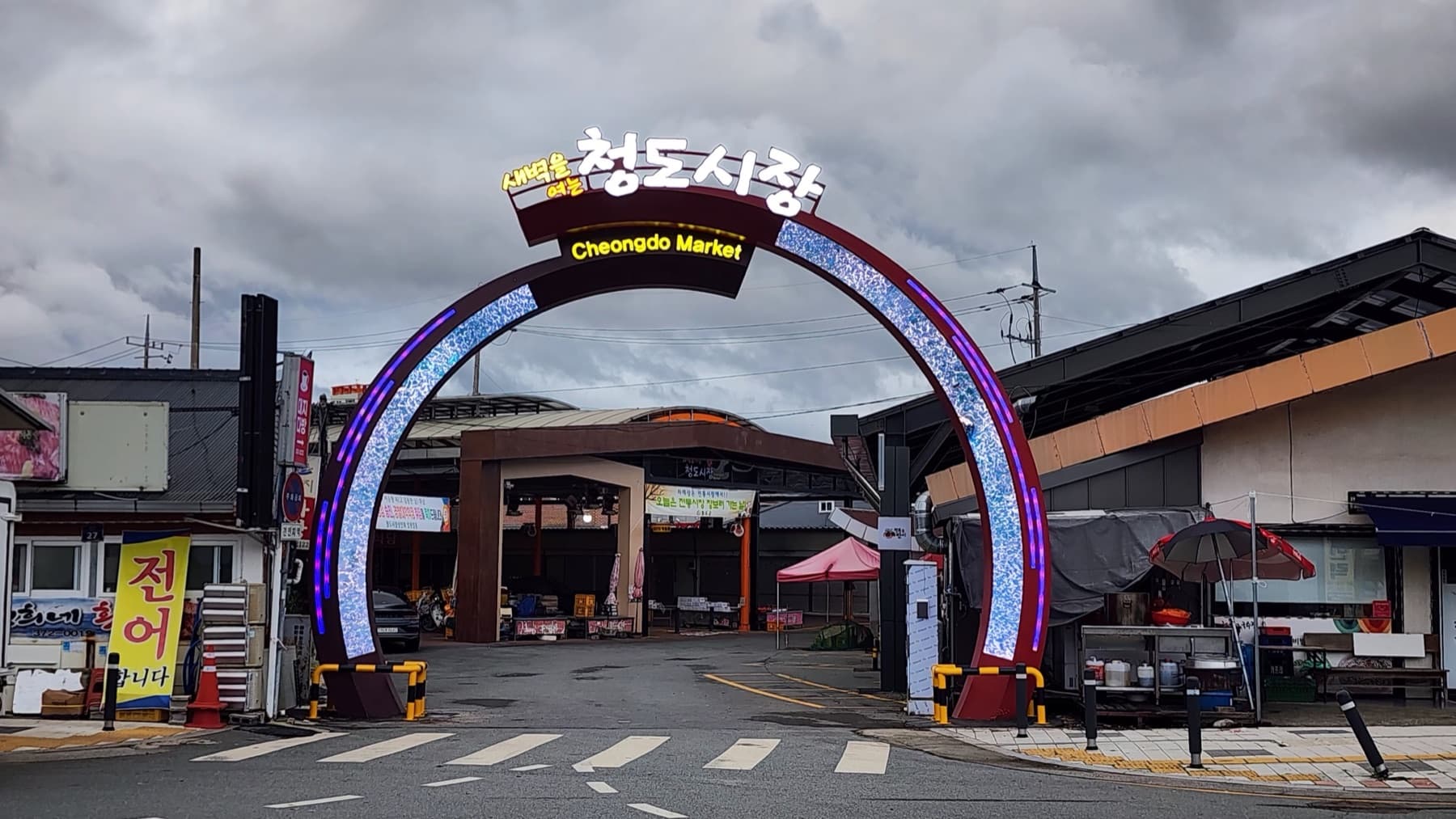
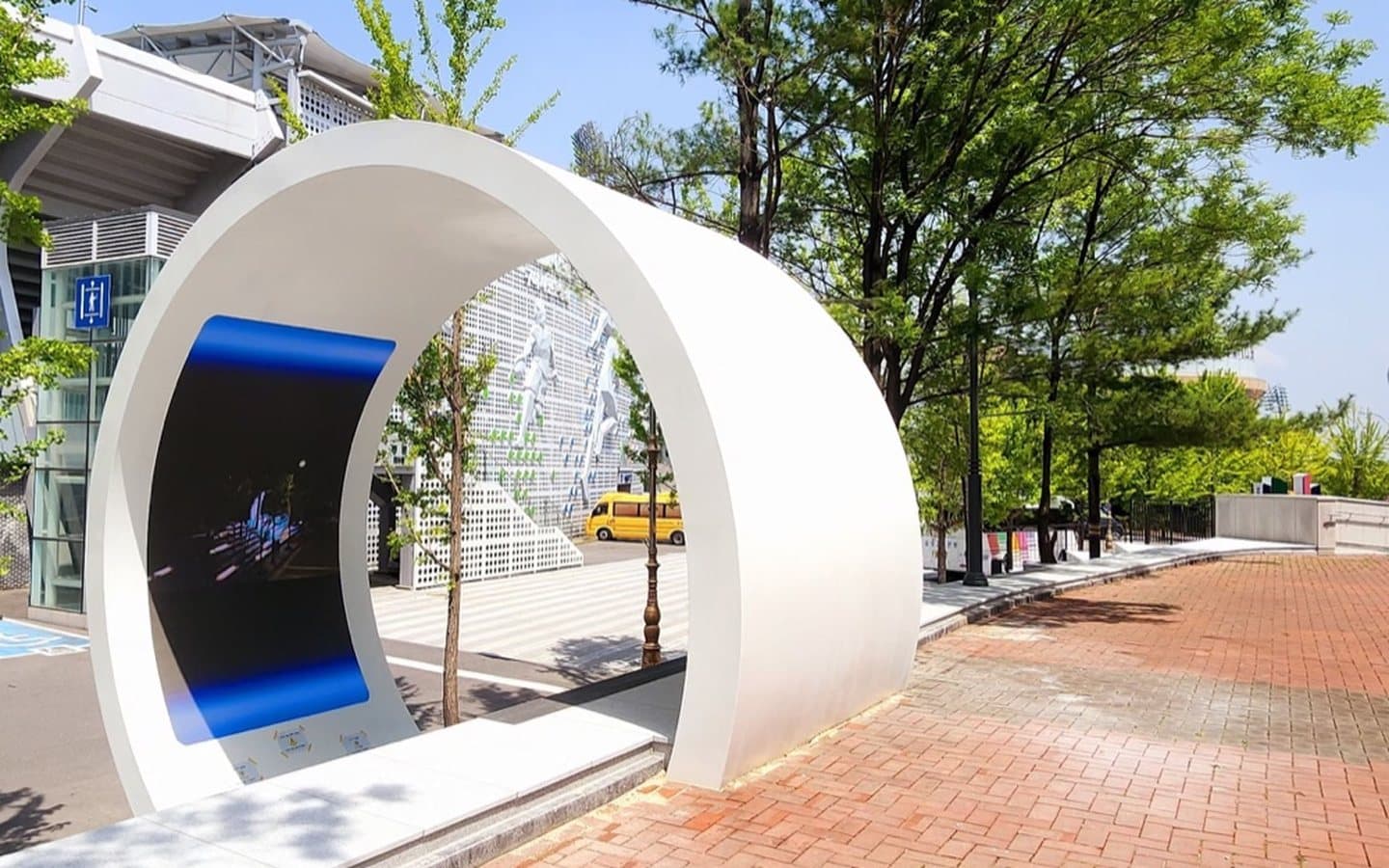
Arched LED sculpture display at Cheongdo Market
Cheongdo County, Gyeongbuk · Cheongdo, Gyeongbuk · 2025.09 Completed
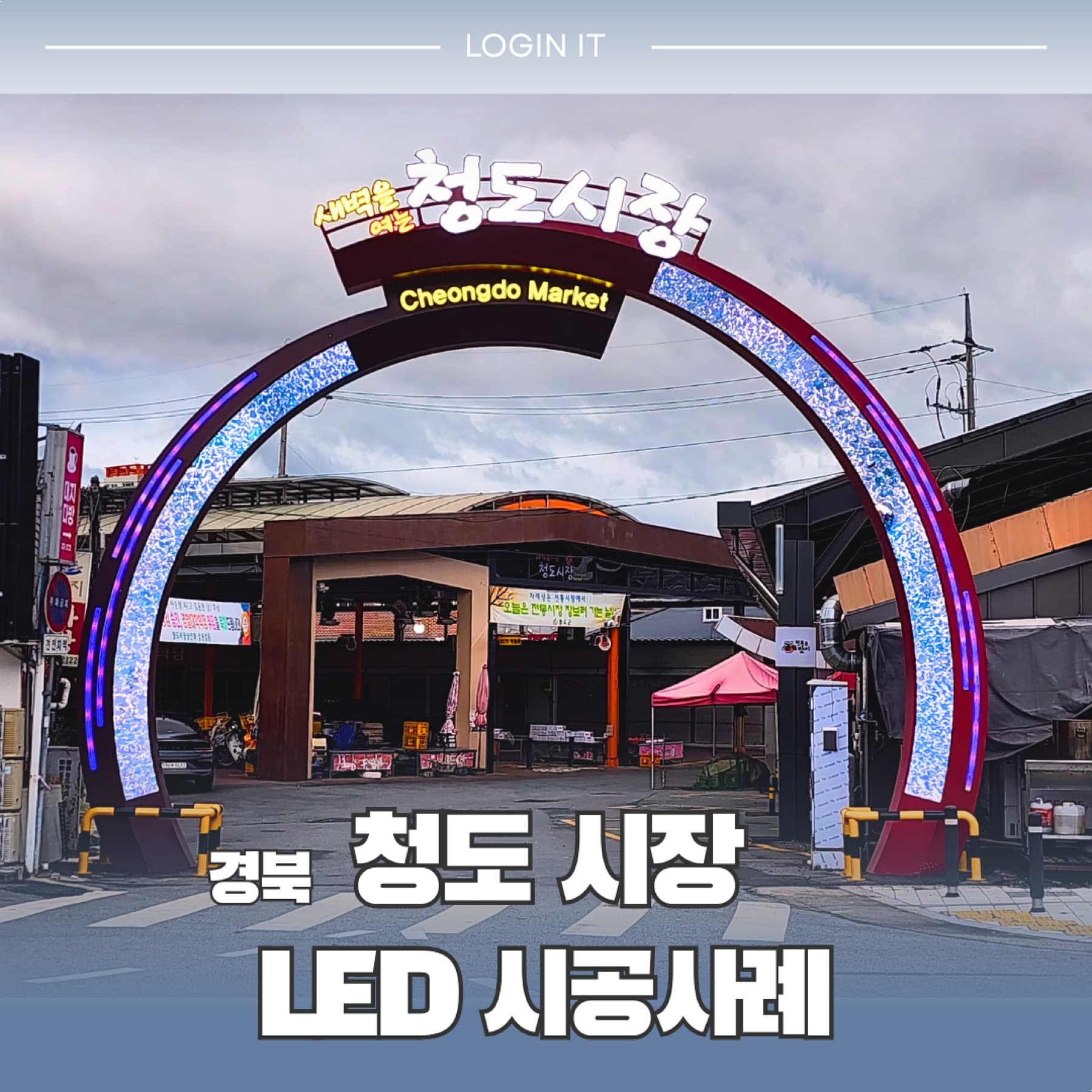
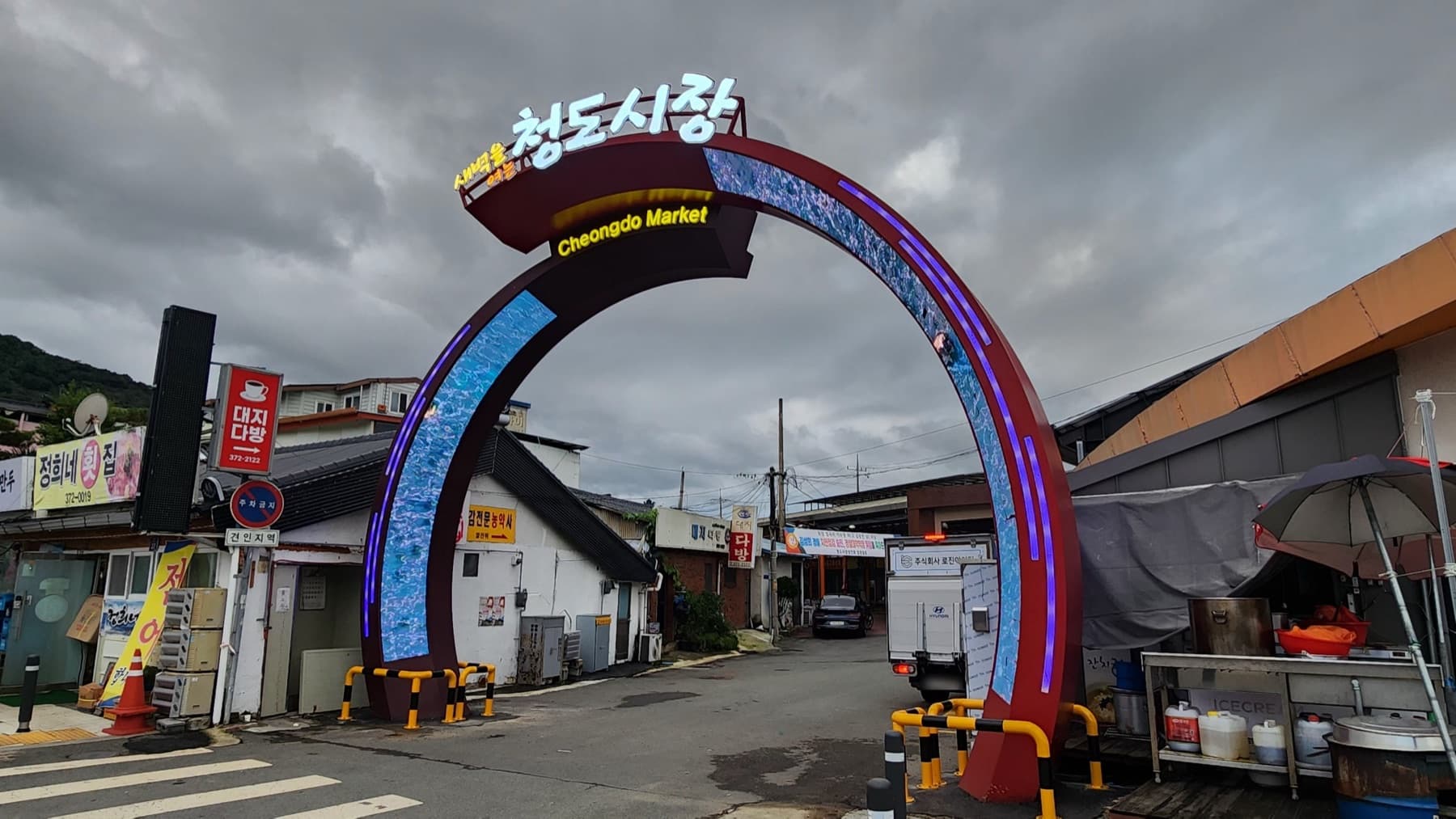
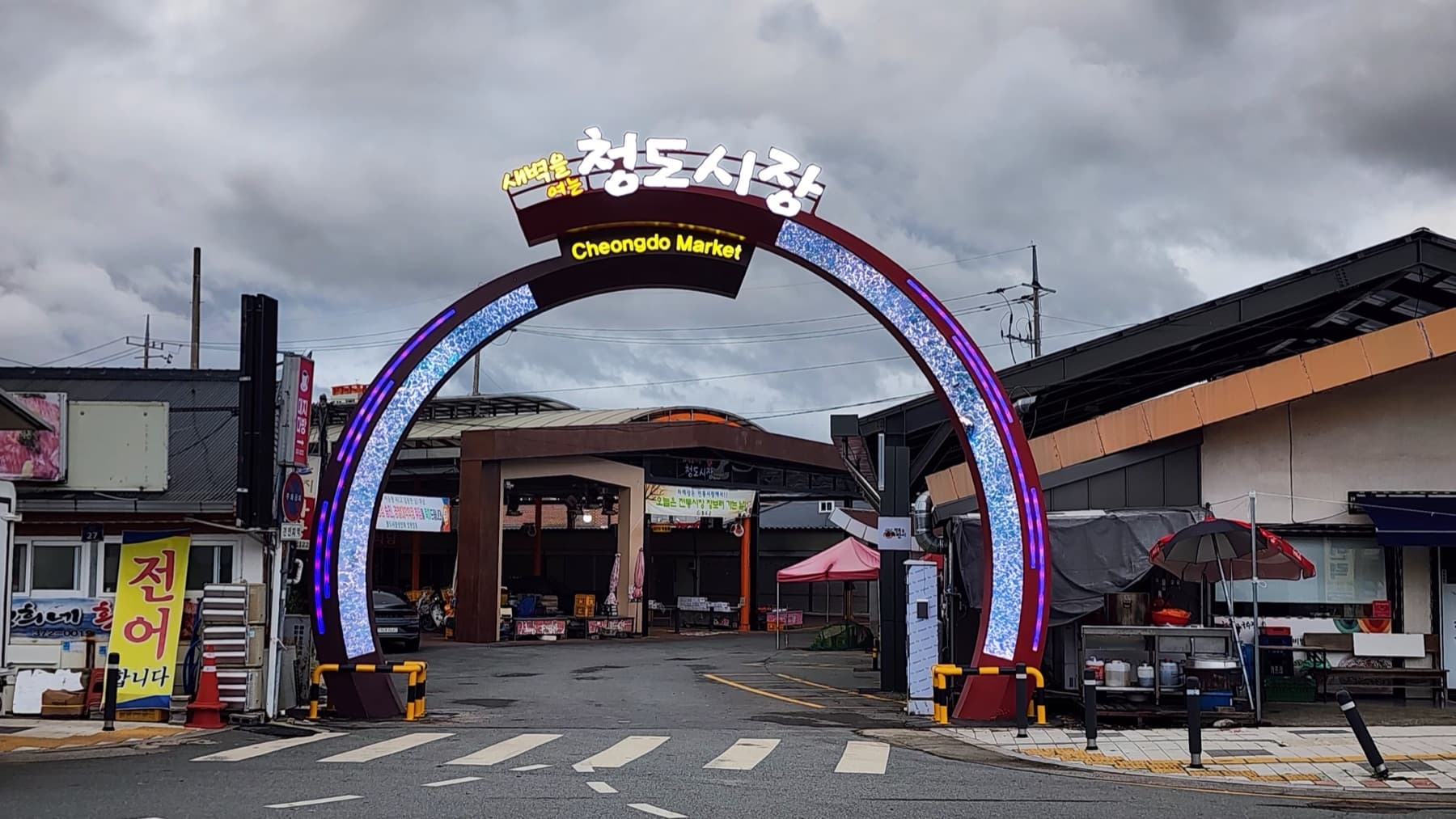
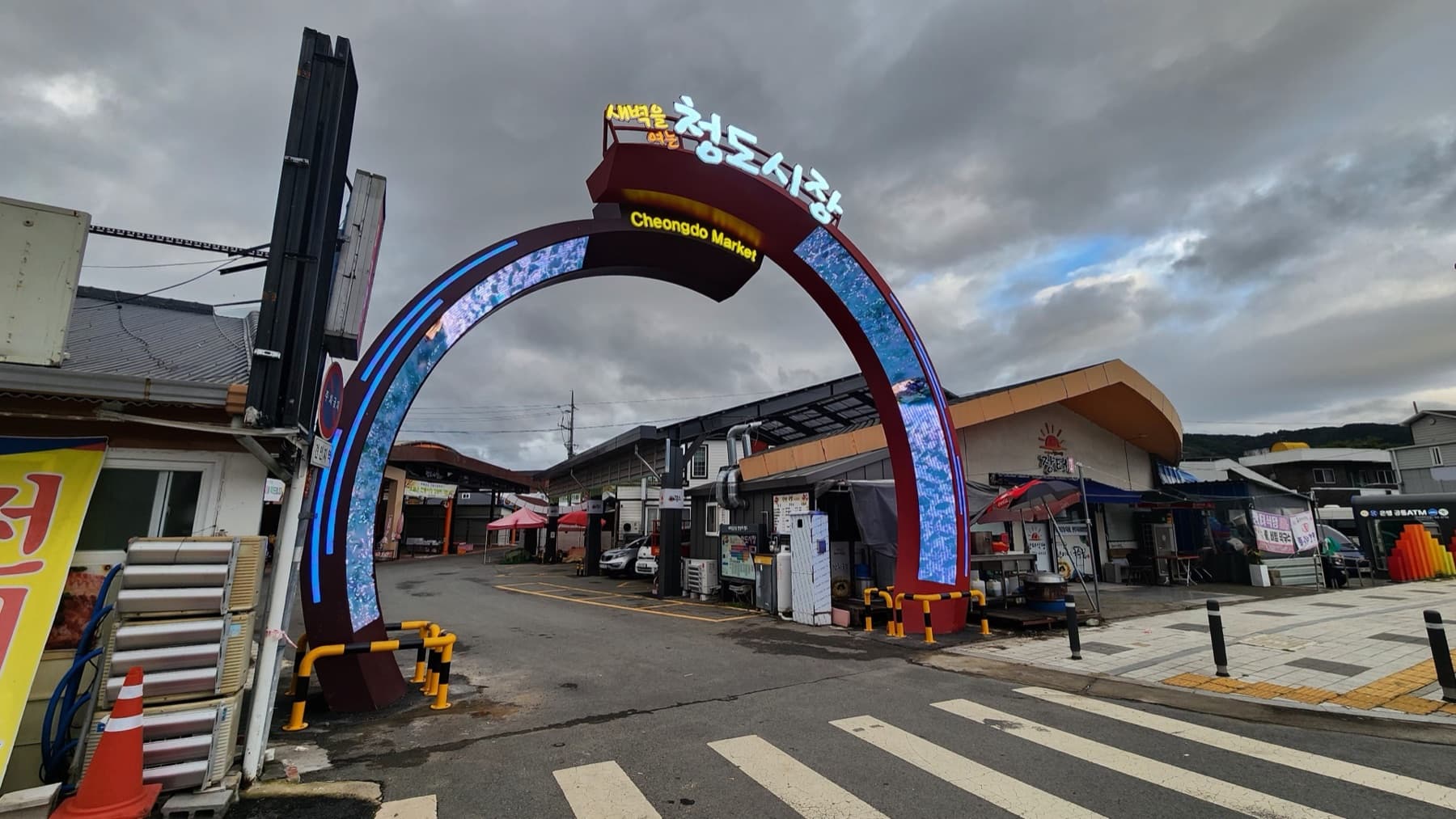
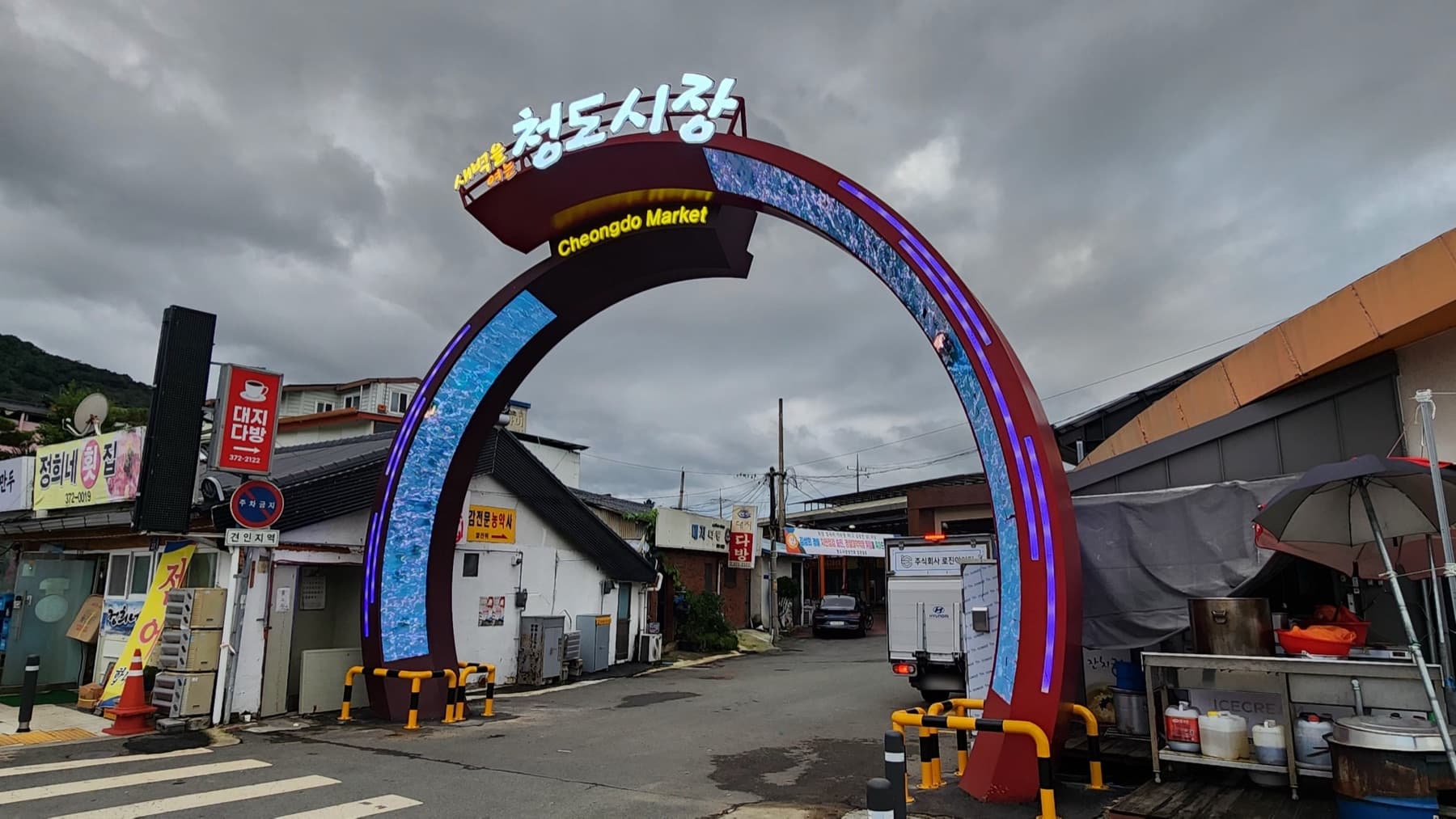
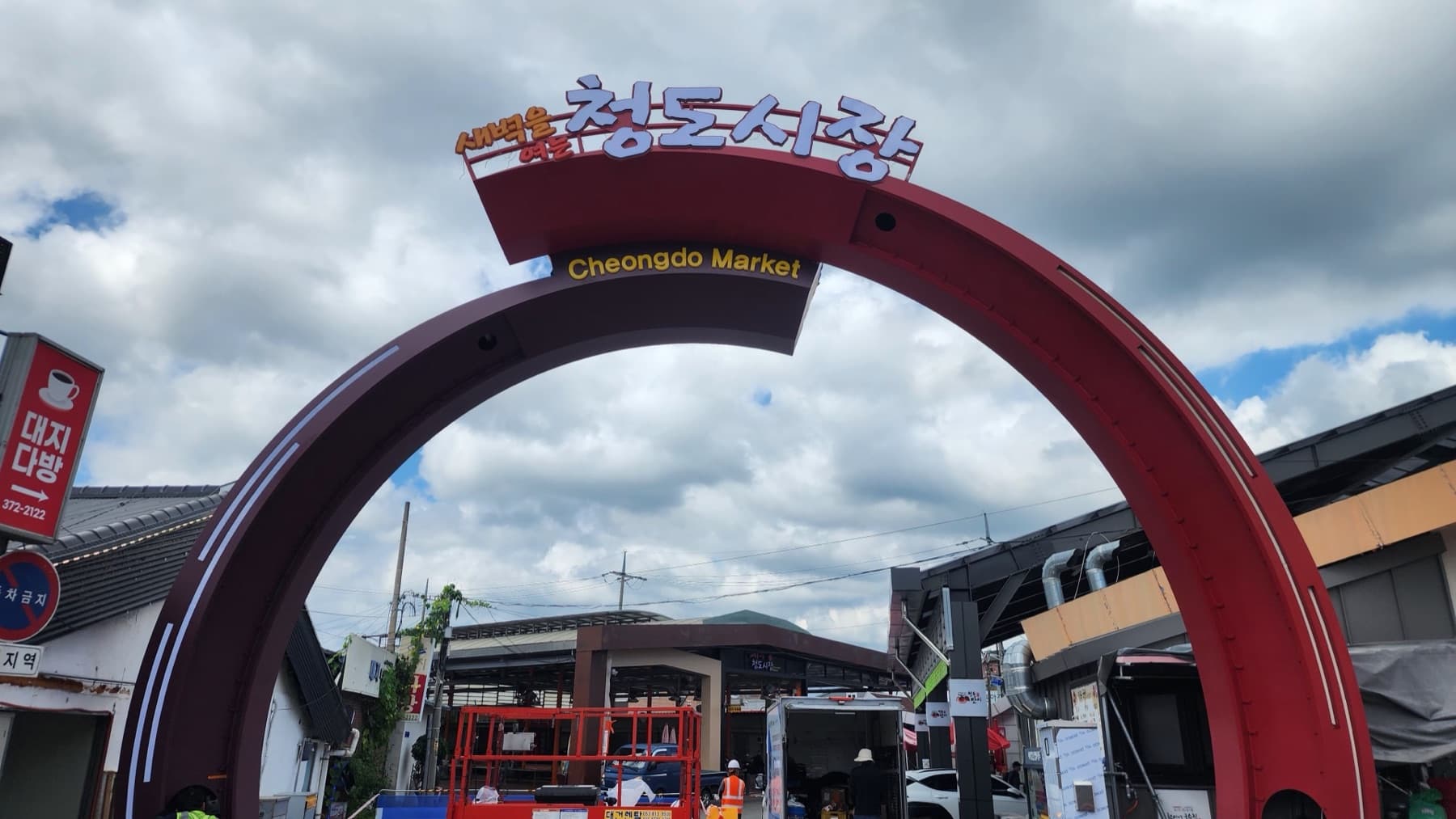
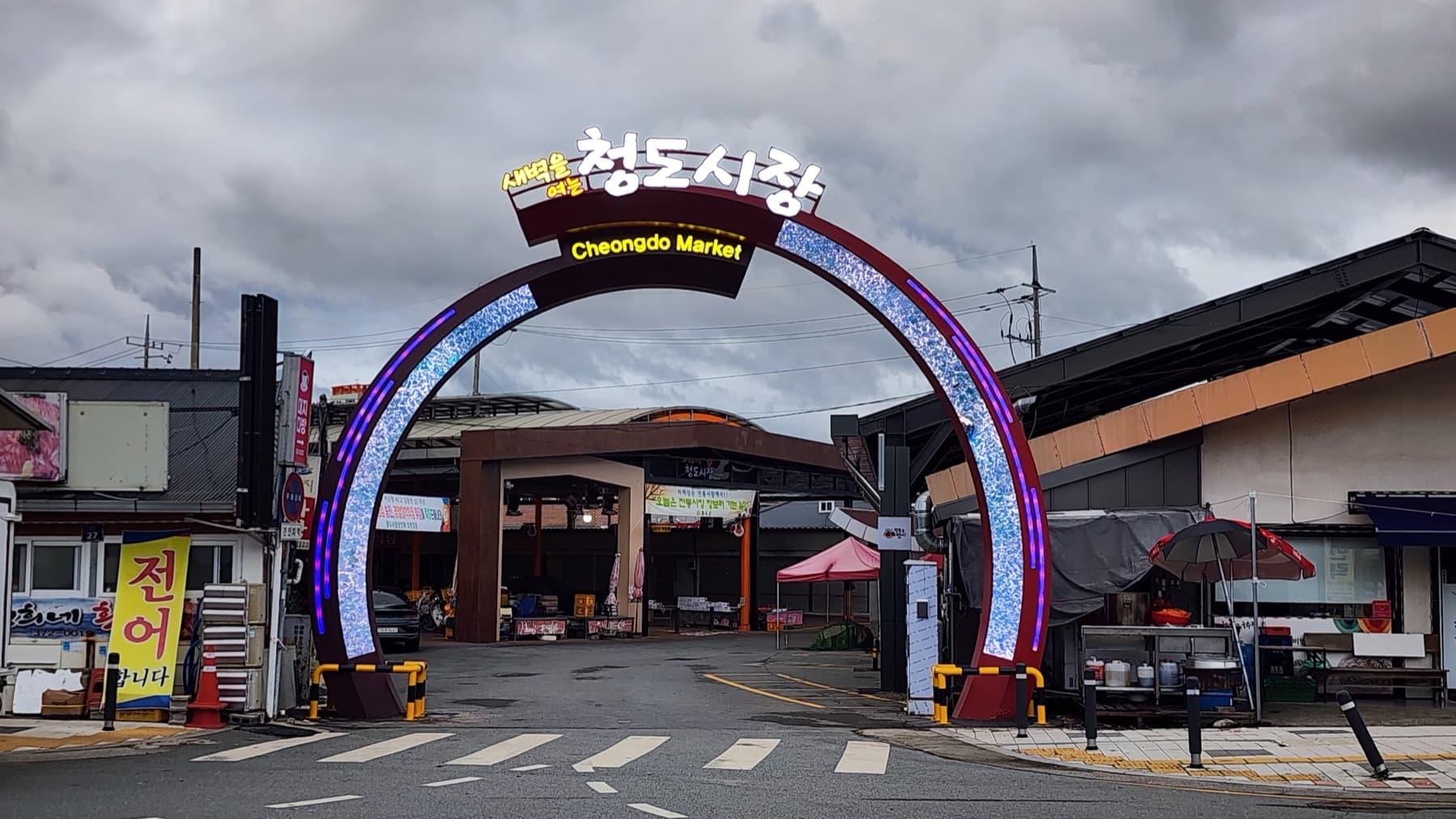
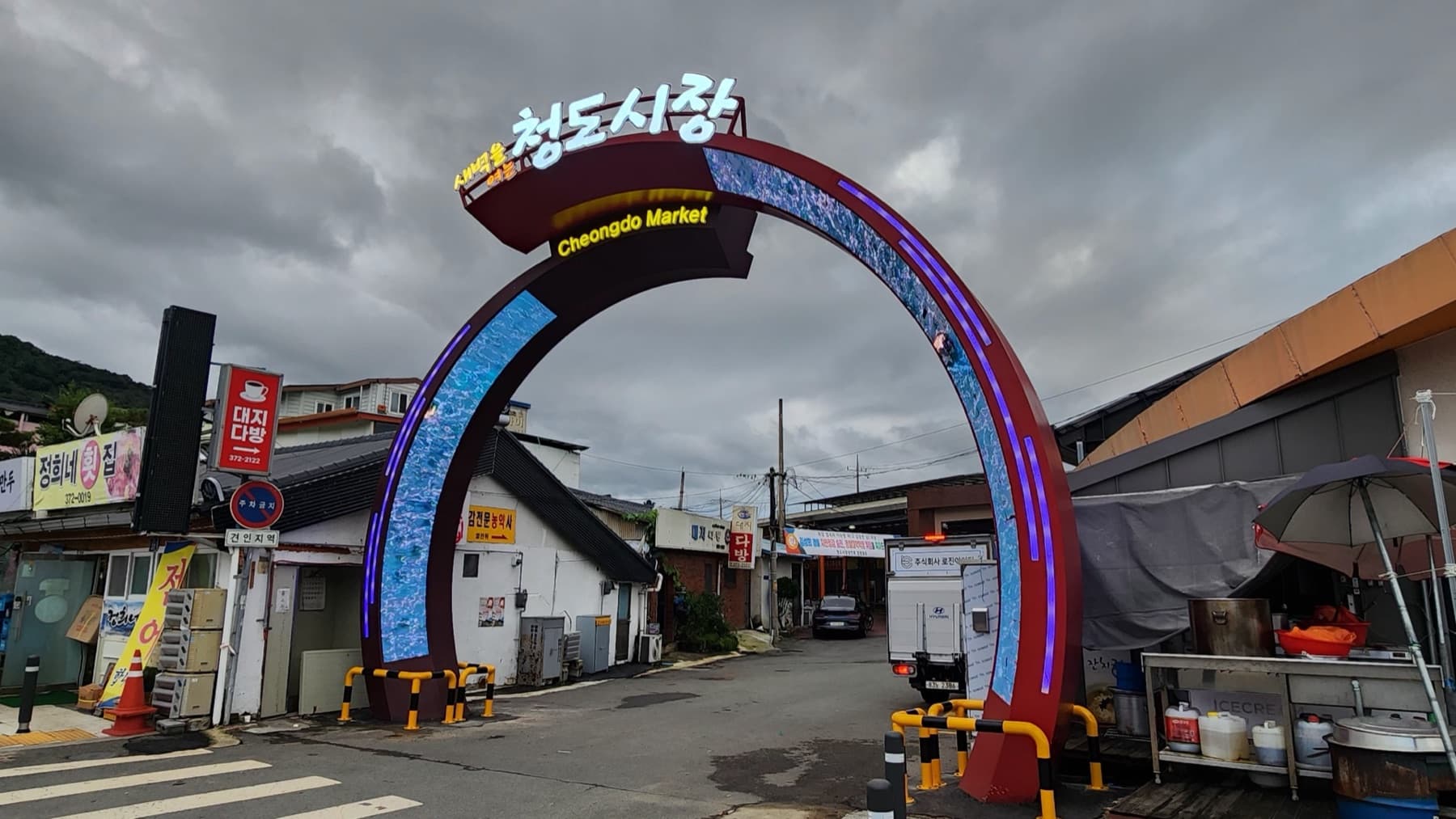
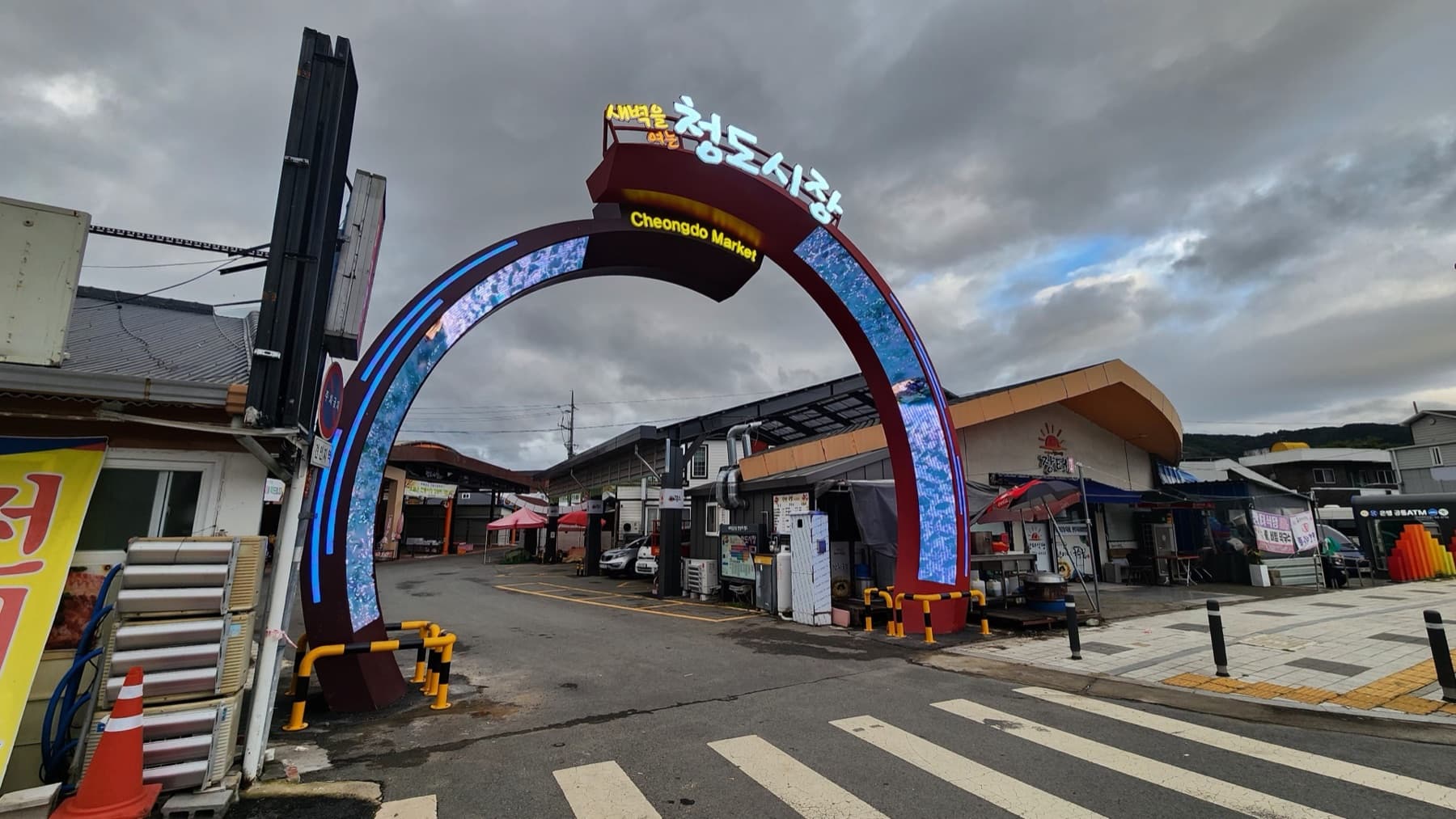
A media tunnel installed at the entrance of Cheongdo Market (a traditional five-day market). Built to commemorate the 'Cheongdo Imagination Maru Project', it uses a free-form LED structure laid out diagonally to follow the curved frame. It offers a spatial experience distinct from conventional flat displays.
- Installation location
- Cheongdo, Gyeongbuk
- Client
- Cheongdo County, Gyeongbuk
- Completed
- 2025.09
- Category
- Outdoor LED
- Product used
- P4
- Size
- 3.68 × 3.14 m
- Resolution
- 1216 × 256 px
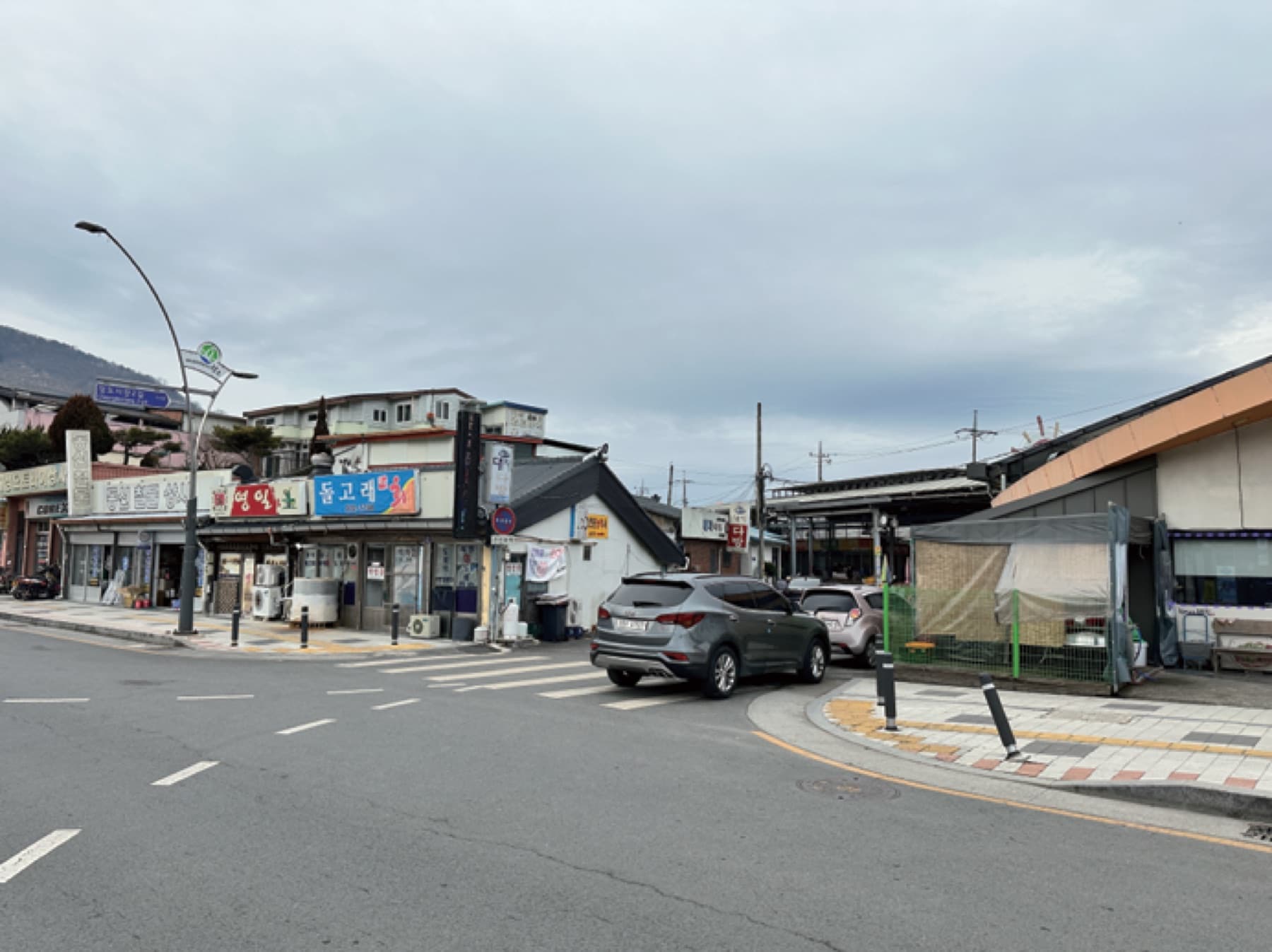
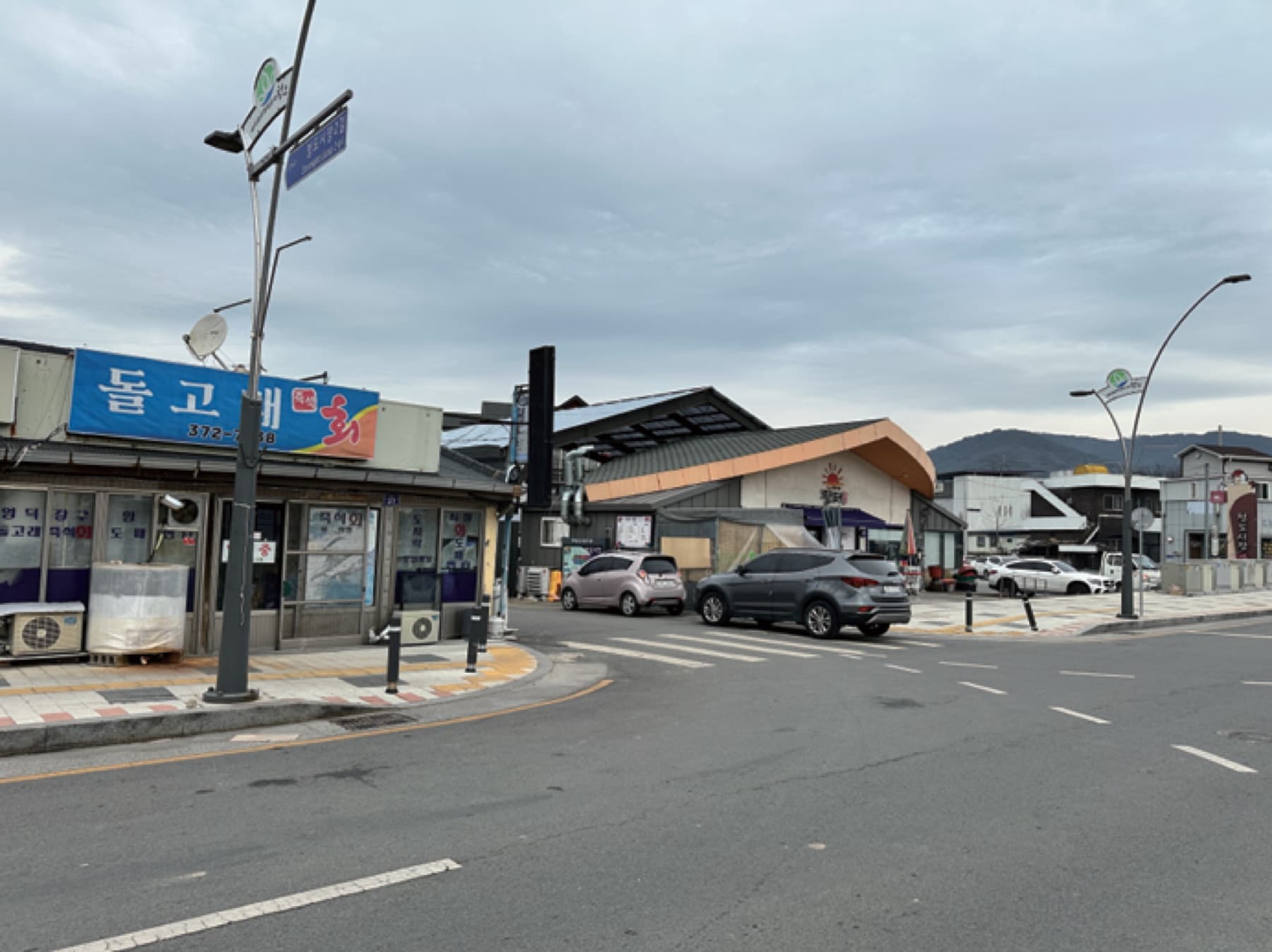
Before installation
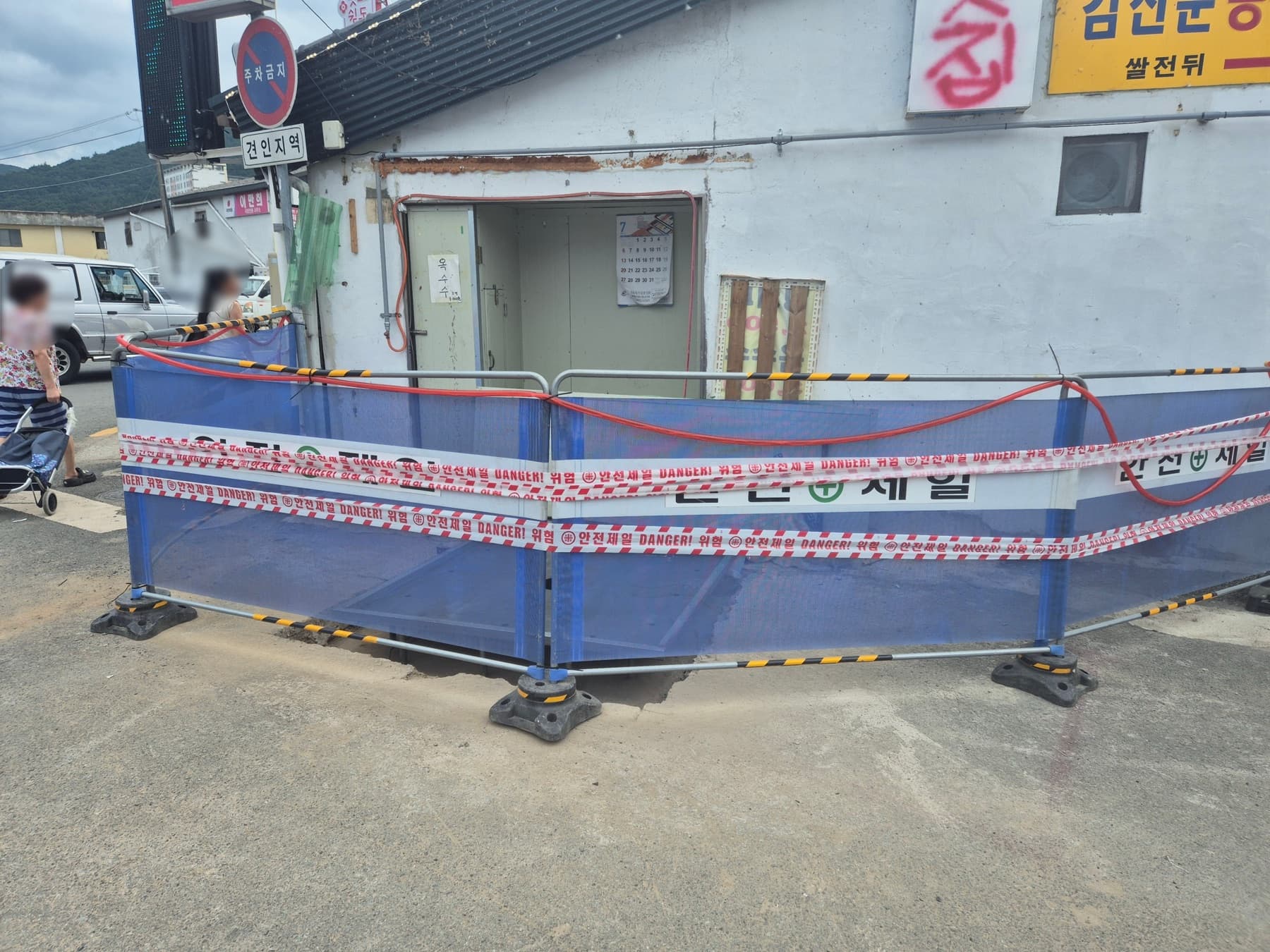
The market entrance was a symbolic space that welcomed visitors, but with no LED display or information facilities, it fell short of expressing the market's character.
In particular, there was no facility to effectively deliver event and promotional videos, which made it hard to use new content.
Installation process 17 steps
Above, we introduced the finished arched LED sculpture display newly installed at the entrance of Cheongdo Market.
A traditional market is more than a place to buy and sell goods; it holds the history and culture of its region. That is why it matters to refresh the market's look and create a space visitors will remember.
Because the design was curved rather than a standard rectangular display, everything from the structure to the LED modules had to be designed from scratch.
In this post, we focus on how the sculpture and the special LED modules were built at our factory.
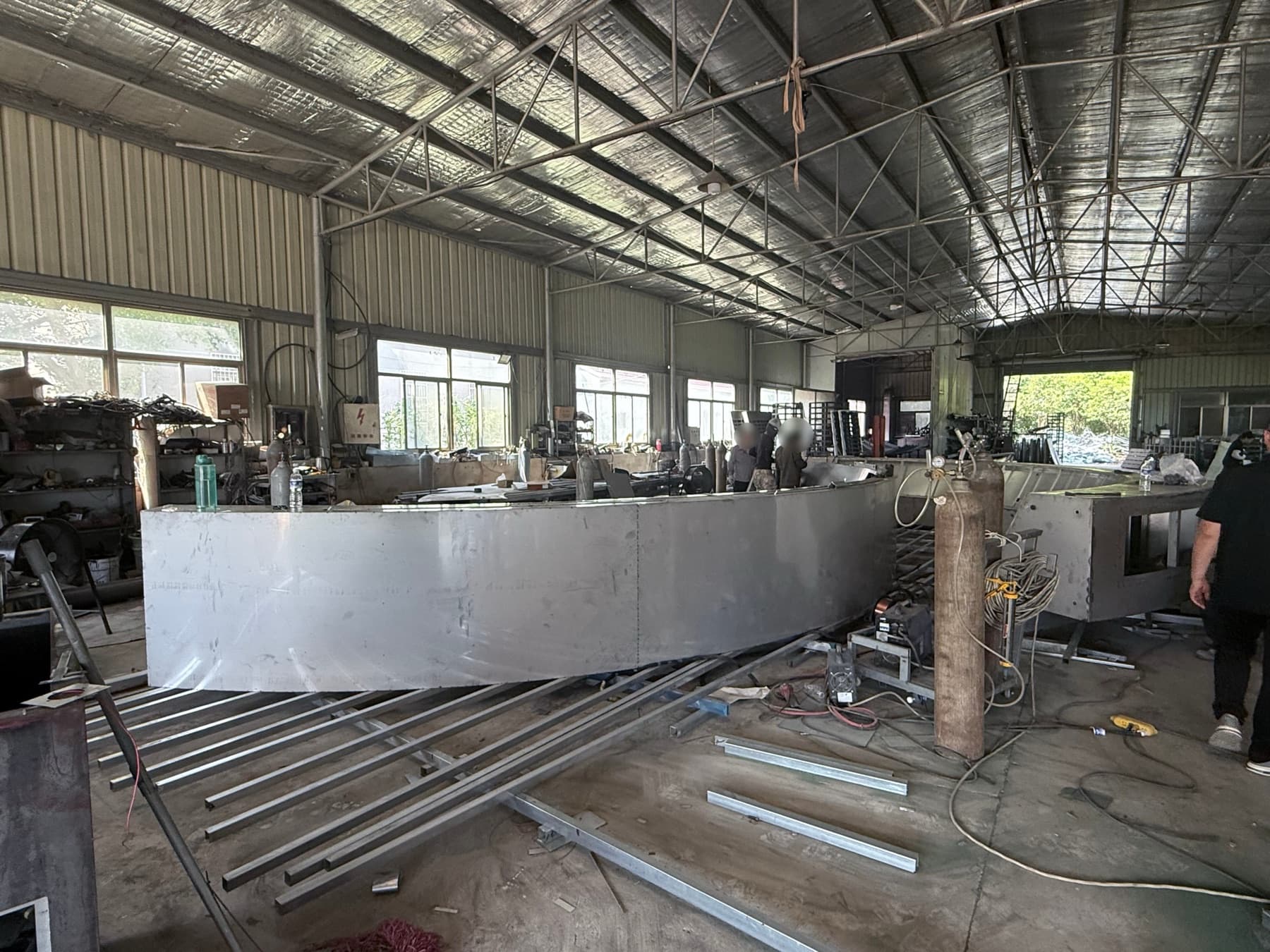
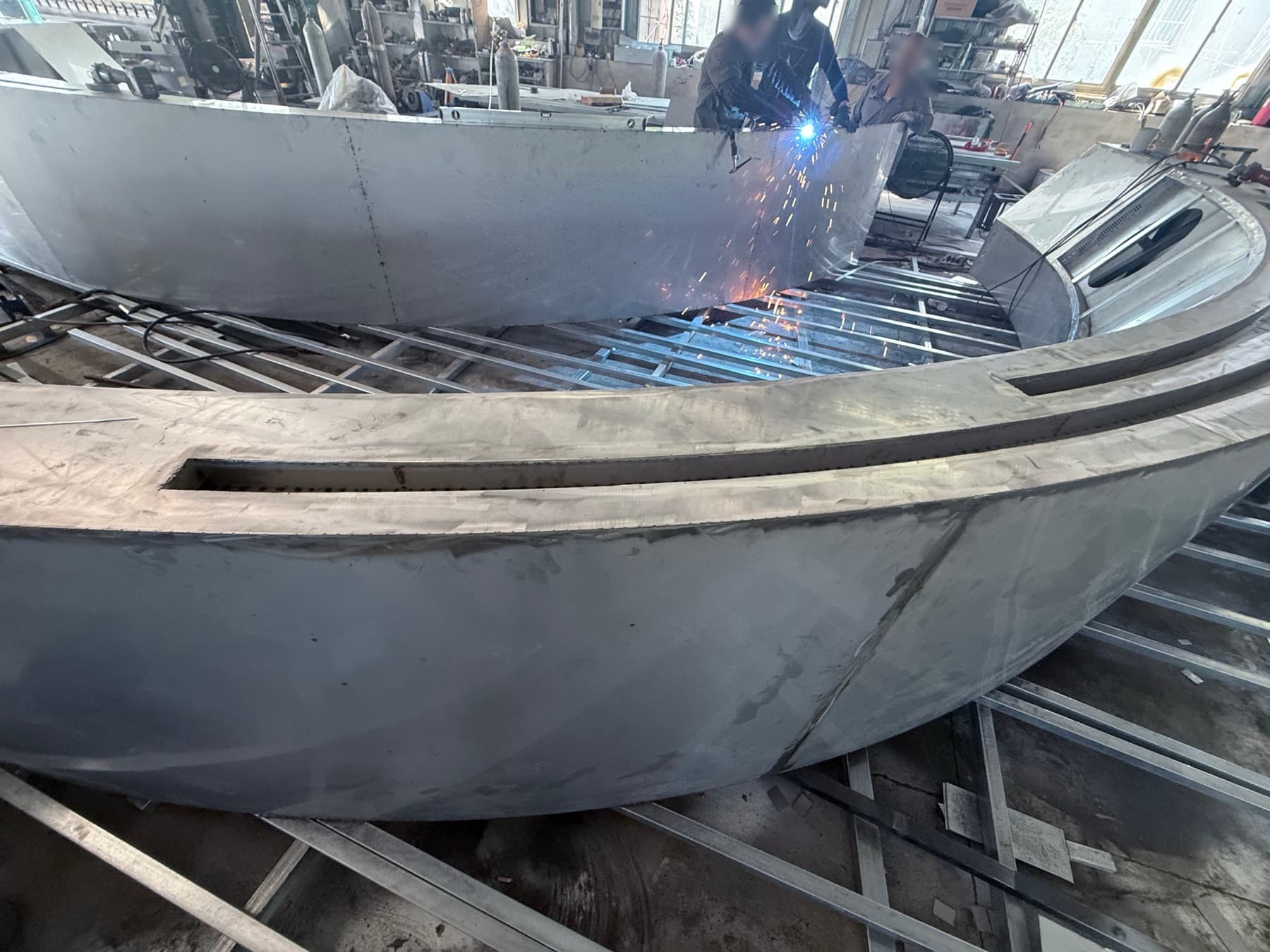
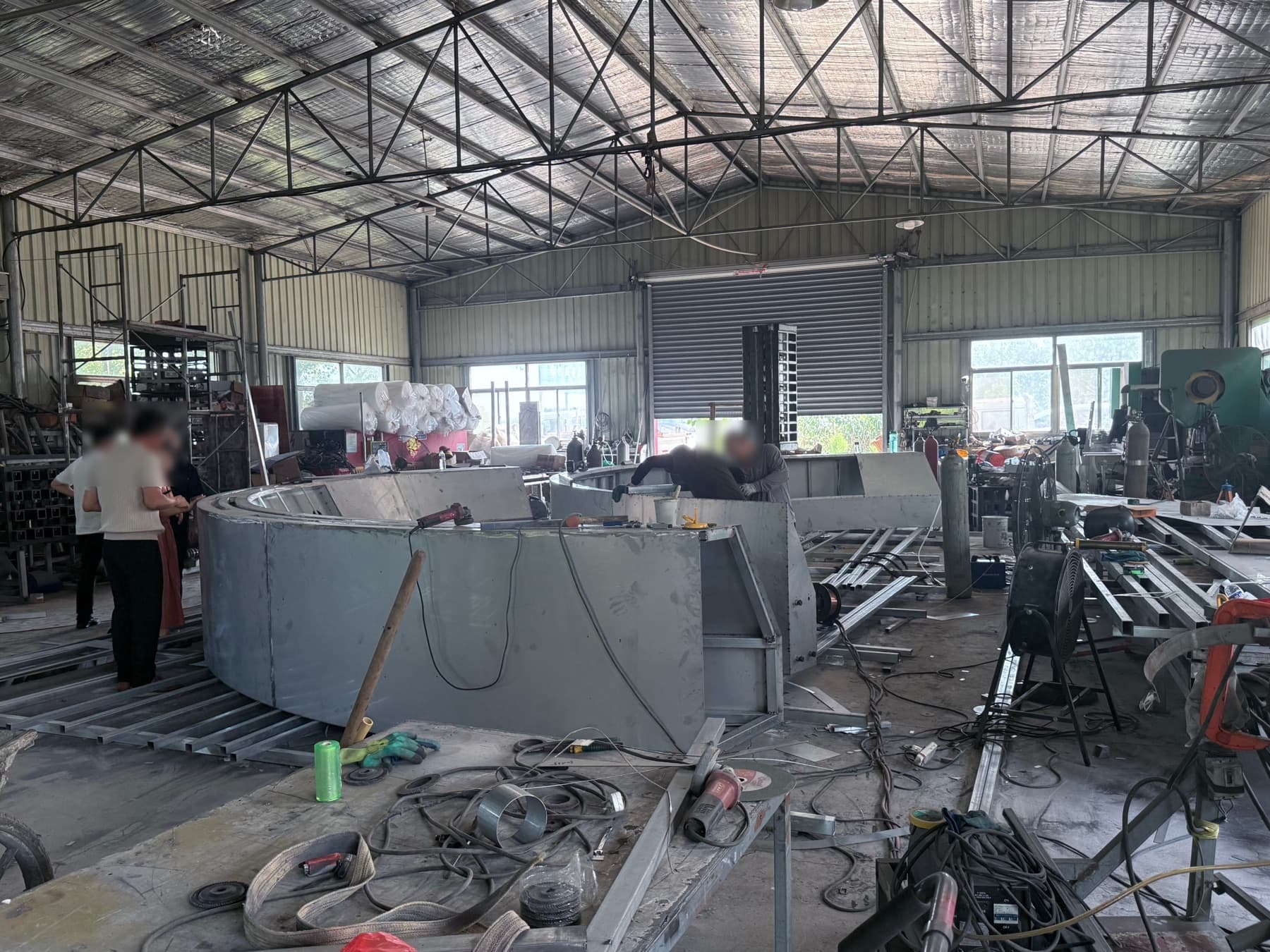
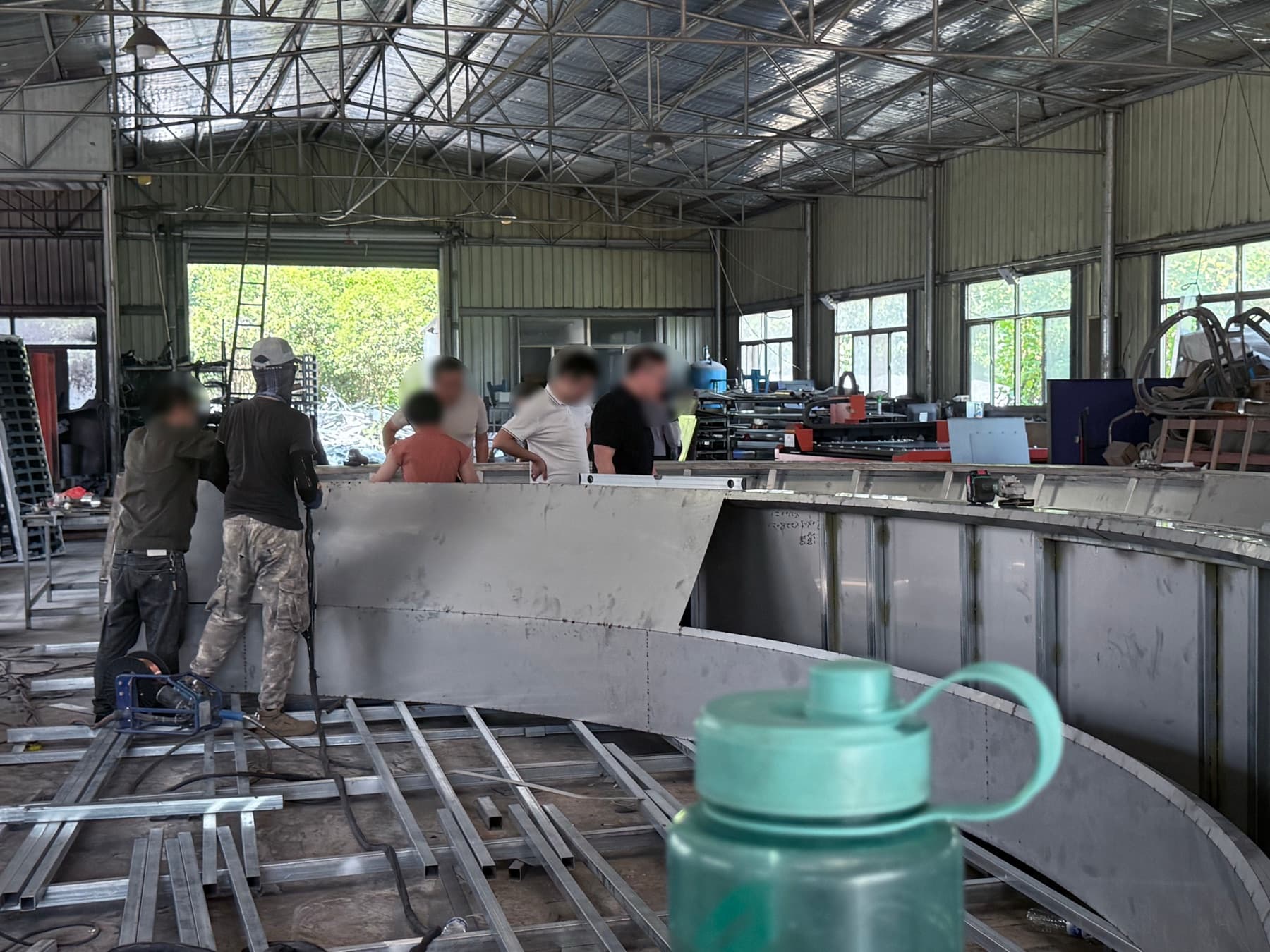
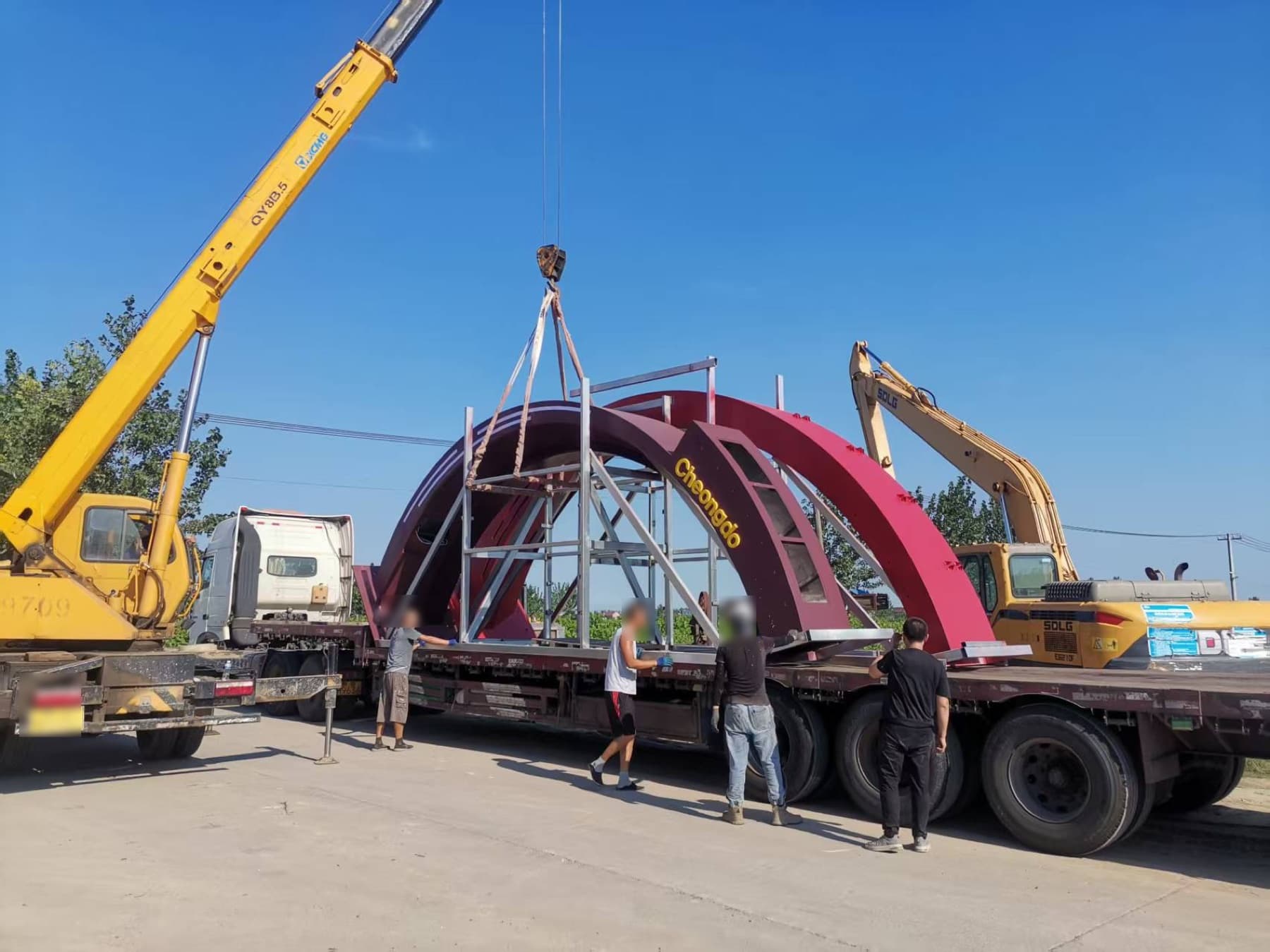
Building a large sculpture about 10 m wide
Full-scale production began at the factory.
The sculpture was a large structure about 10 m wide.
As this is far larger than a typical LED sign or display, we planned to build the main structure at the factory first, then assemble and install it on site, rather than doing all the work on site.
The larger a structure gets, the more even small errors during fabrication can affect the whole.
So the structure had to be built with the actual on-site installation in mind from the very start.
On site, the structure would be raised by crane and joined at the top, so we planned the assembly method and how each part connects while still at the factory.
For a large structure, it is not just about making it big. What matters is building it with the entire process in mind, from transport to on-site assembly and lifting.
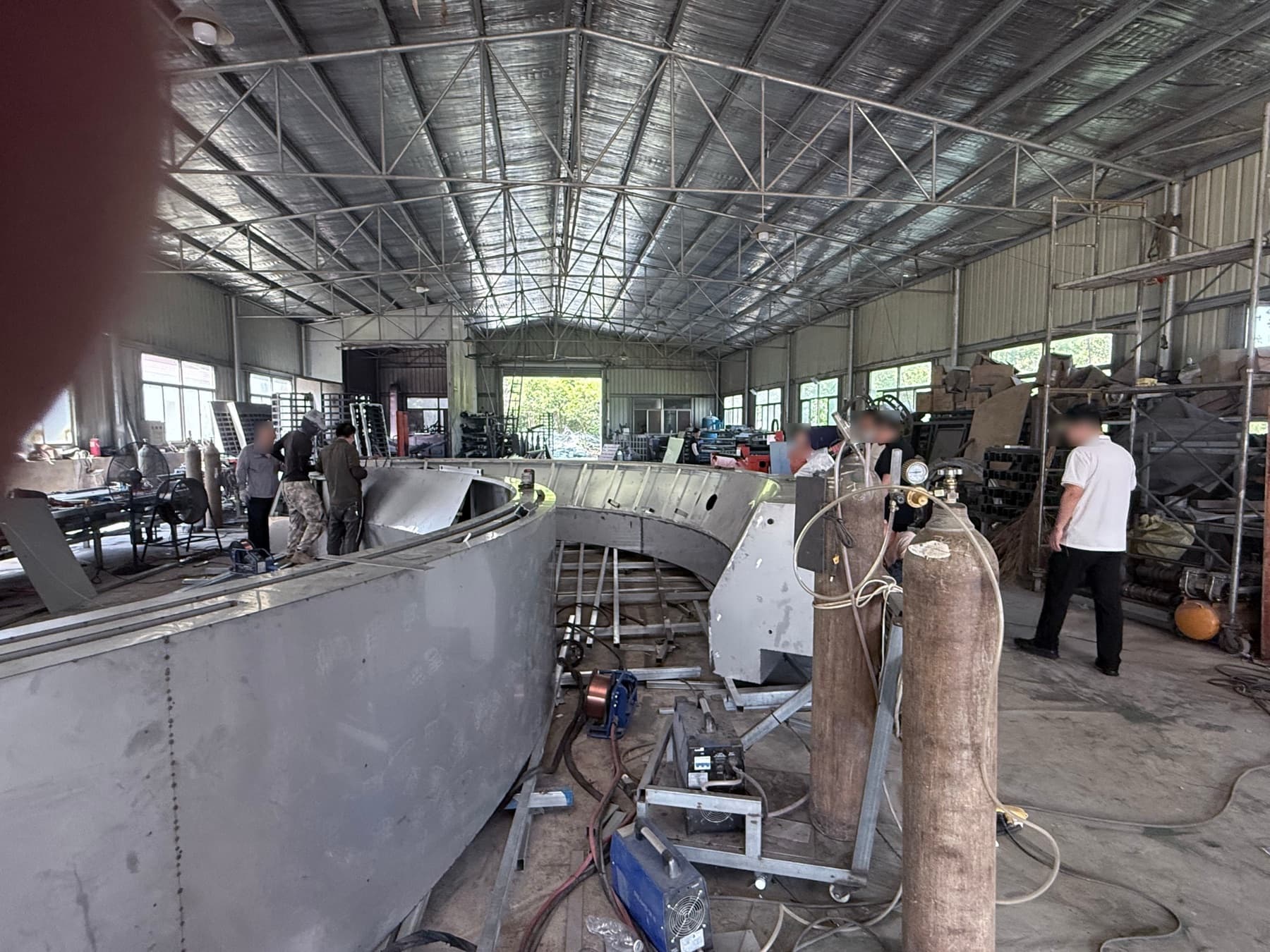
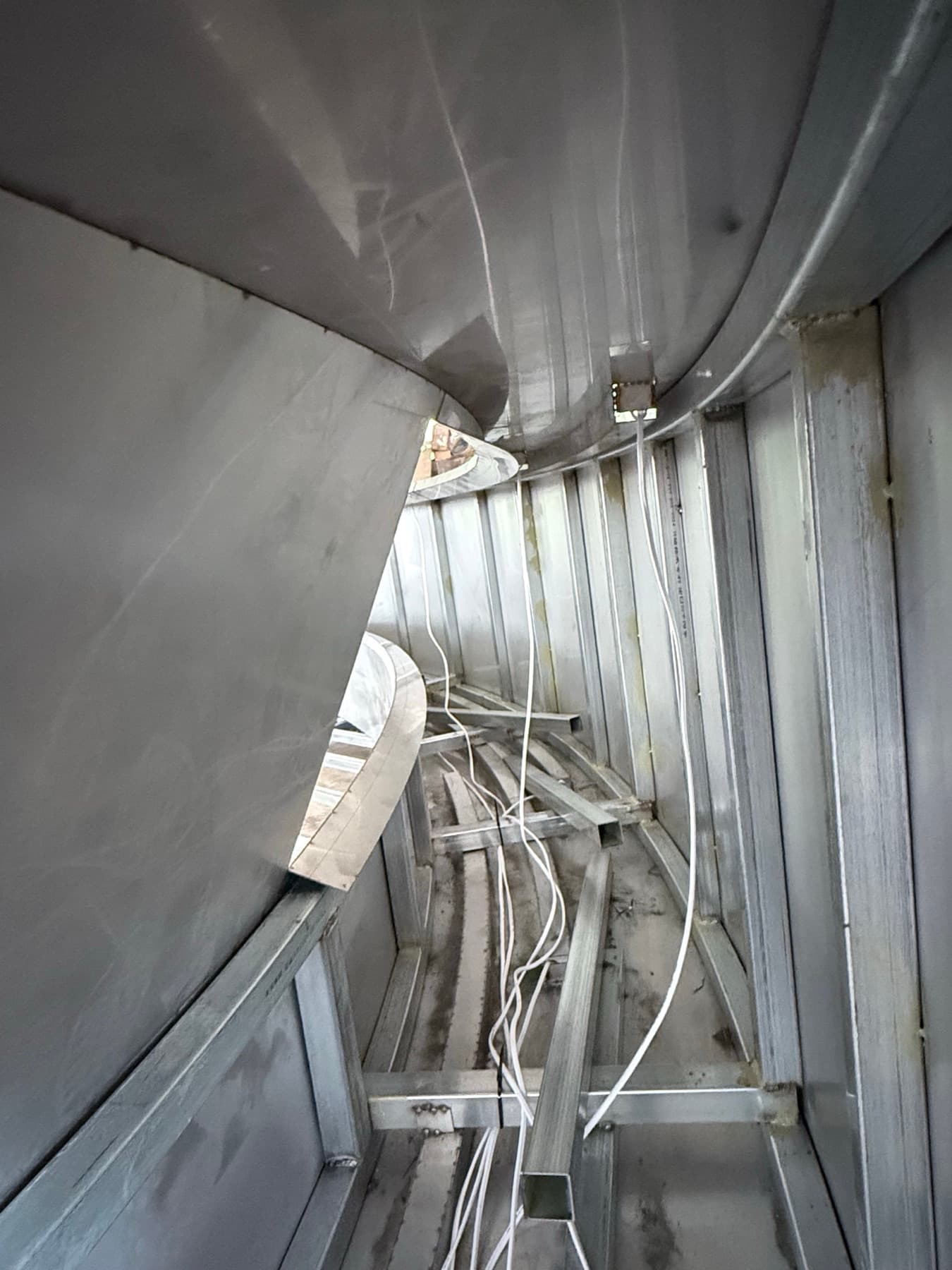
Structural reinforcement to keep the large sculpture's shape stable
When building a sculpture about 10 m wide, one of the most important things is keeping the structure's shape stable.
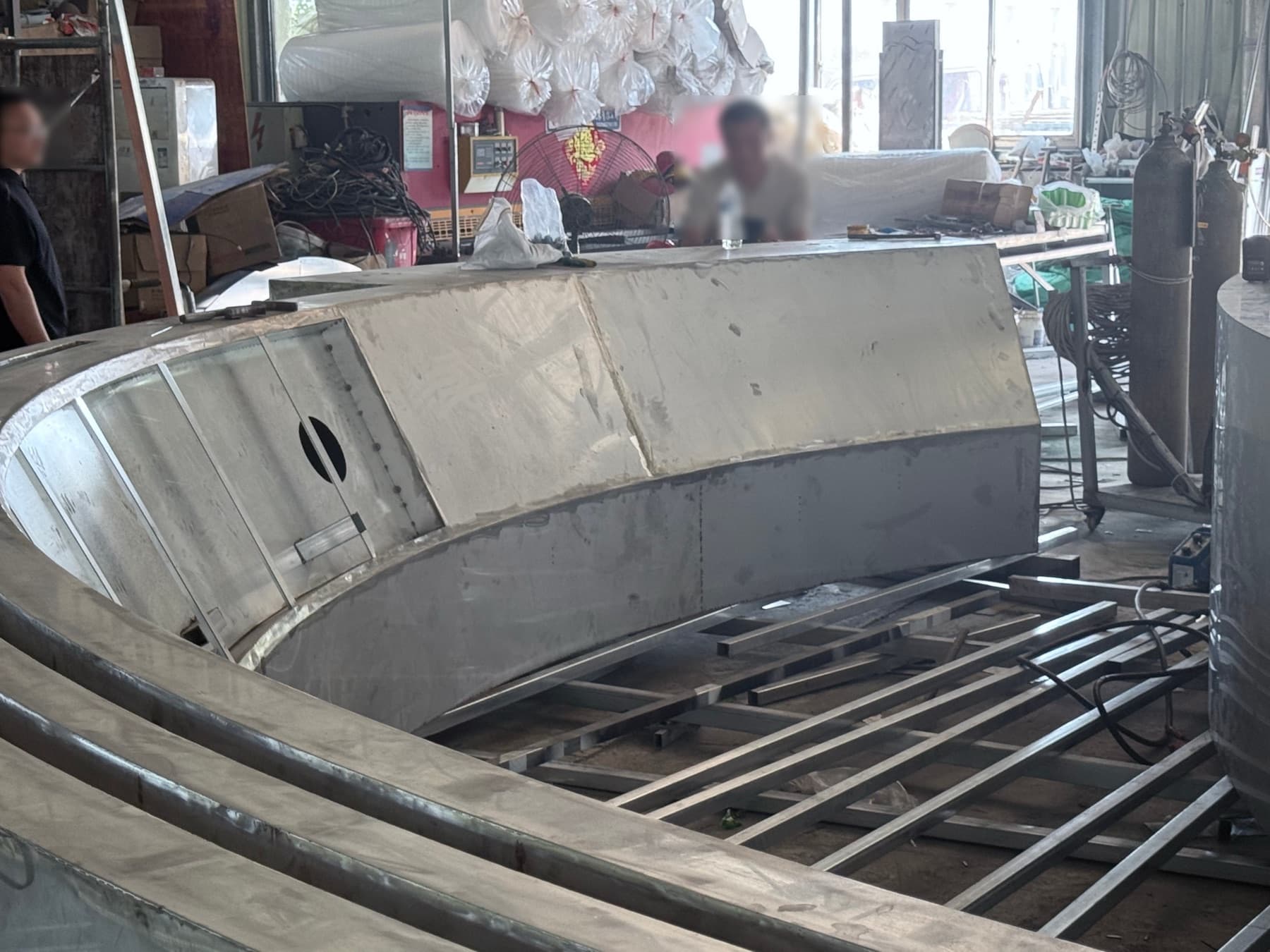
After building the basic frame, we added reinforcement members along the horizontal and vertical axes so the shape would not twist or deform once installed.
This reinforcement holds the overall shape of the sculpture.
A large structure bears not only its own weight but also various loads during transport and lifting, so structural stability must be considered from the fabrication stage.
We also planned the joints and reinforcement points so that the original shape would be kept exactly when the sections were assembled on site.
In the end, structural work at the factory is not just shaping the sculpture's exterior. It is the process of making a structure that can be assembled safely and accurately on site.
Finishing the structure with welding and grinding
We placed each member of the structure in its exact position and joined them by welding, so the whole structure would hold a single, stable form.
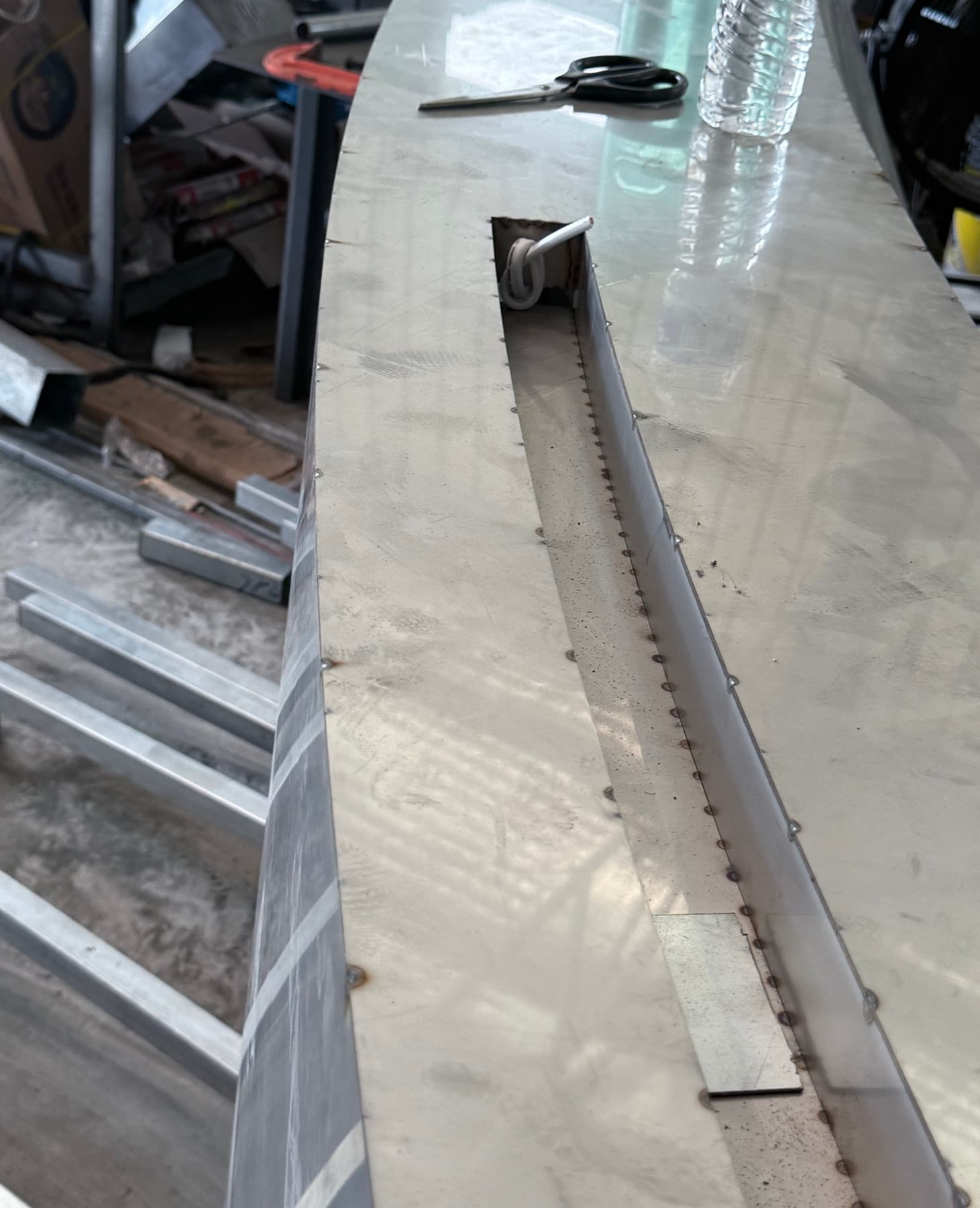
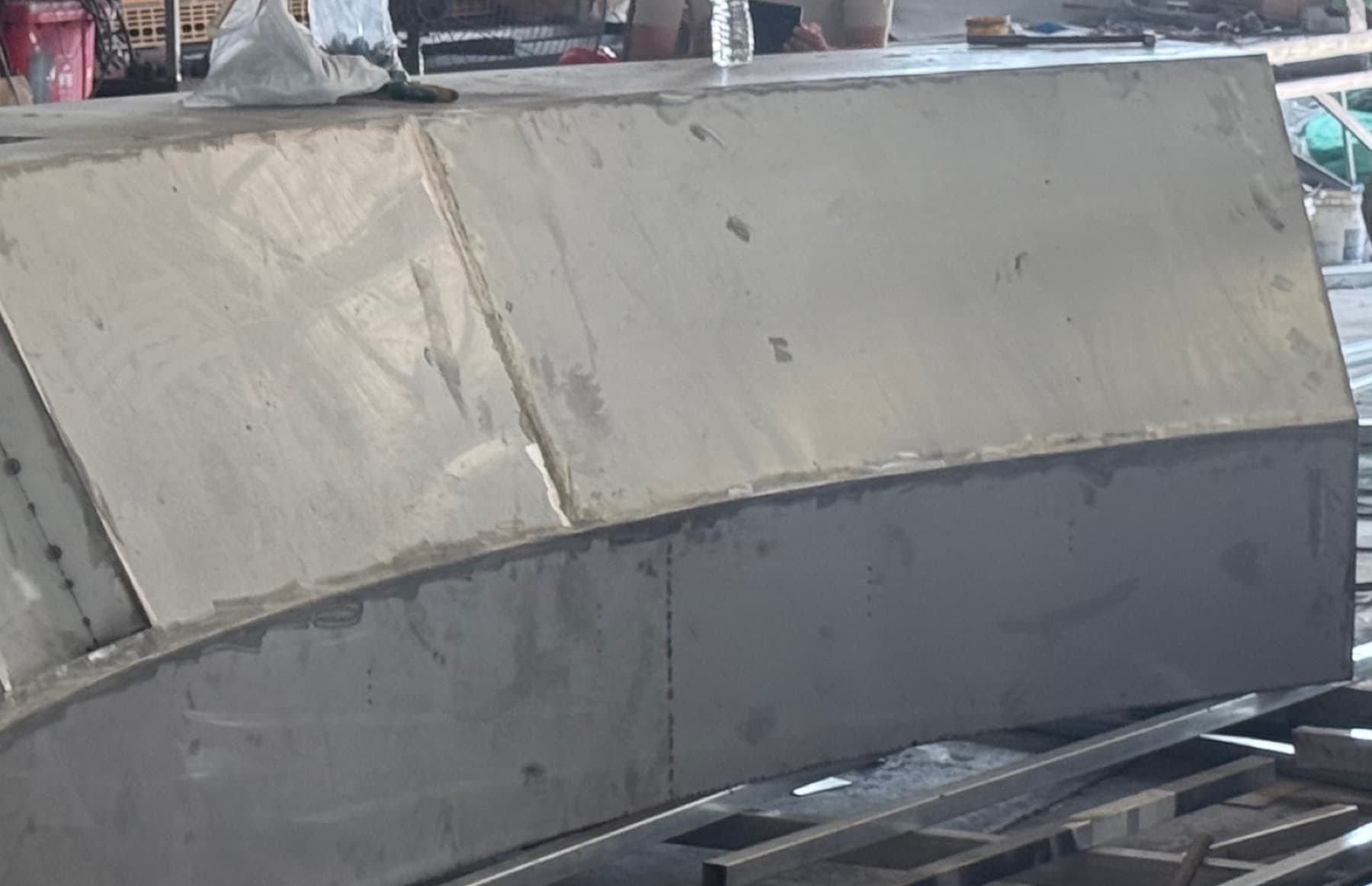
After welding, we ground the welds. We smoothed out protruding or rough spots at the welds and cleaned up the surface for a neat finish.
In particular, "grinding the crack points at the welds smooth" is critical. If crack points are left as they are, small cracks or rough spots on the surface can show through after painting and finishing. They can also interfere with mounting the LED modules and housings, and affect the structure's quality and durability.
Grinding, therefore, is not just a cosmetic finishing step. Carefully checking the weld crack points and unnecessary protrusions, and grinding until the surface is smooth enough, is a critical core process that determines the structure's quality and safety and the finish of the later LED installation.
A large sculpture has many welds and a large frame, so careful work is needed to check every single crack point. Only by grinding even hard-to-see areas thoroughly can later processes run without problems, resulting in a clean, stable sculpture.
This grinding is an important post-process that also enables more precise and cleaner work when installing the LED modules and housings later.
Curves that standard LED modules can't express
Alongside the structure, the part of this project that took the most thought was fitting the LED modules to the sculpture's curves.
A typical LED display is made by arranging rectangular modules of a fixed size in a regular grid. We could have considered the commonly used 320×160 LED modules for this project too, but the sculpture's form differed from a typical flat structure.
Applying rectangular modules as they are to a curved sculpture means the module orientation is hard to adjust freely, and gaps can appear between modules.
These problems become even more visible where the curve is tight. If the sculpture's outline is curved but the LED screen looks broken into angular steps, the overall design inevitably suffers.
So in this project, we set making the sculpture's curves flow naturally on the LED screen as well as a key production goal.
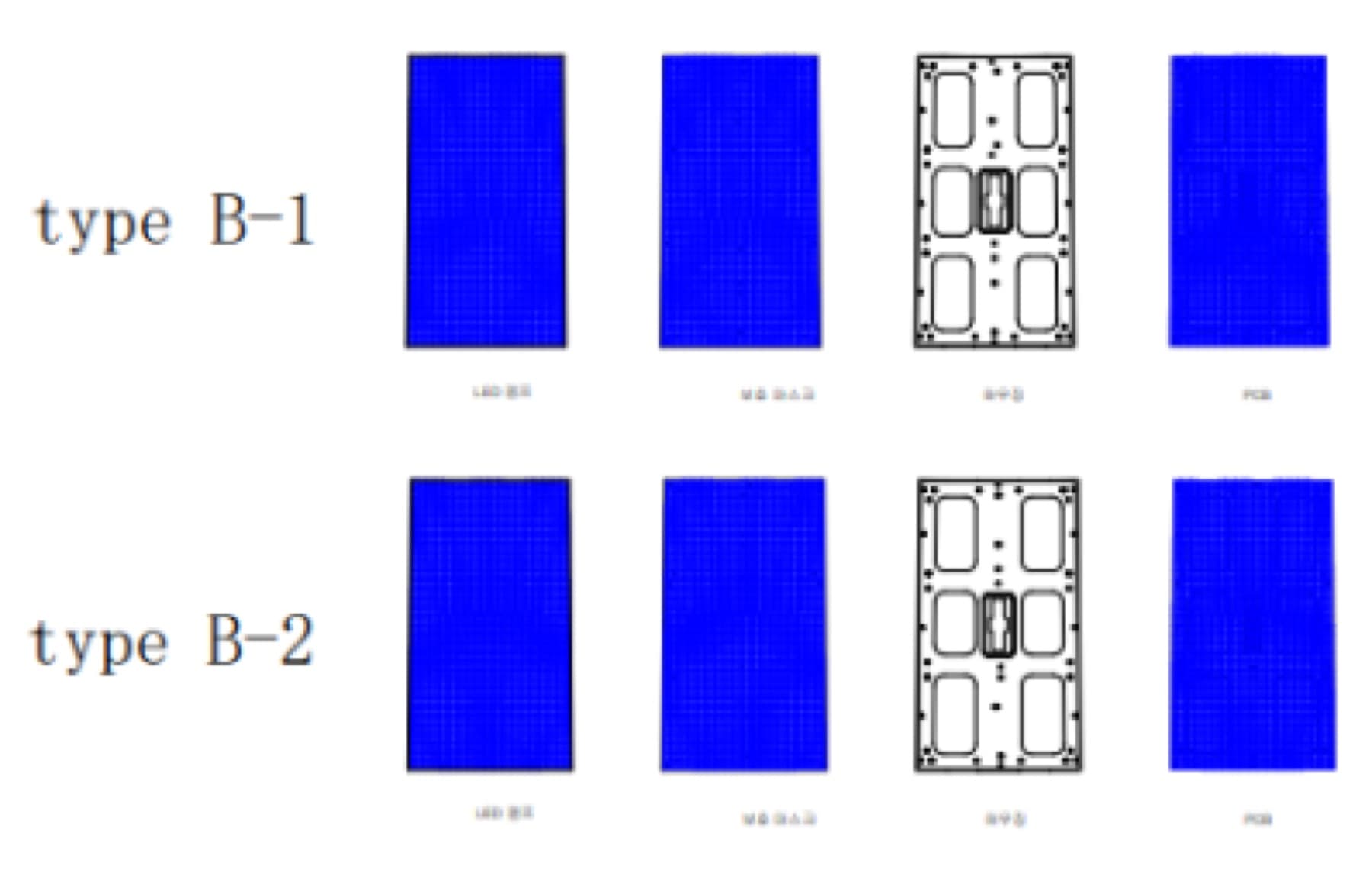
Custom trapezoidal LED modules
Standard LED modules alone could only go so far in expressing curves, so we took a special approach in this project.
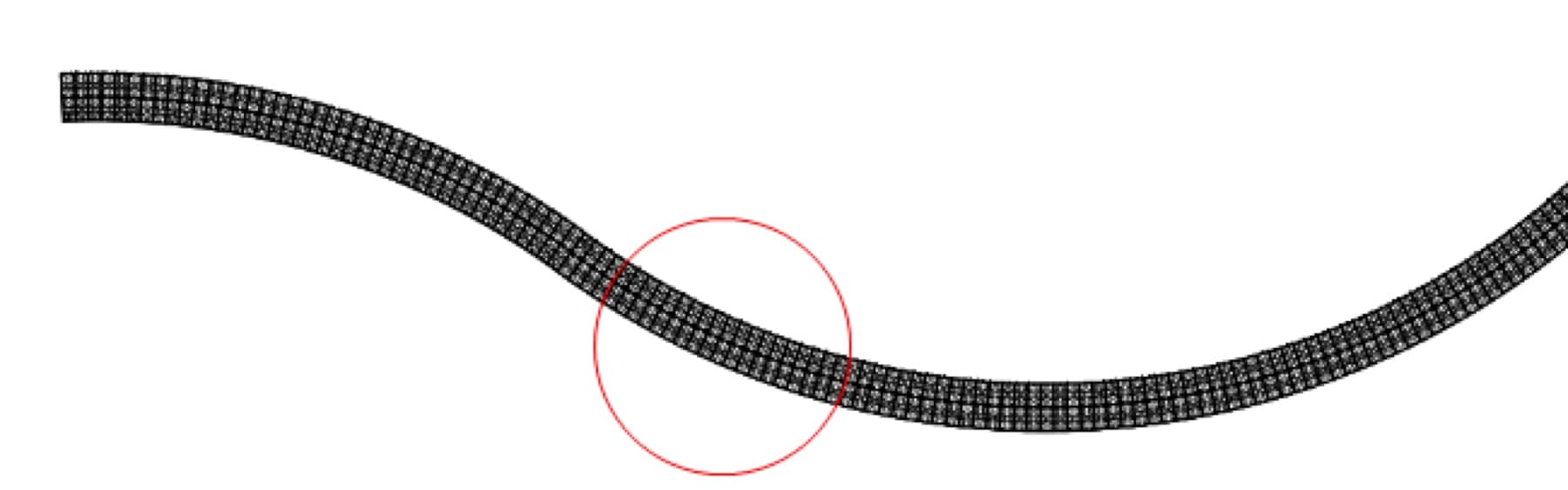
That approach was "custom-building irregular, trapezoidal LED modules."
By changing the shape of the LED modules themselves to match the sculpture's curves, we could express curves far more naturally than simply arranging standard rectangular modules would allow.
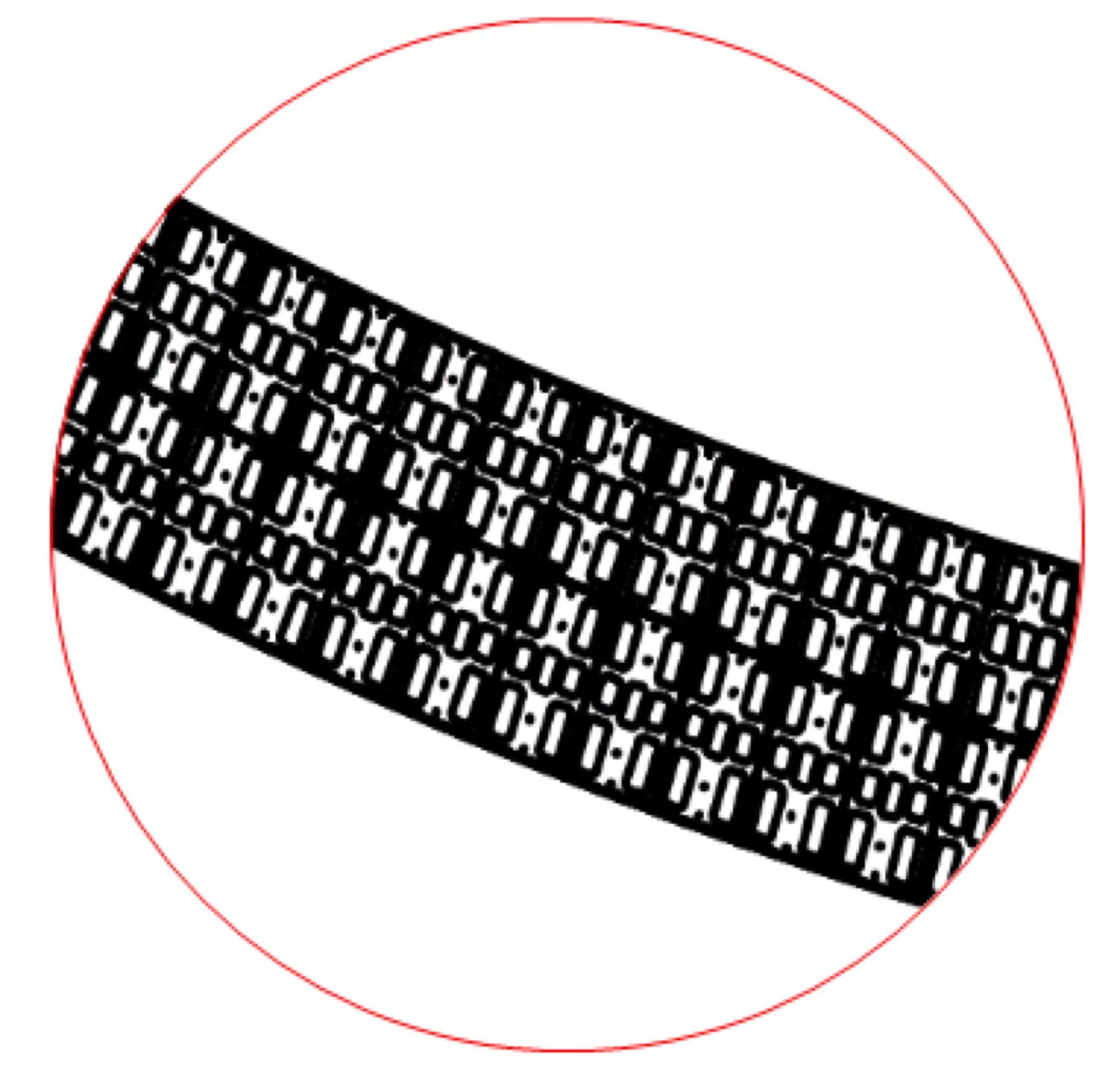
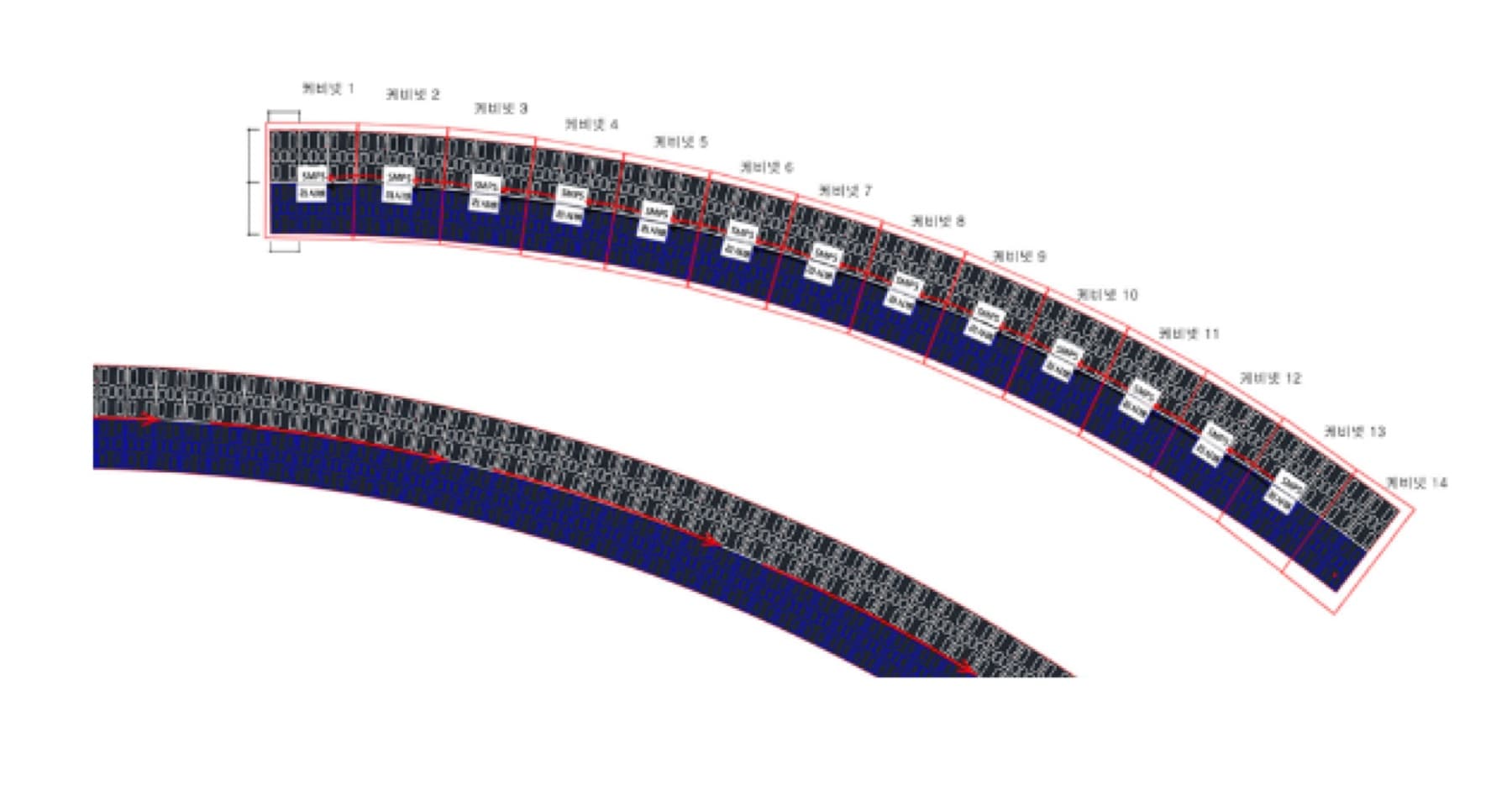
The custom trapezoidal LED modules can be laid out along the sculpture's curves, minimizing unnecessary gaps between modules.
This was also the most demanding part of the build. Each LED module had to follow the sculpture's form and be mounted securely, with no gaps between modules.
As a result, production was more complex than with standard-size LED modules, but we achieved an LED screen that preserves the sculpture's design as intended.
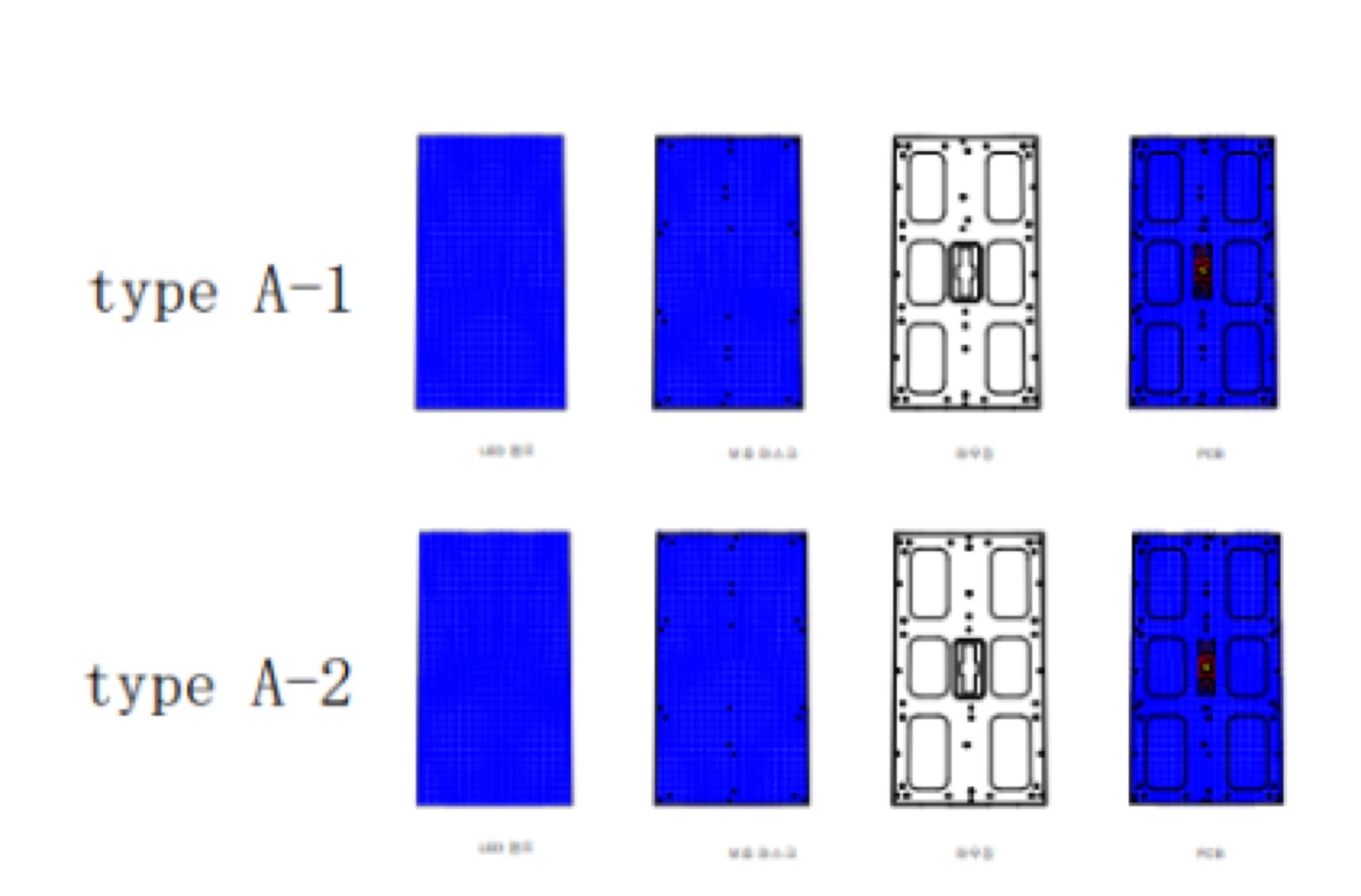
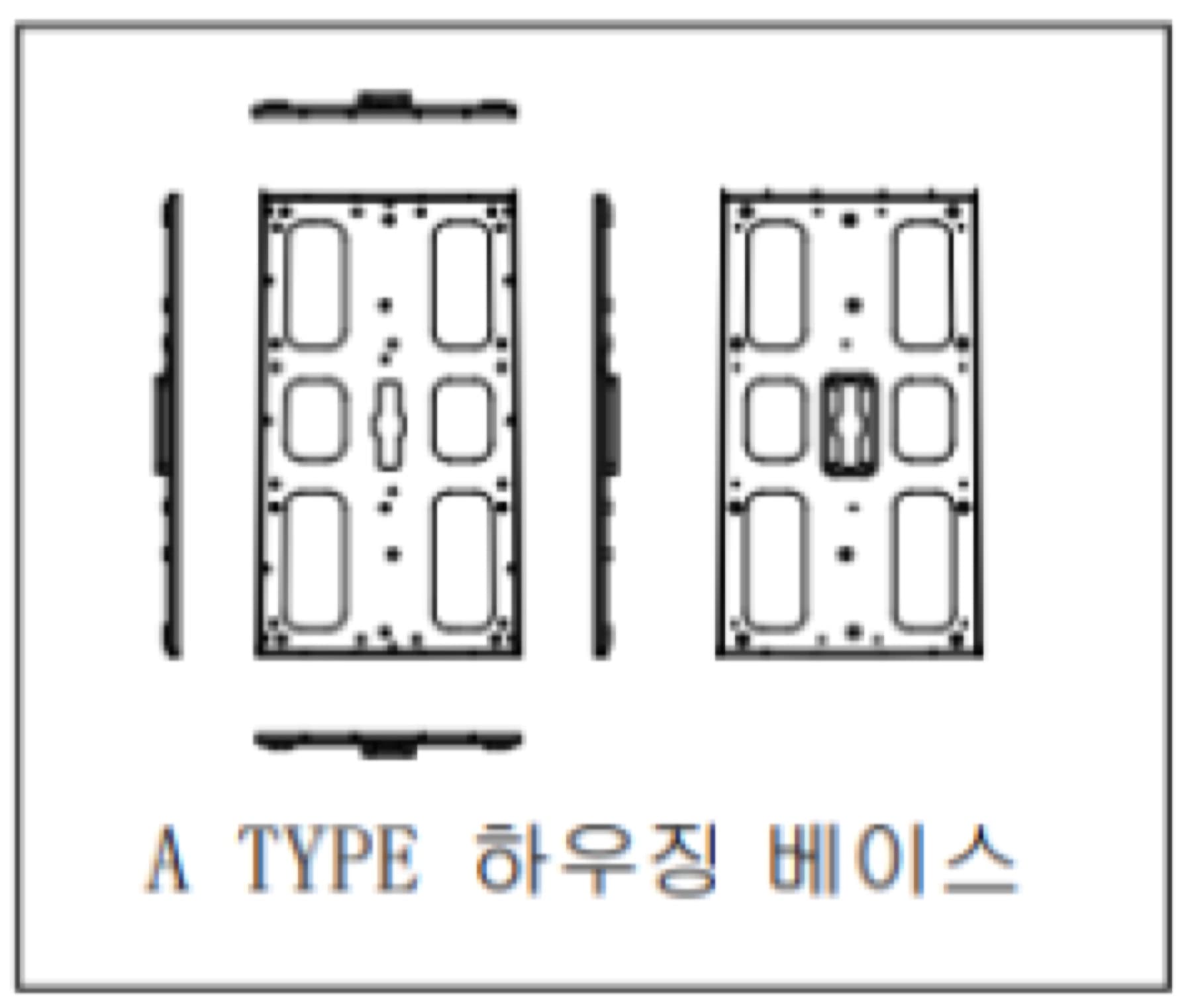
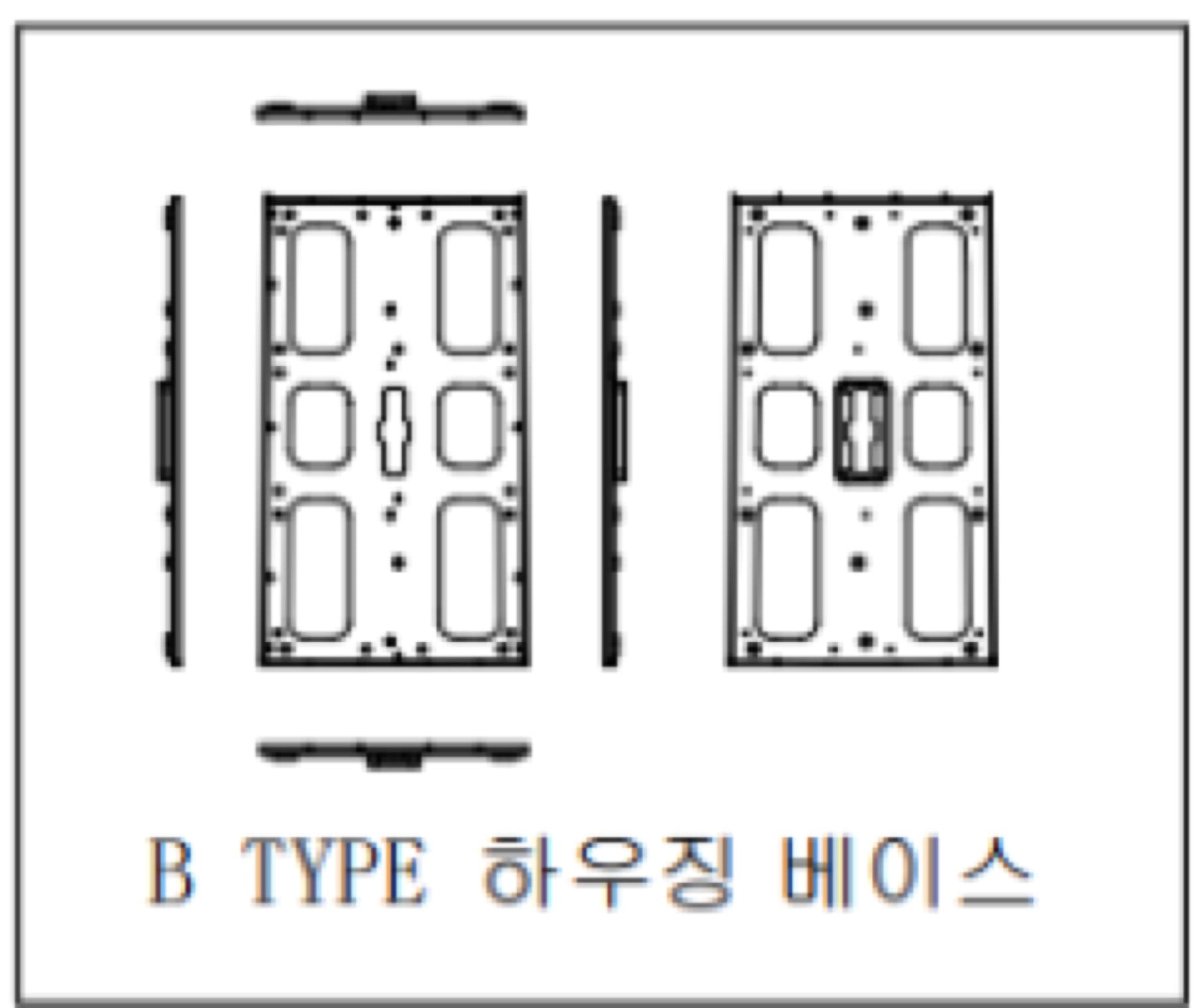
Dedicated housings for the custom LED modules
If the LED modules change shape, the housings that hold them securely must be built to match.
Housings made for standard LED modules could not be used as they were, so we built dedicated housings to fit the shape and size of the custom trapezoidal LED modules.
The sculpture's curves, the LED modules and the housings all had to fit together precisely, so we had to consider the dimensions and shape of each element together.
In other words, this project was not just about making one new LED module. It went from designing LED modules to fit the sculpture's form → building housings to fit the LEDs → and finally applying them to the sculpture.
This custom fabrication made free-flowing curves possible on the sculpture and minimized the gaps between LED modules.
From special transport and foundation work to crane lifting, LED installation and final inspection
In the production section, we introduced how we built the large LED sculpture, about 10 m wide, for the Cheongdo Market environmental improvement project.
We built the structure at the factory, reinforced its horizontal and vertical axes, and completed the basic sculpture through welding and grinding. To create curves that standard LED modules can't express, we also custom-built trapezoidal, irregular LED modules and dedicated housings.
But finishing the sculpture at the factory doesn't mean the work is done.
The final result is complete only after the roughly 10 m structure is transported to Cheongdo Market, erected in the exact position, and fitted with LED modules, wiring and waterproofing, followed by lighting tests.
In this post, we take a detailed look at how the factory-built sculpture was installed on site.
On-site assembly in two sections
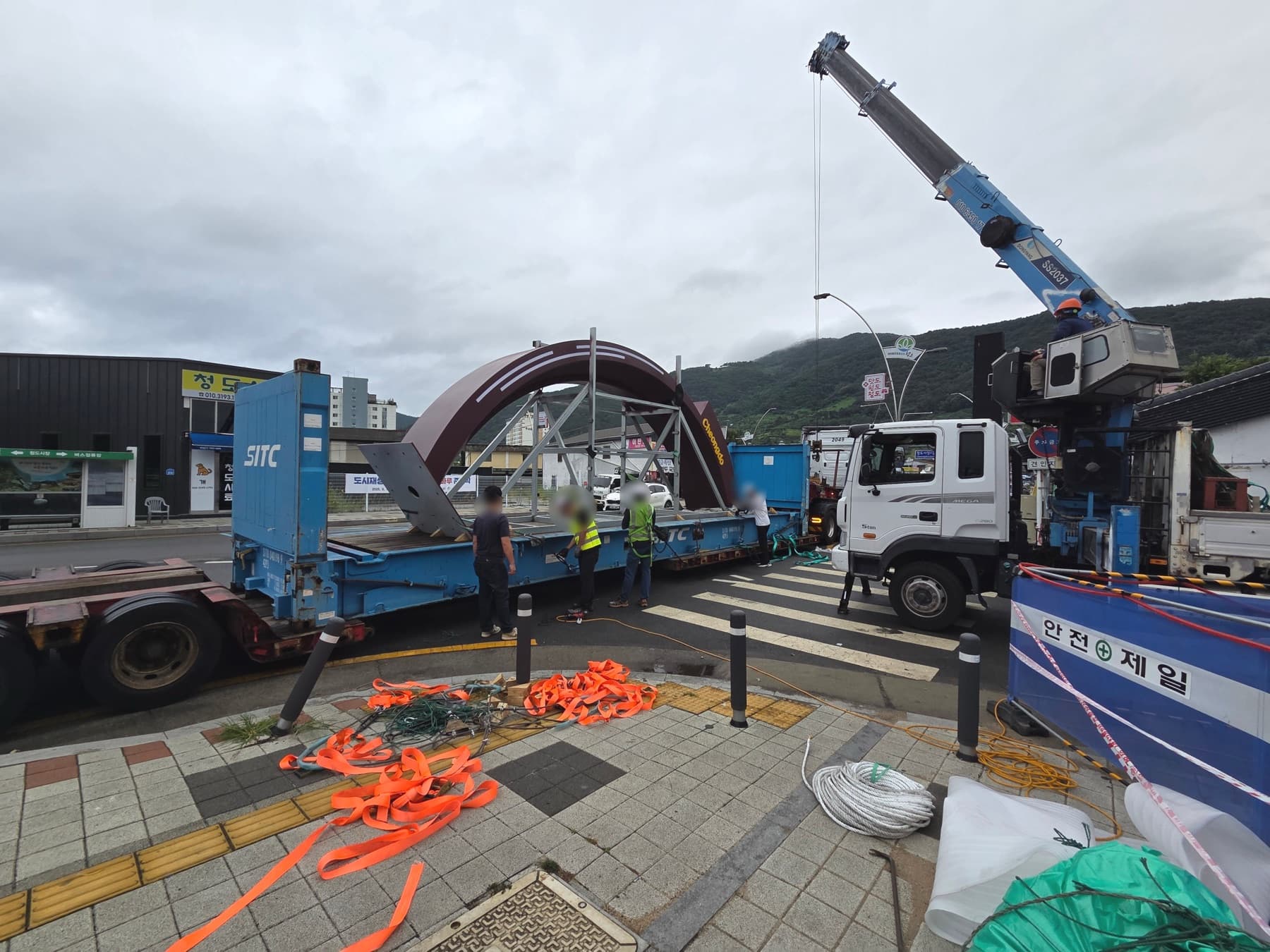
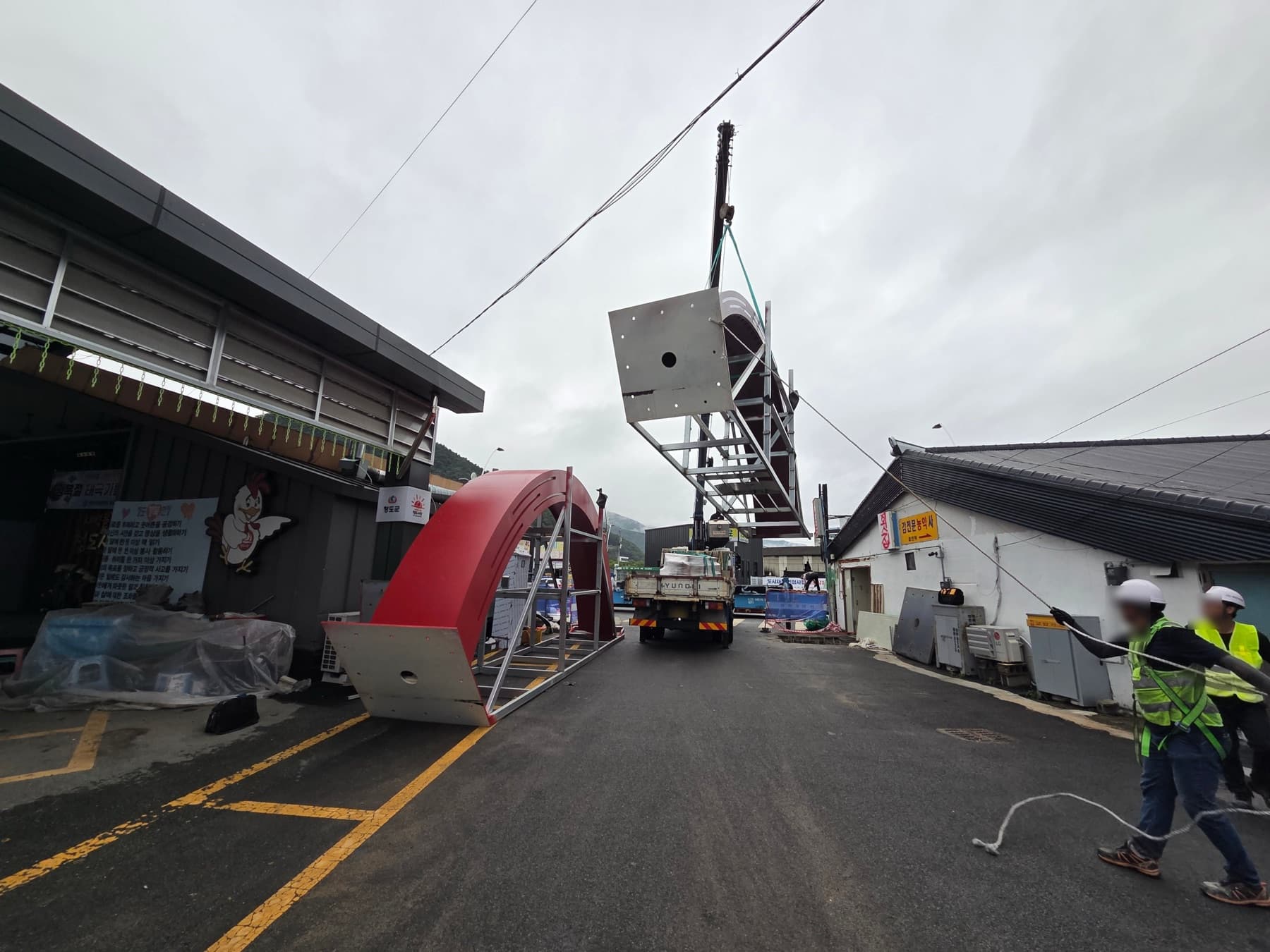
As the sculpture is a large structure about 10 m wide, on site we installed it in two assembly sections.
Rather than completing one huge structure at the factory and installing it as is, the structure was built in sections with transport and on-site work in mind, then assembled on site.
This method accommodates the constraints of transporting a large structure while still allowing it to be completed accurately as a single structure on site.
On site, each section was positioned at its installation point, and the top was then joined to complete the overall form.
Foundation work to support the sculpture securely
Before erecting the sculpture, we started with foundation work so it would be securely supported.
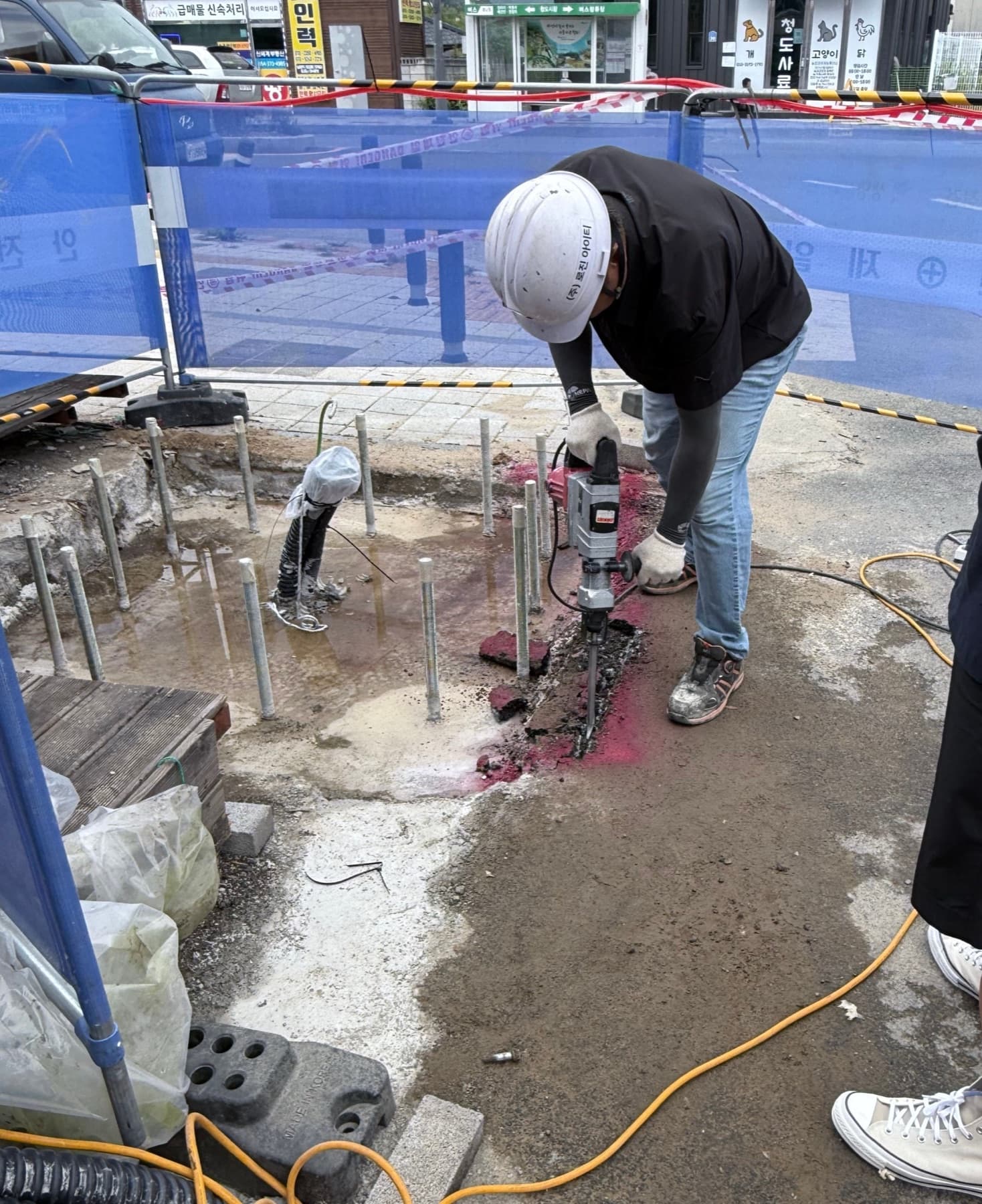
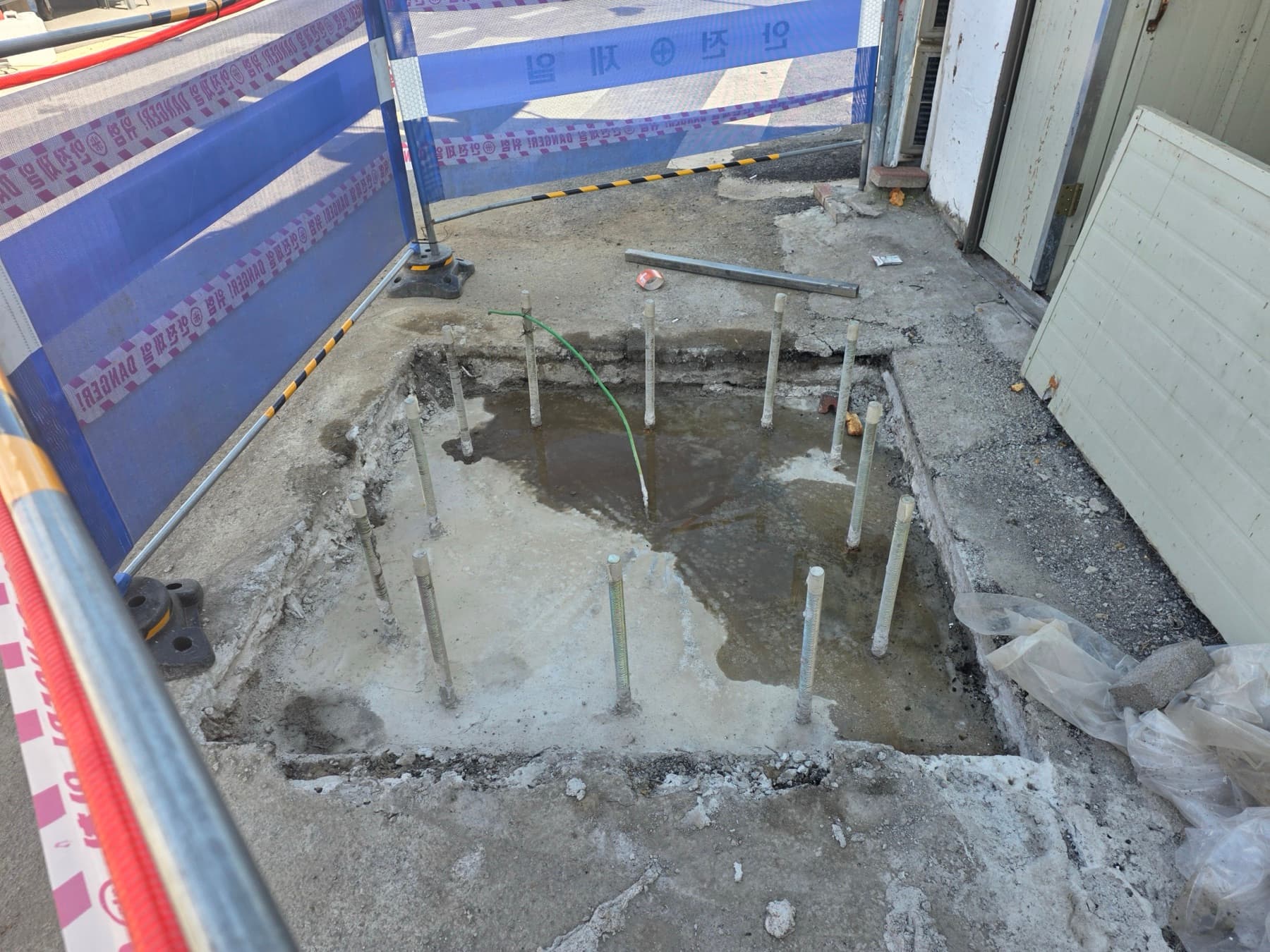
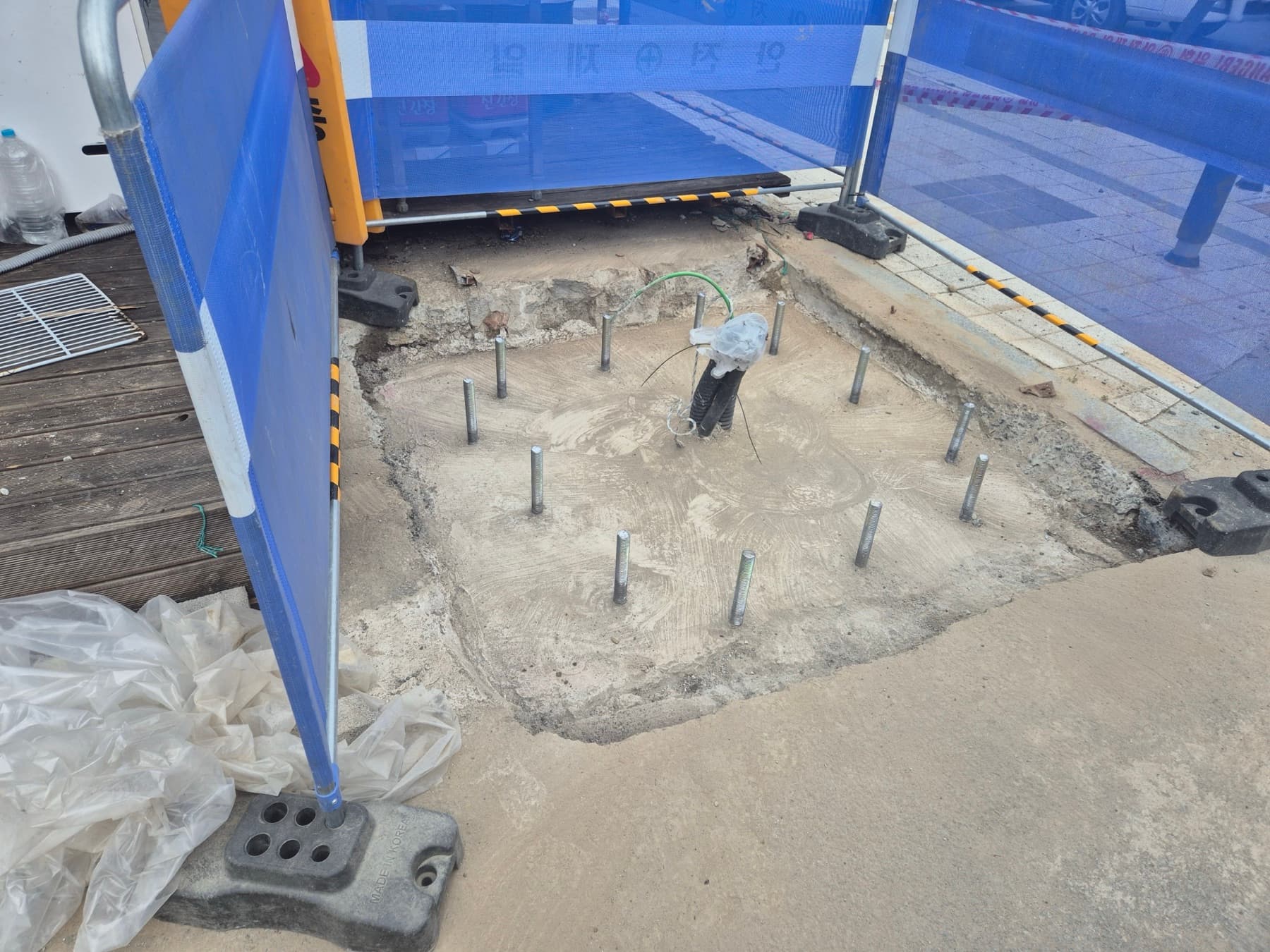
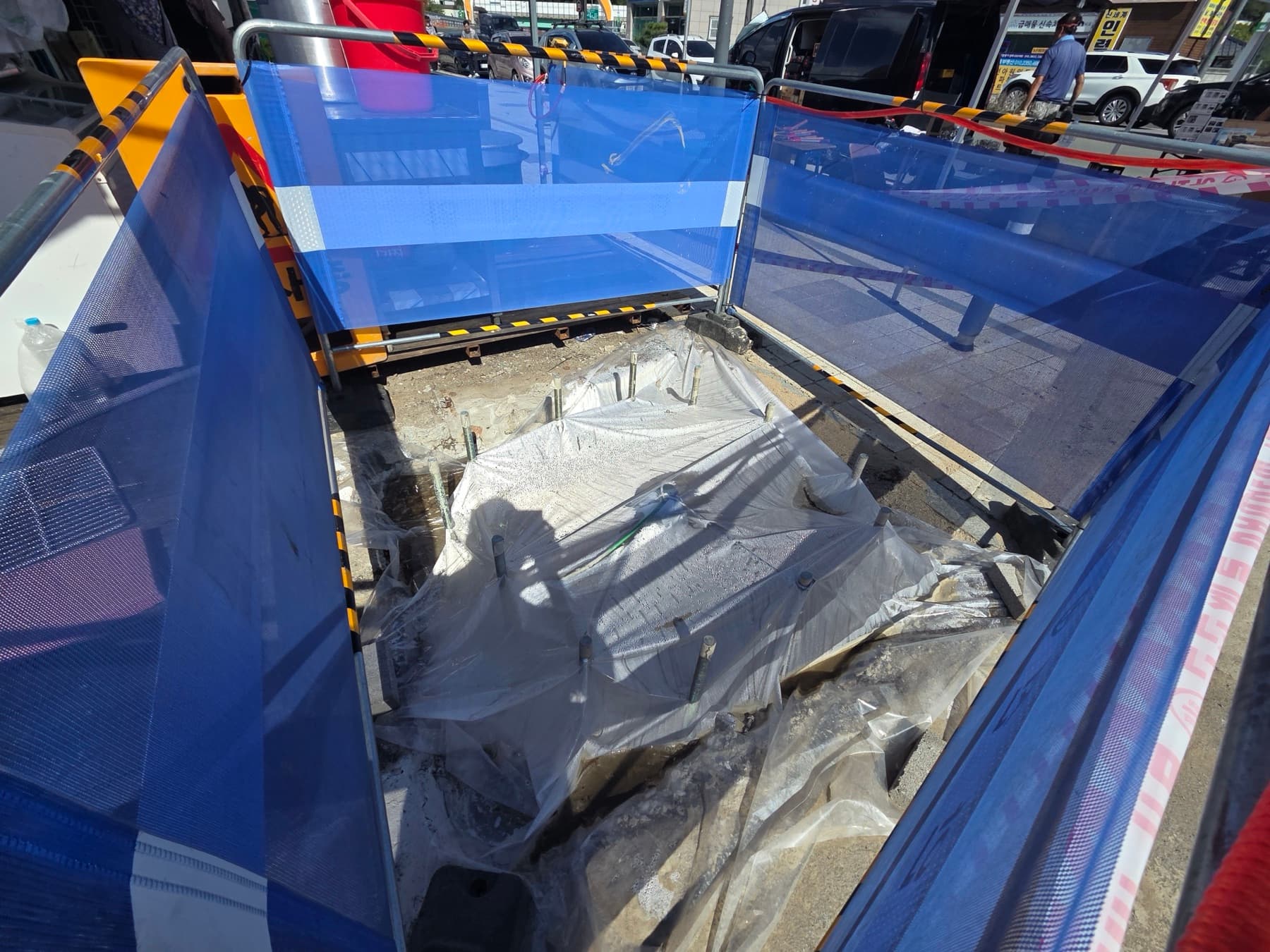
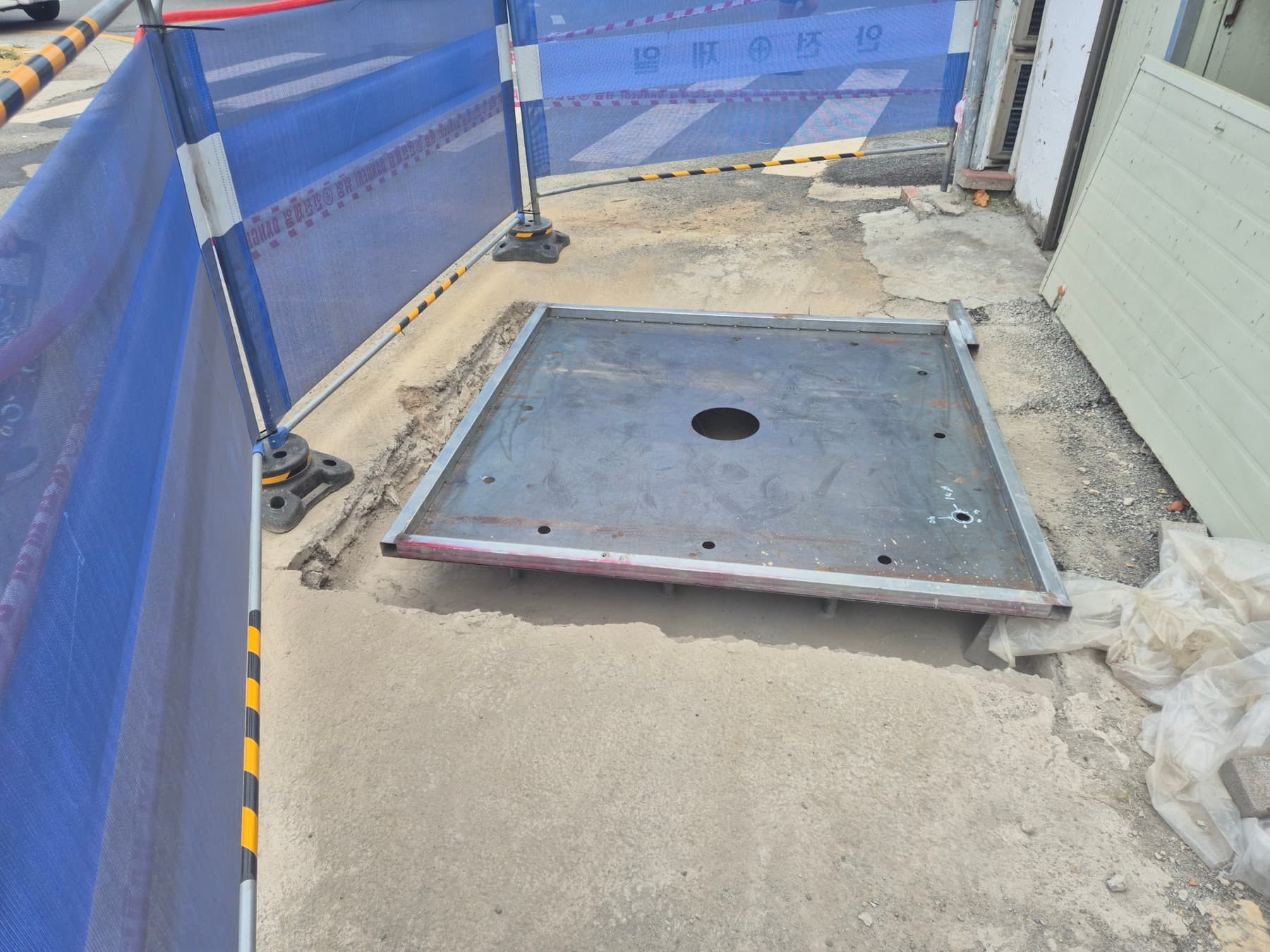
First, we built a dedicated jig on the ground so both legs of the sculpture would sit in exactly the right place. Using the jig, we set the position and spacing of both legs precisely, then installed threaded rods and steel framing to anchor the structure.
The jig sets the position and spacing of the structure and is a key element in keeping it in the exact position while the sculpture is erected.
After checking the foundation positions and structure spacing, we poured concrete. We also allowed a curing period so the foundation would set firmly and the concrete would reach sufficient strength.
As this sculpture is a large structure about 10 m wide, even a slight misalignment in the foundation could cause the top joints not to line up once the structure was erected.
So from precise positioning with the jig to anchoring the threaded rods and steel framing, pouring and curing the concrete, we carefully checked dimensions at every step in preparation for the lifting work.
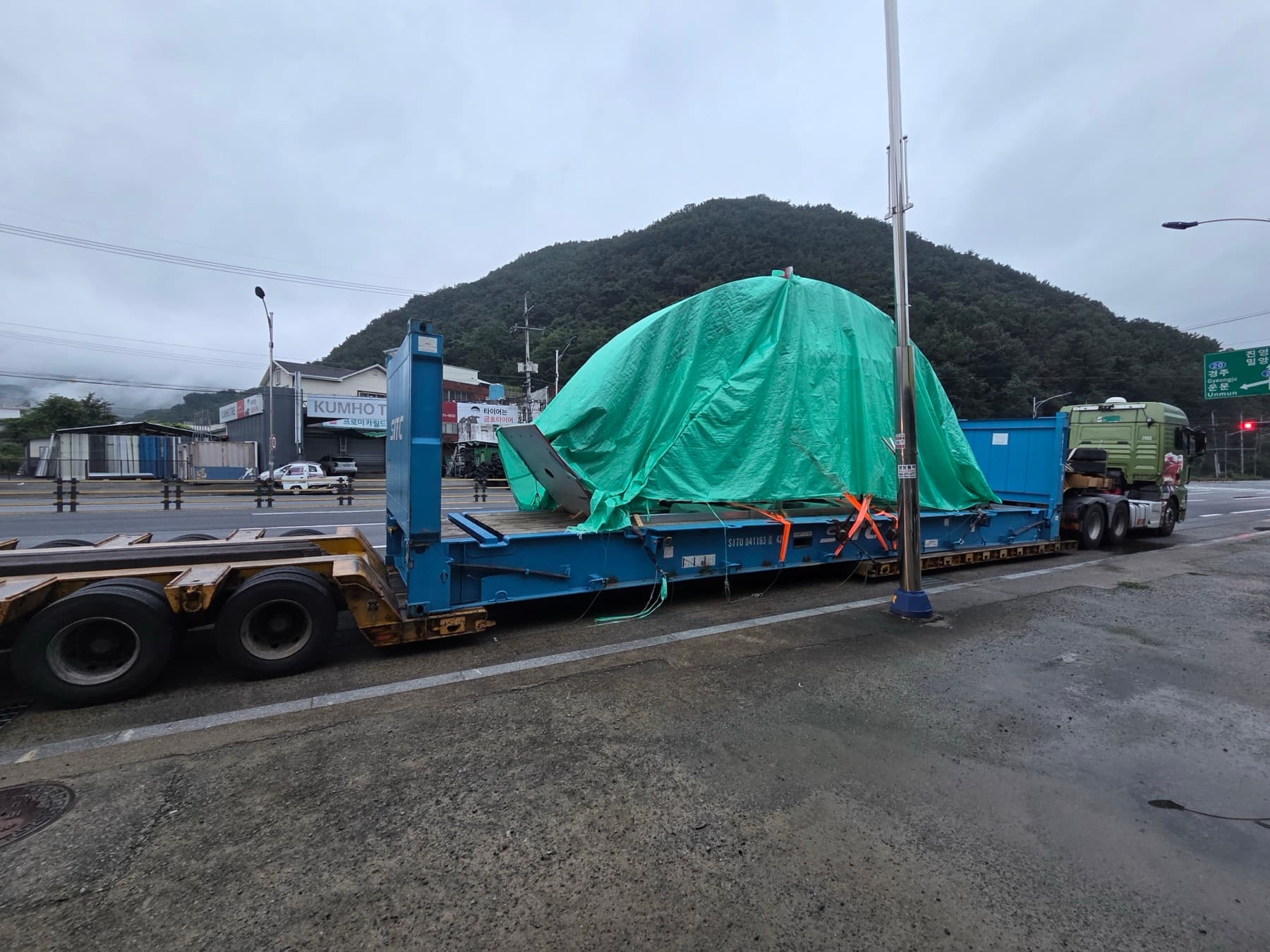
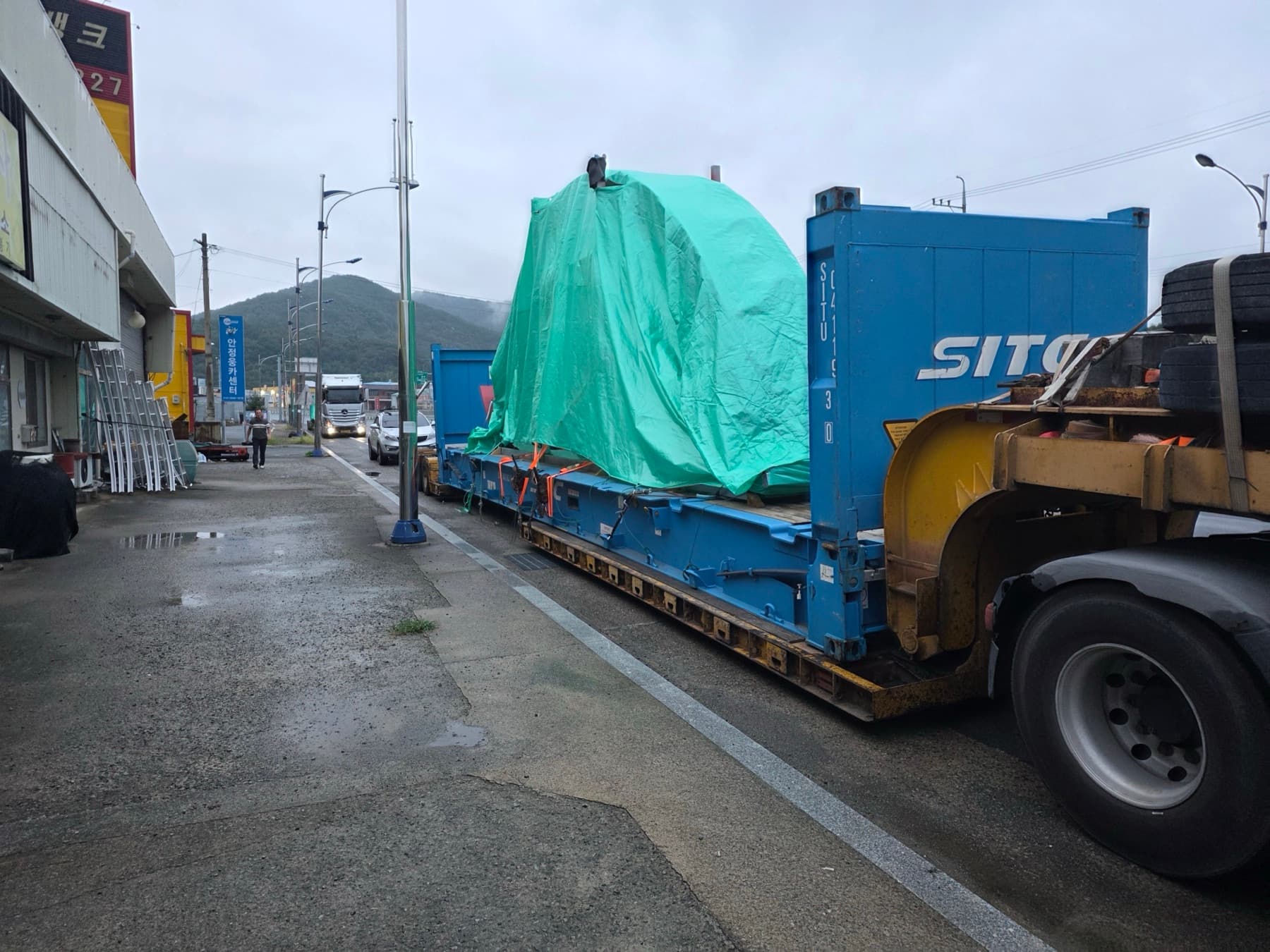
Special low-bed trailer for transporting the large sculpture
Alongside the foundation work, preparations were made to transport the large factory-built sculpture to the site.
Transporting a structure about 10 m wide on an ordinary vehicle requires considering the total height of the vehicle and its load.
If the total height of the vehicle and load exceeds the standard limit of 4.0 m, operation is restricted, while some roads allow up to 4.2 m by notice of the road authority. So when transporting large structures, the route and the limits for each road must be checked in advance.
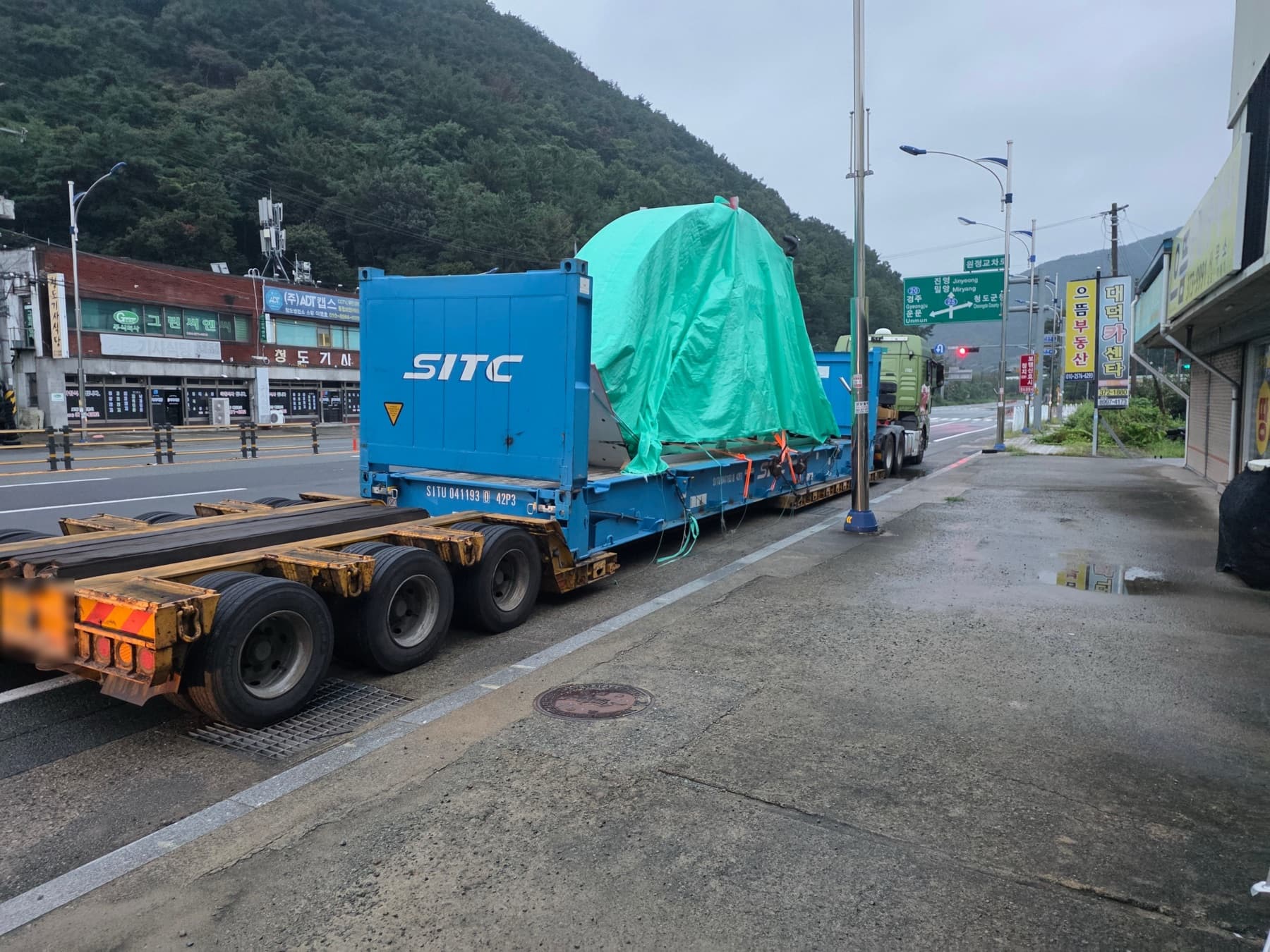
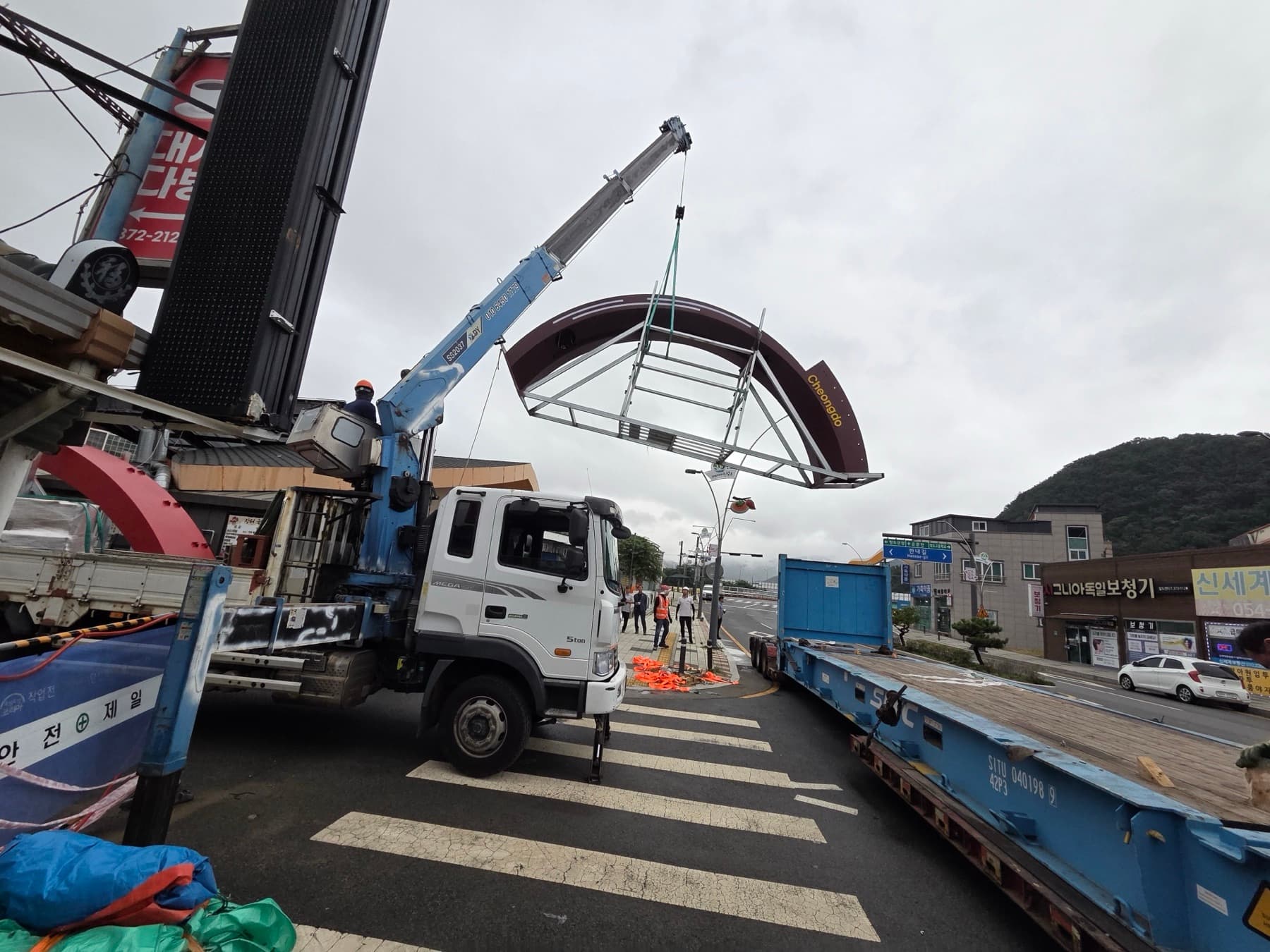
For this project, with these transport conditions in mind, we carried the sculpture to the Cheongdo site on a special low-bed trailer.
A low-bed trailer has a lower deck height, which helps reduce the total height of the vehicle and load when transporting large structures.
To transport the large factory-built structure safely to the site and lead smoothly into the planned crane lift, we considered the structure's size and site conditions at the transport stage as well.
Lifting the sculpture with a 5-ton cargo crane
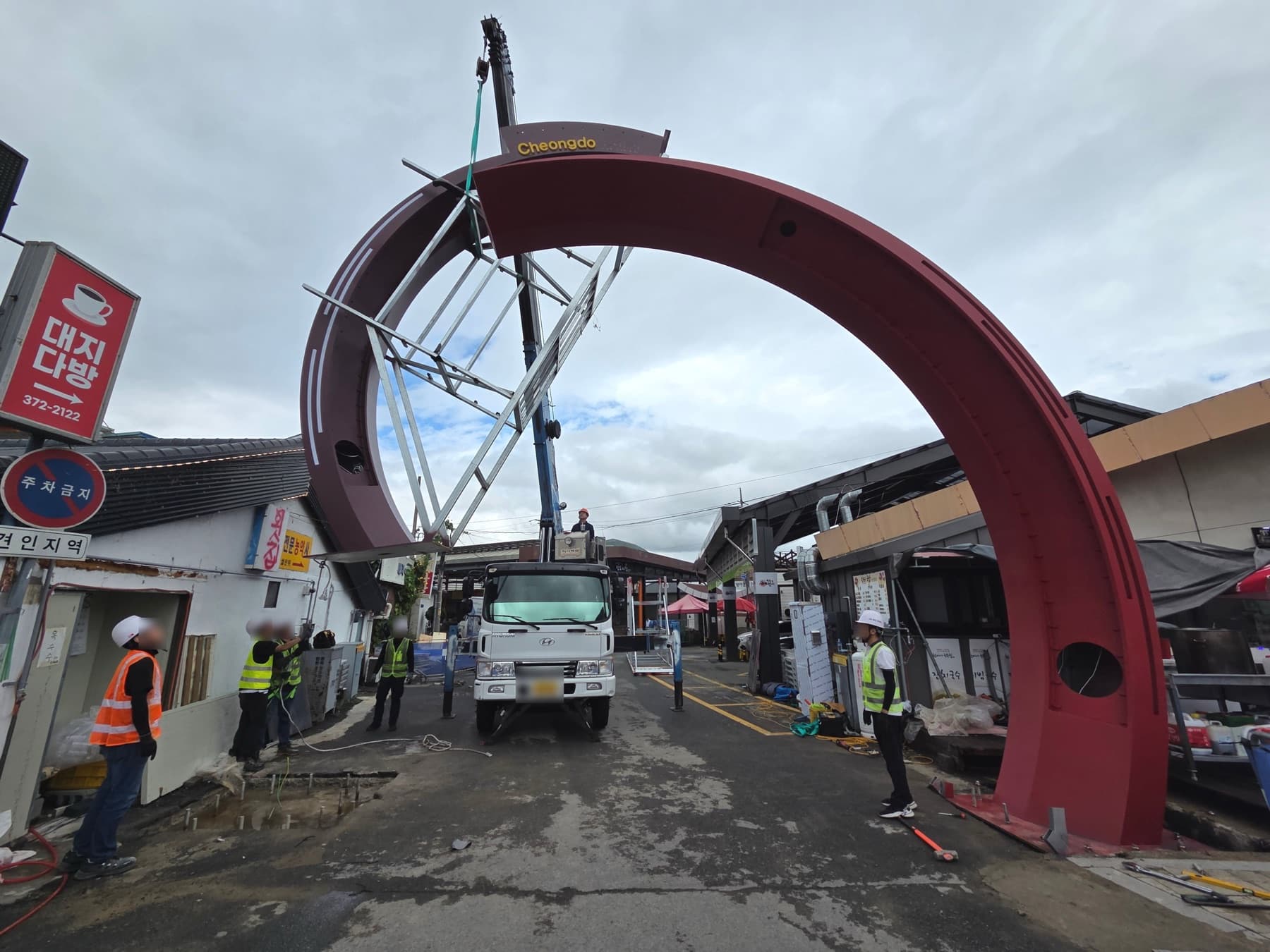
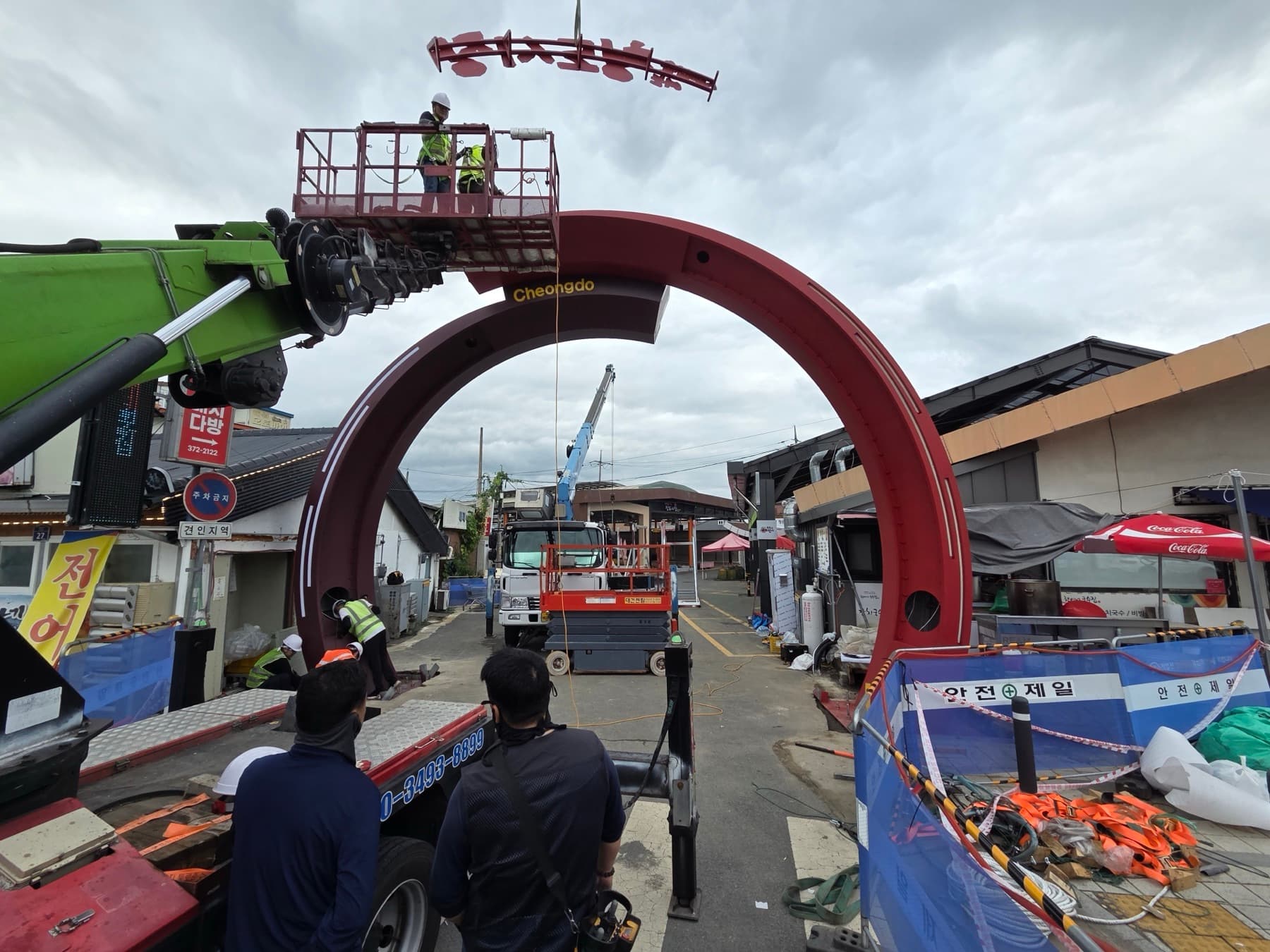
Once the sculpture arrived on site, we used a 5-ton cargo crane to lift and erect the structure.
The crane slowly raised the structure, and we set it down precisely on the foundation prepared in advance.
A large steel structure can shift or sway during lifting, so we kept checking the positions of nearby workers and the structure throughout the work.
Both sections had to sit in exactly the right position before the top could be joined, so we used the crane to fine-tune their positions.
Joining the top with two cranes
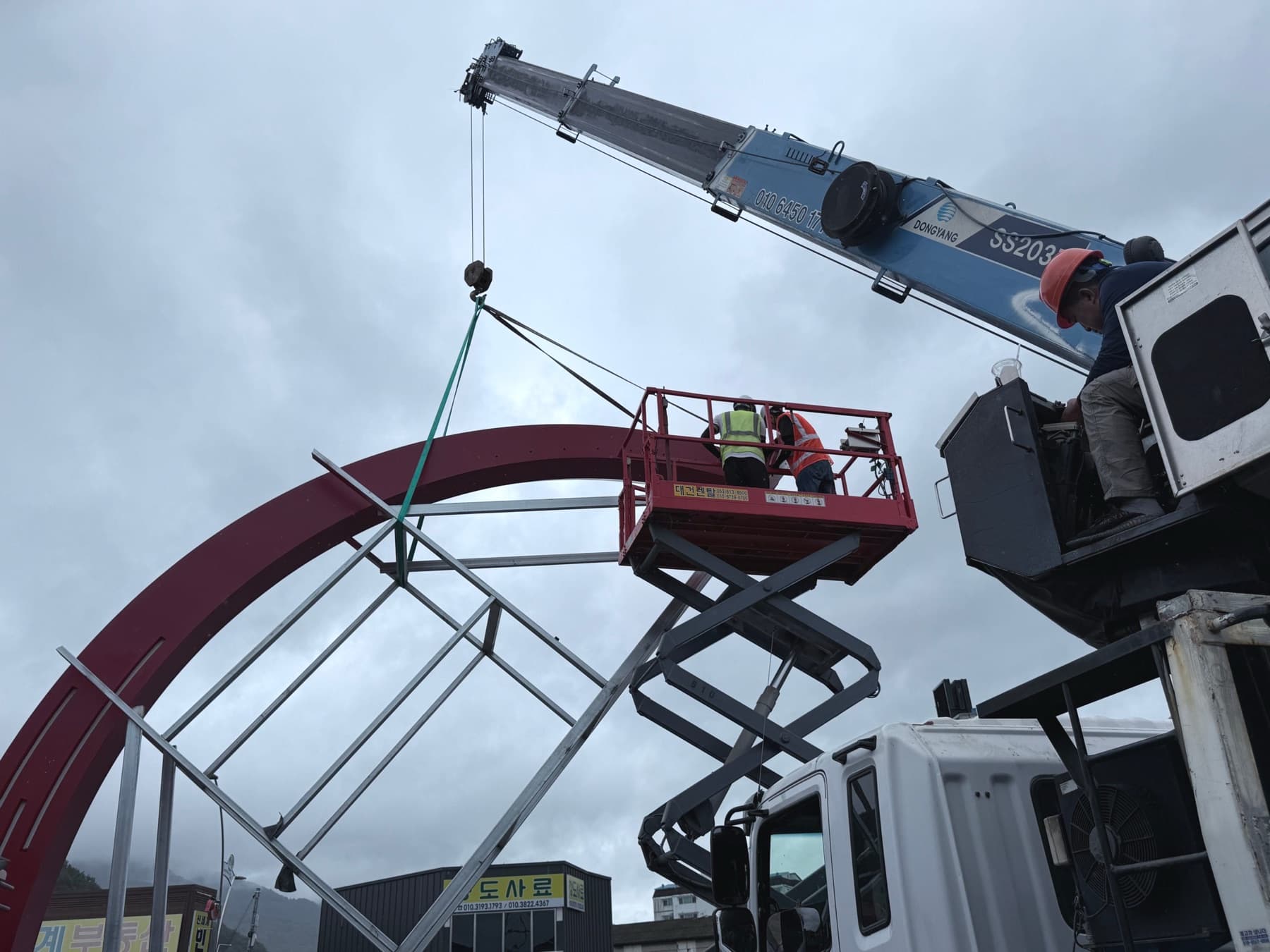
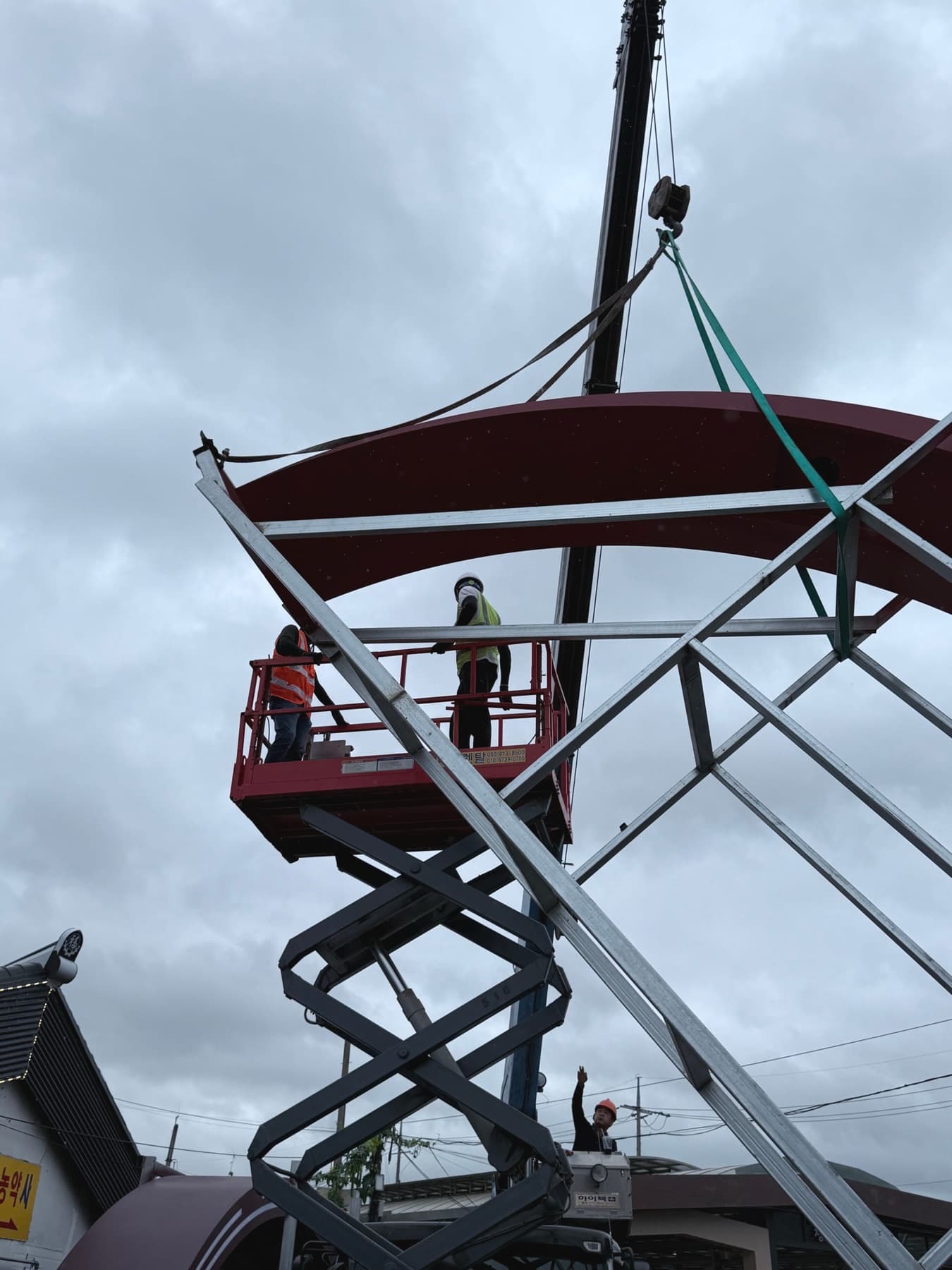
The hardest task in this installation was joining the two erected sections into one at the top.
A large steel structure can develop a "bending moment" from its own weight and loads, so aligning the top joint precisely was not easy.
Even a slight twist in the structure could misalign the joint or affect the overall balance, so careful adjustment was needed.
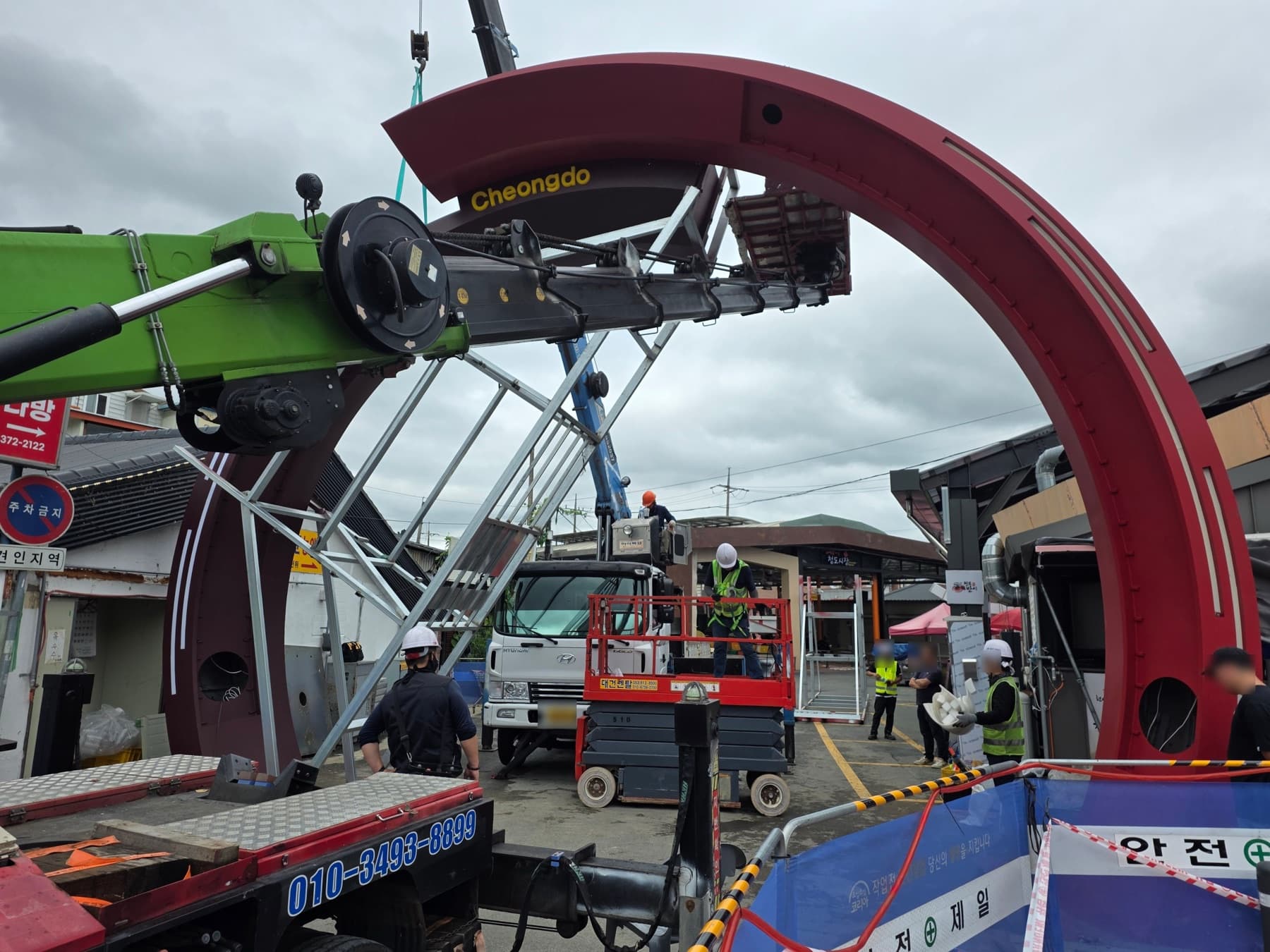
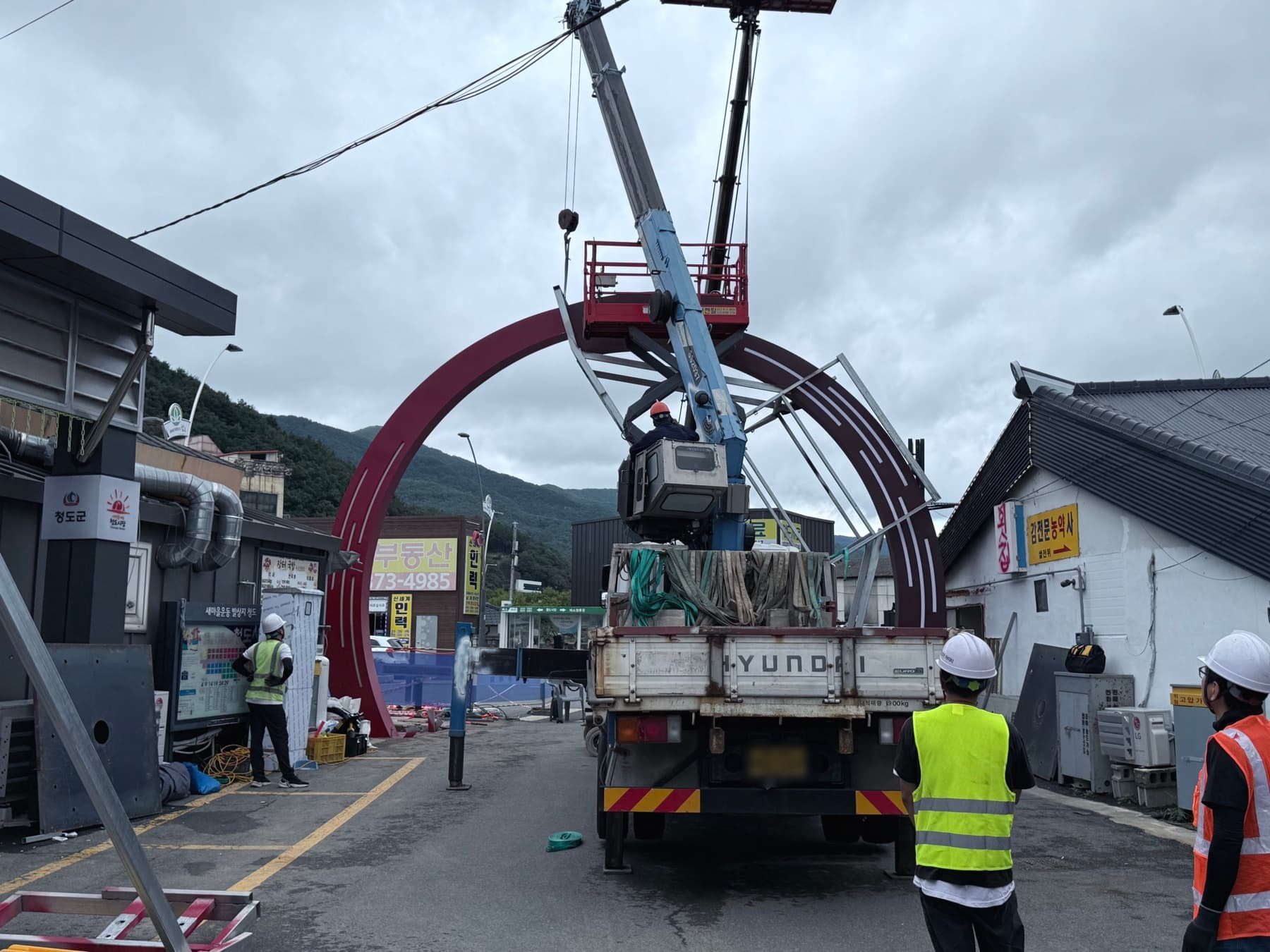
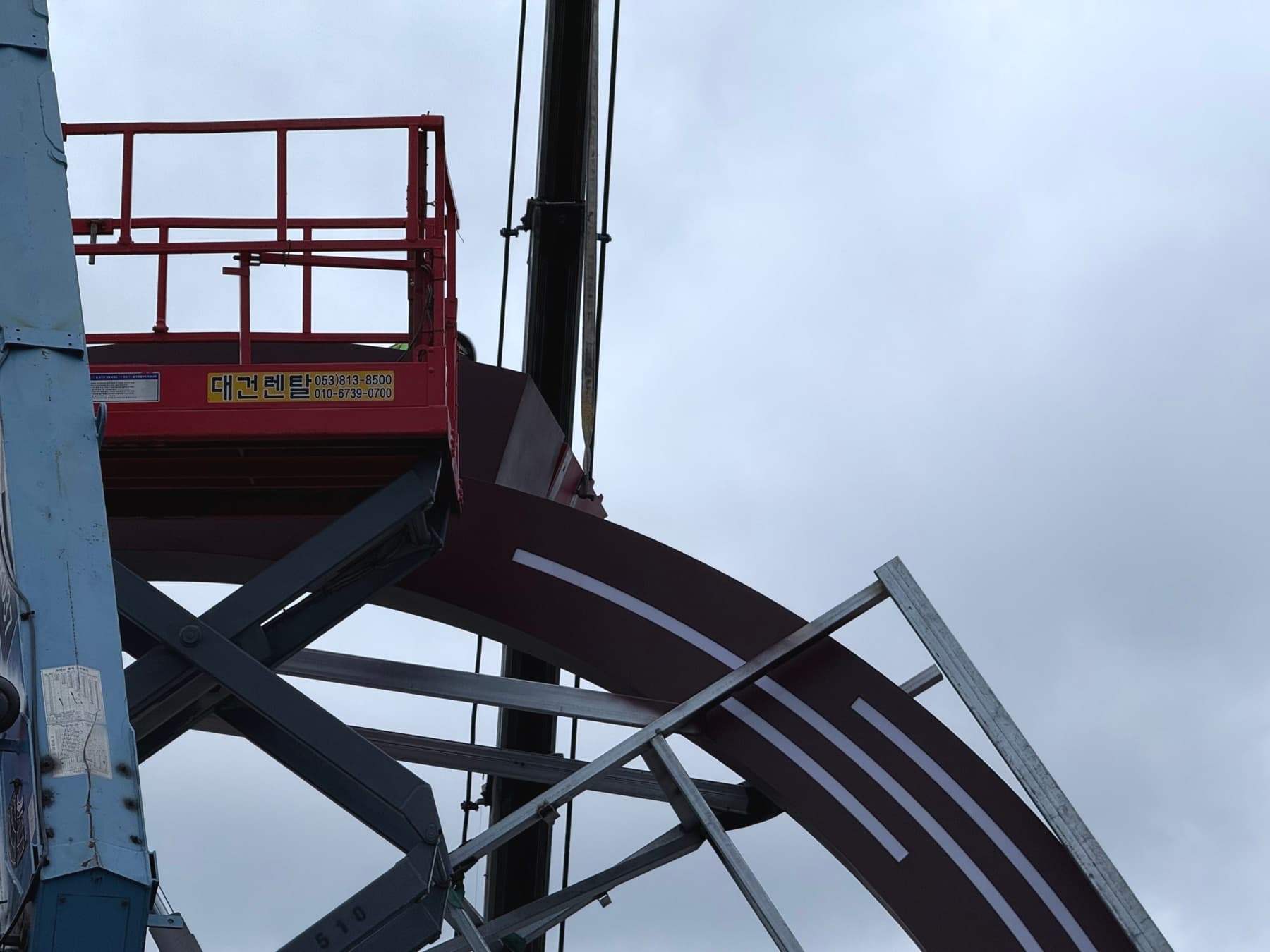
To solve this, on site we used two cranes to pull the structure diagonally while adjusting its position. The two cranes each controlled the structure's movement, bringing the top joint into line little by little, while workers kept checking the spacing and level of the structure.
Once the structure was correctly aligned, we fastened the joint, turning the two separate sections into a single sculpture. As it required controlling a large structure steadily while joining it precisely, this was the step that called for the most care and teamwork.
Installing the Cheongdo Market sign and electrical wiring
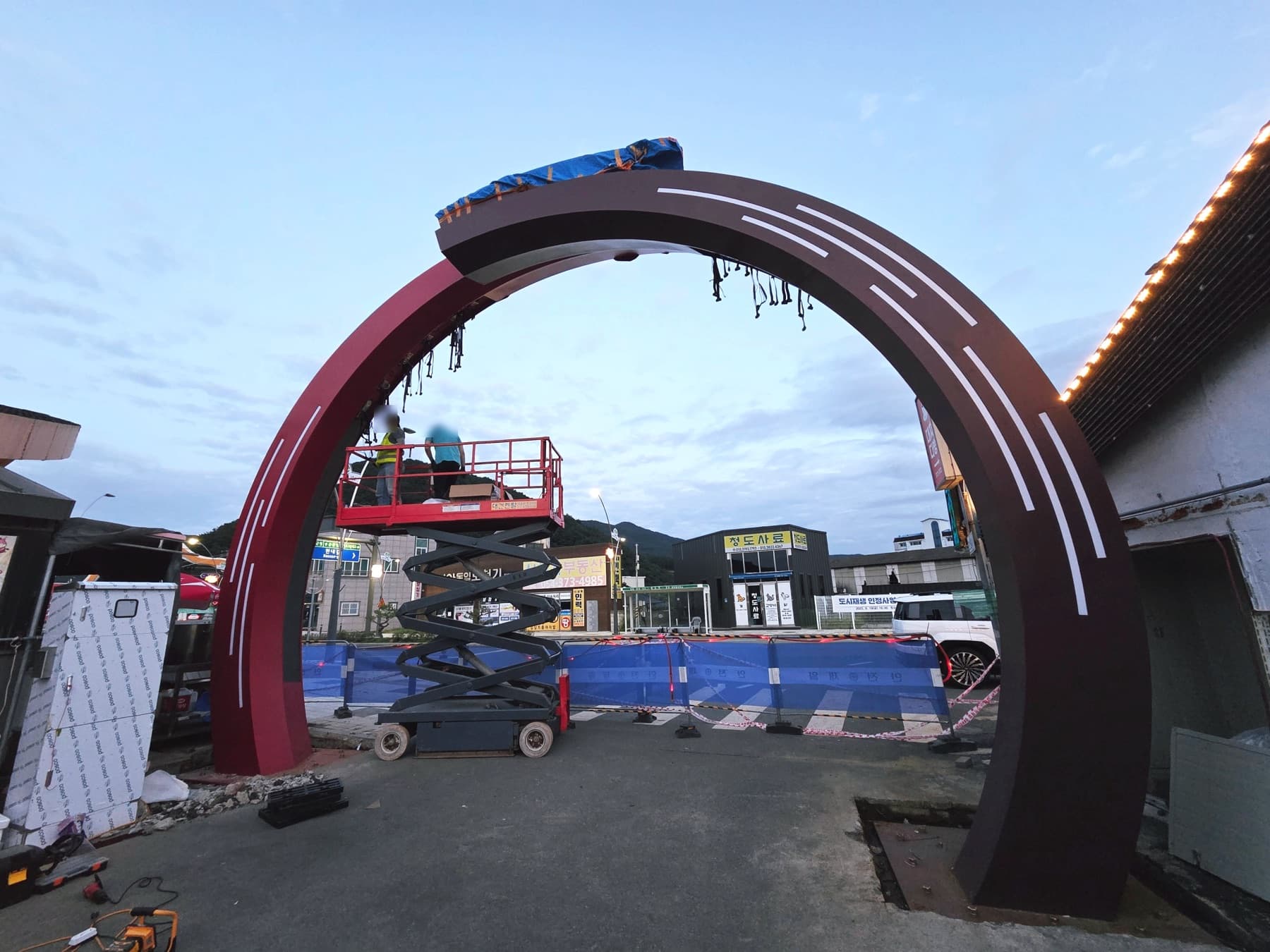
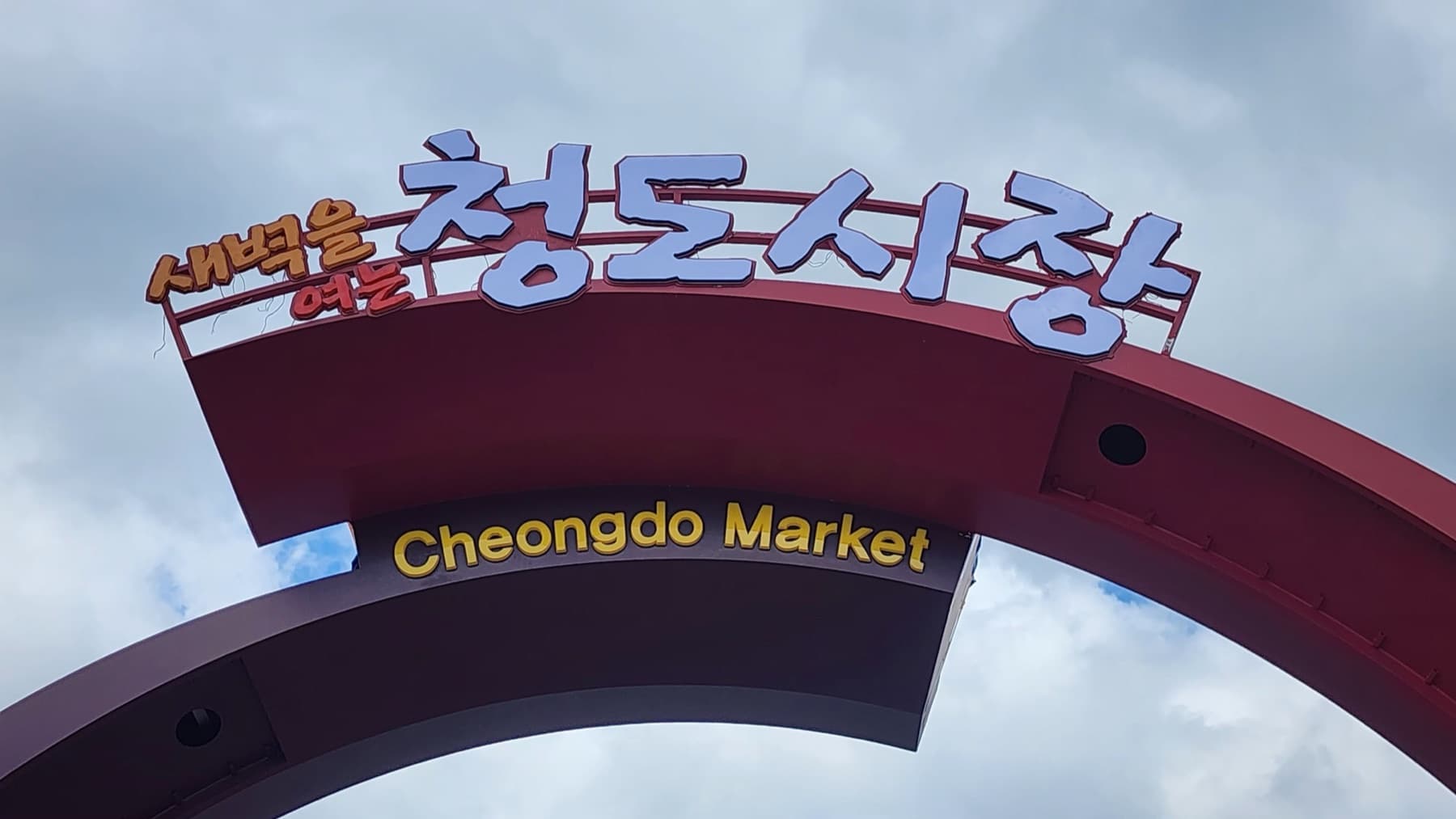
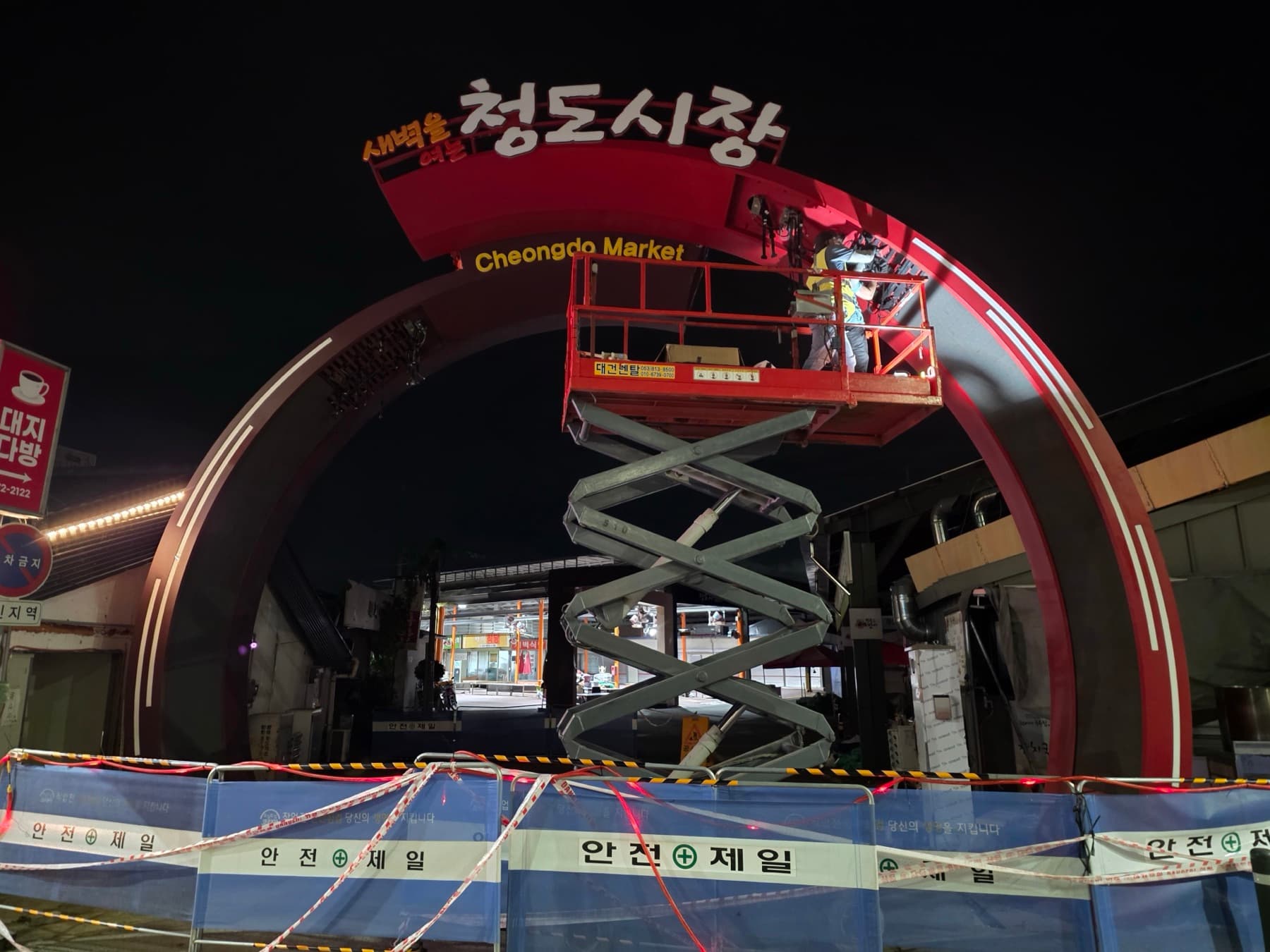
After the structure was assembled, we installed the Cheongdo Market sign on top of the sculpture.
We checked the sign's position against the structure's centerline, then adjusted its direction and angle so it would look level and balanced from the front. We then fixed it firmly to the structure so it would not shake in strong winds or vibration.
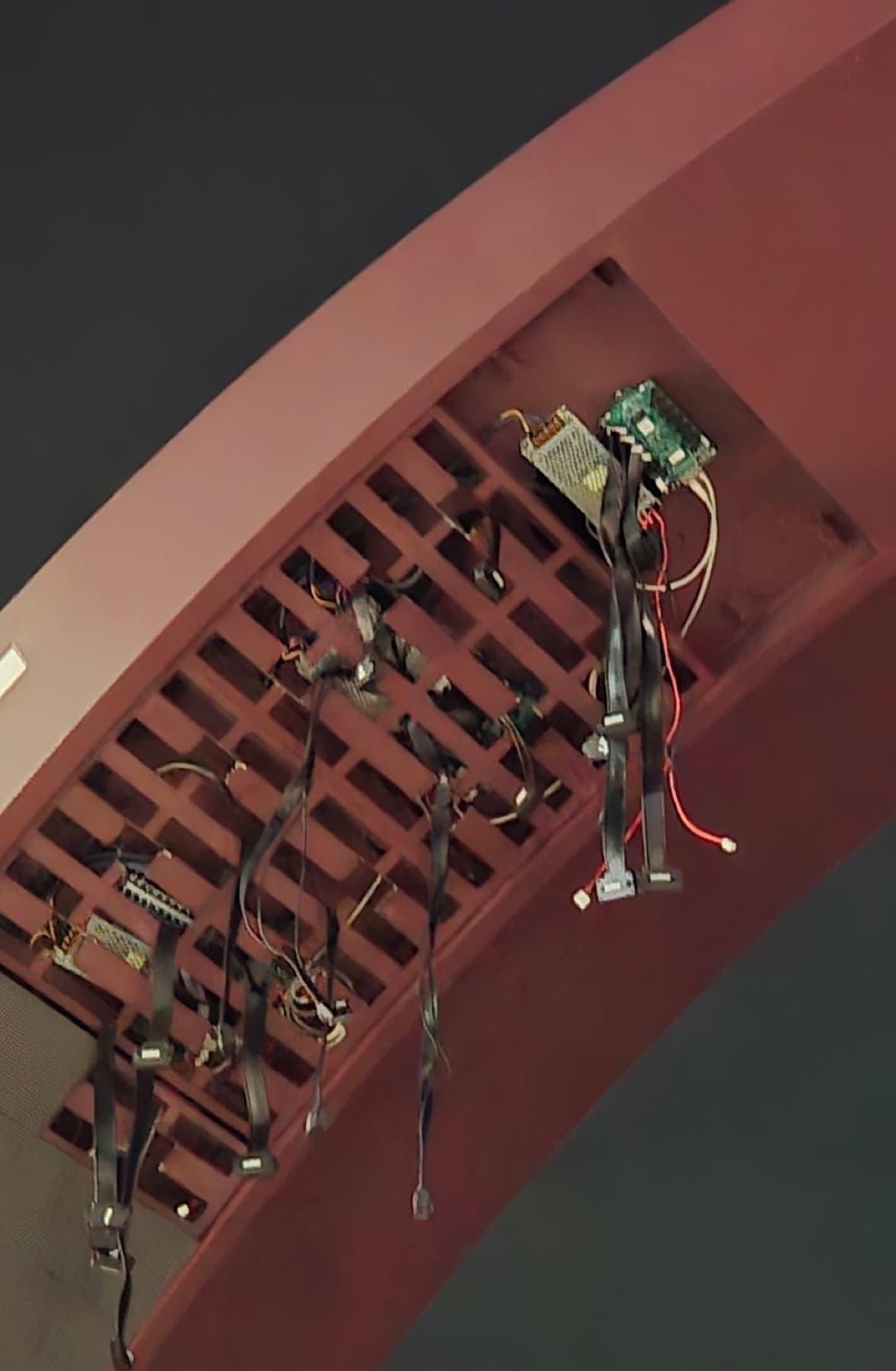
Along with the sign, we carried out the electrical wiring for the LED sculpture. We connected the power and signal lines and routed them along designated paths so no wiring was exposed.
We checked the power and signal connections of each LED module in order and organized the wiring by section to prevent tangling. We also left slack and service space to make future inspections and part replacements easier.
As the sculpture stands outdoors, we waterproofed the wiring connections and protected the cables from damage by the structure. Finally, we checked the connections of the distribution board and control equipment, as well as power, signal and grounding.
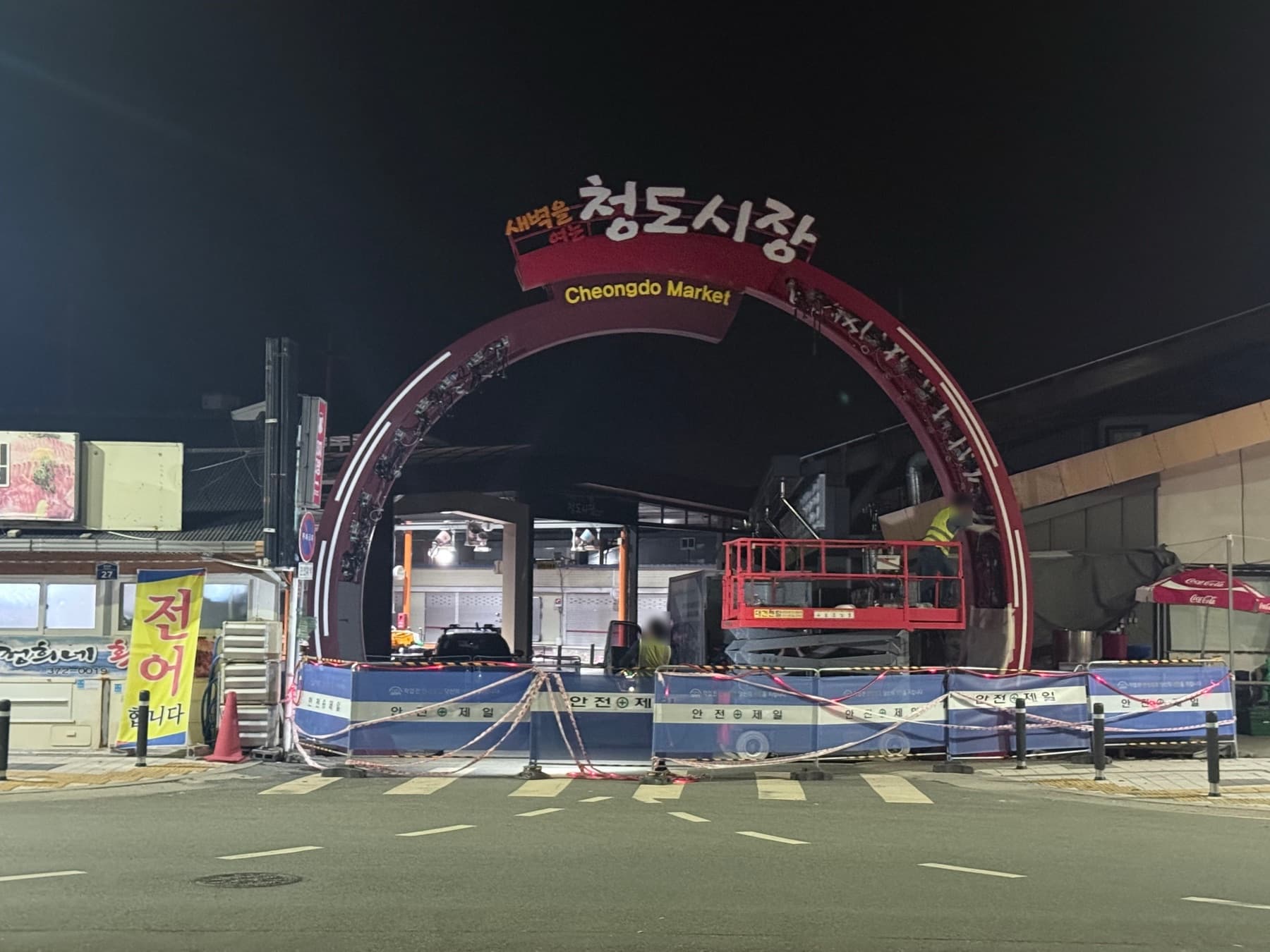
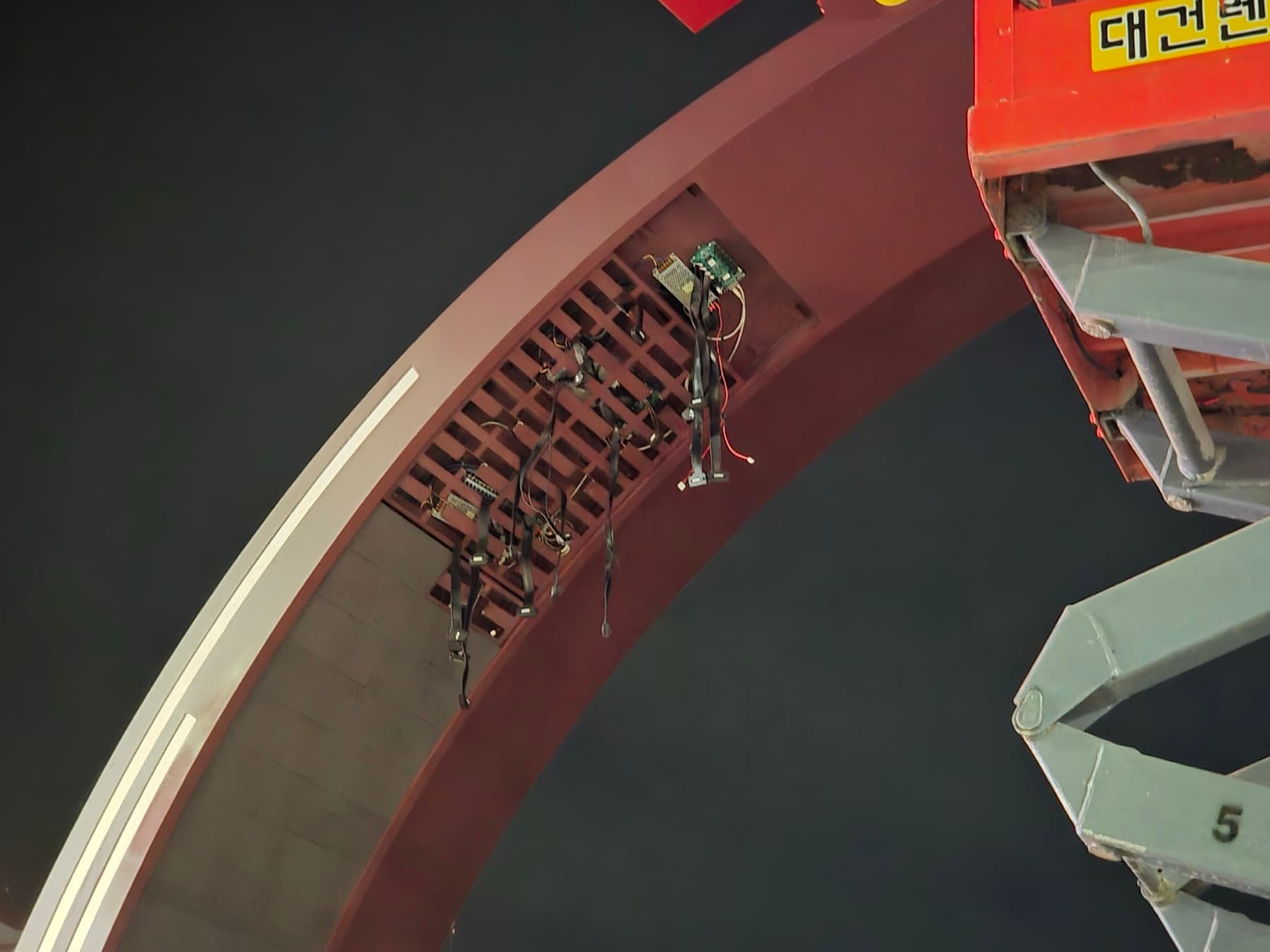
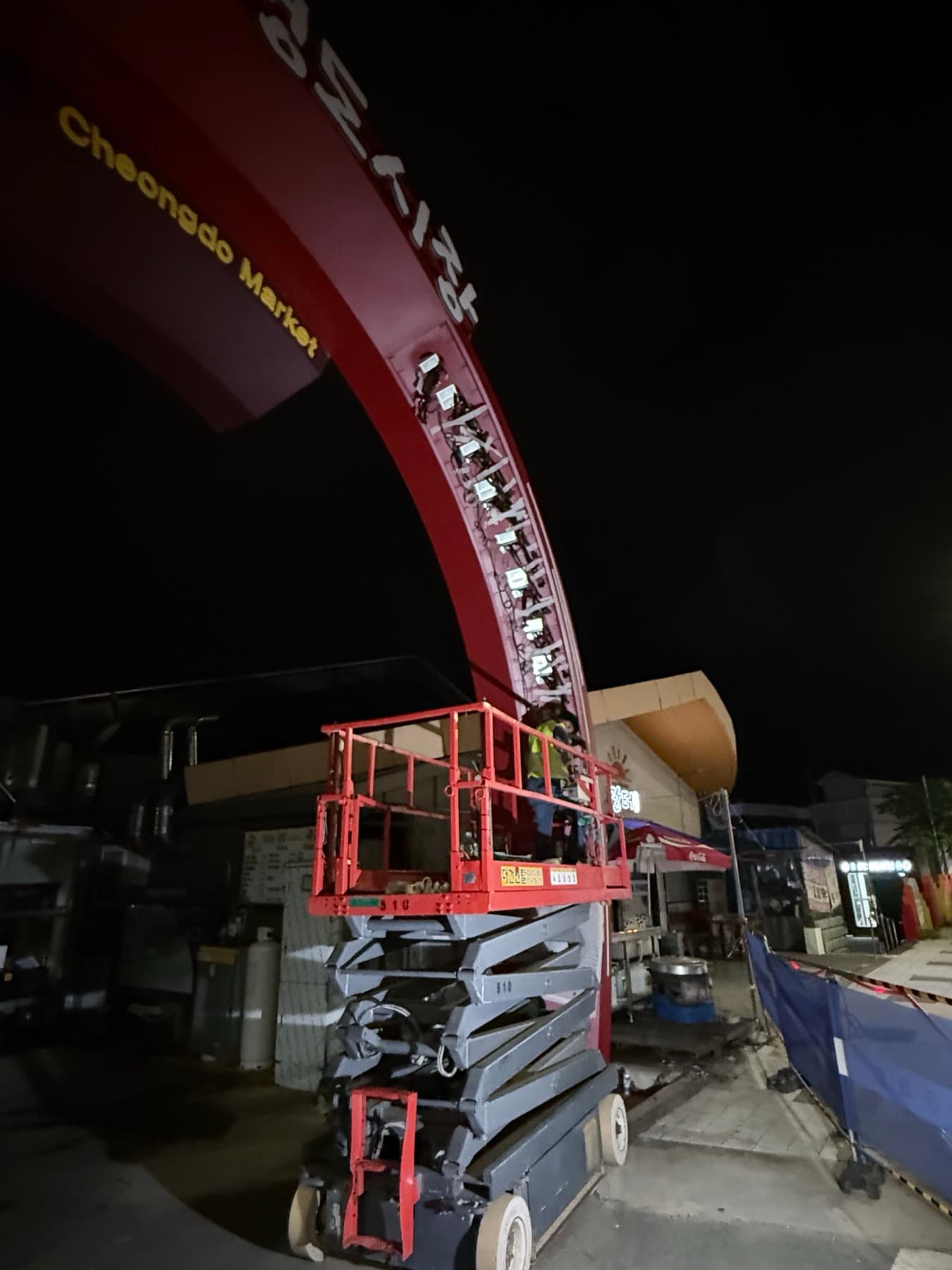
Installing LED modules to follow the curves
Once the structure and wiring were complete, we installed the LED modules one by one.
This sculpture features curves that are hard to express with standard 320×160mm LED modules alone, so we used the irregular, trapezoidal LED modules made separately during production.
Applying standard rectangular LED modules directly to a curved structure can leave large gaps between modules or make the outline look stepped. Forcing modules to bend or deform also reduces screen flatness and can strain the modules and connections over long-term use.
So during installation, we focused on minimizing gaps and height differences between modules. Even small gaps or height differences can make the screen look broken or show uneven brightness and color once lit, so we aligned each module's position and height carefully to keep the curve flowing naturally.
Waterproofing and LED module checks
After the LED modules were installed, we carried out waterproofing so the sculpture could operate reliably outdoors.
We carefully checked joints and vulnerable areas and waterproofed them to keep rain and moisture from getting inside.
At the same time, we inspected the appearance and connections of the LED modules to make sure none were faulty.
Calibration
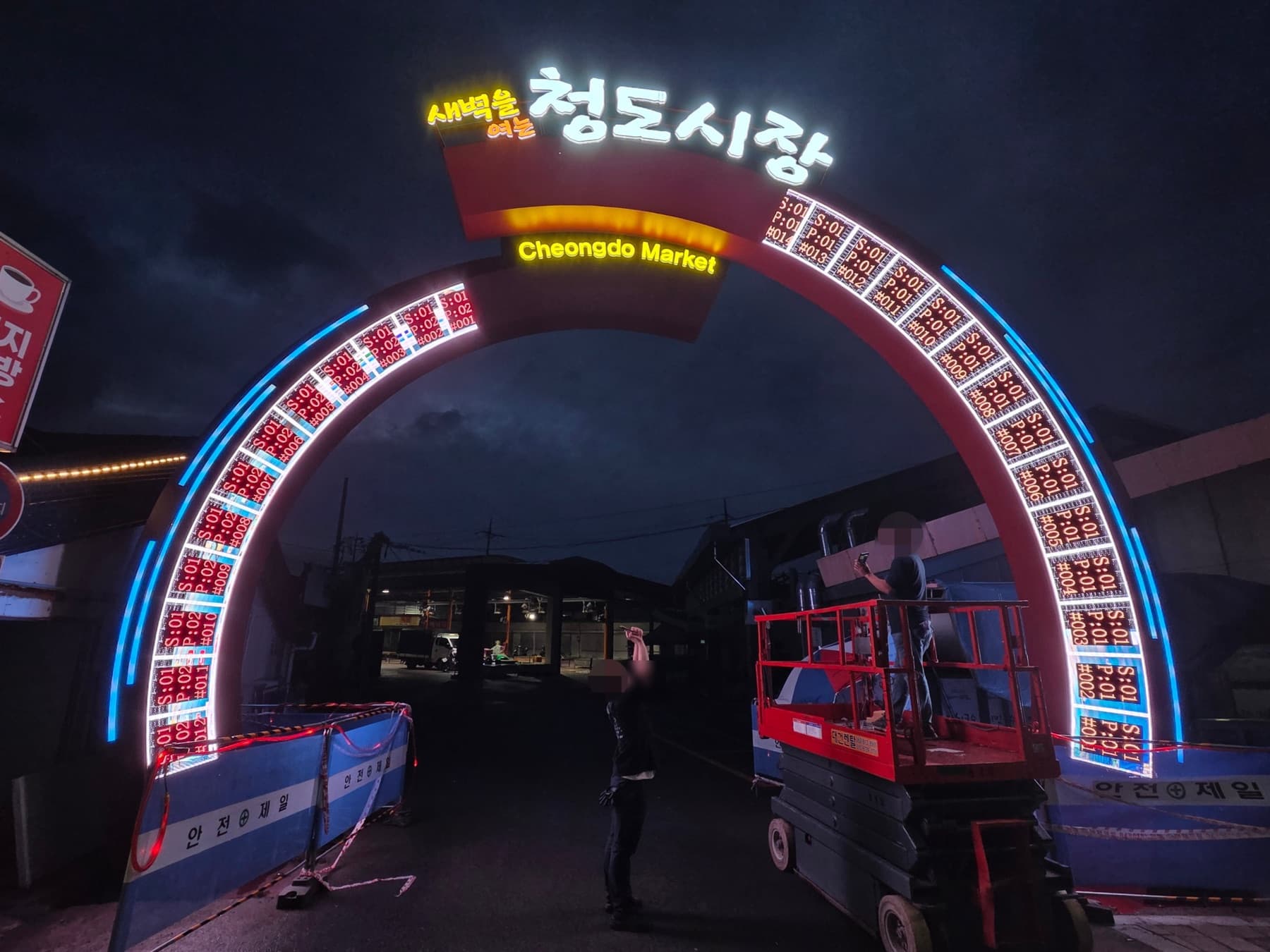
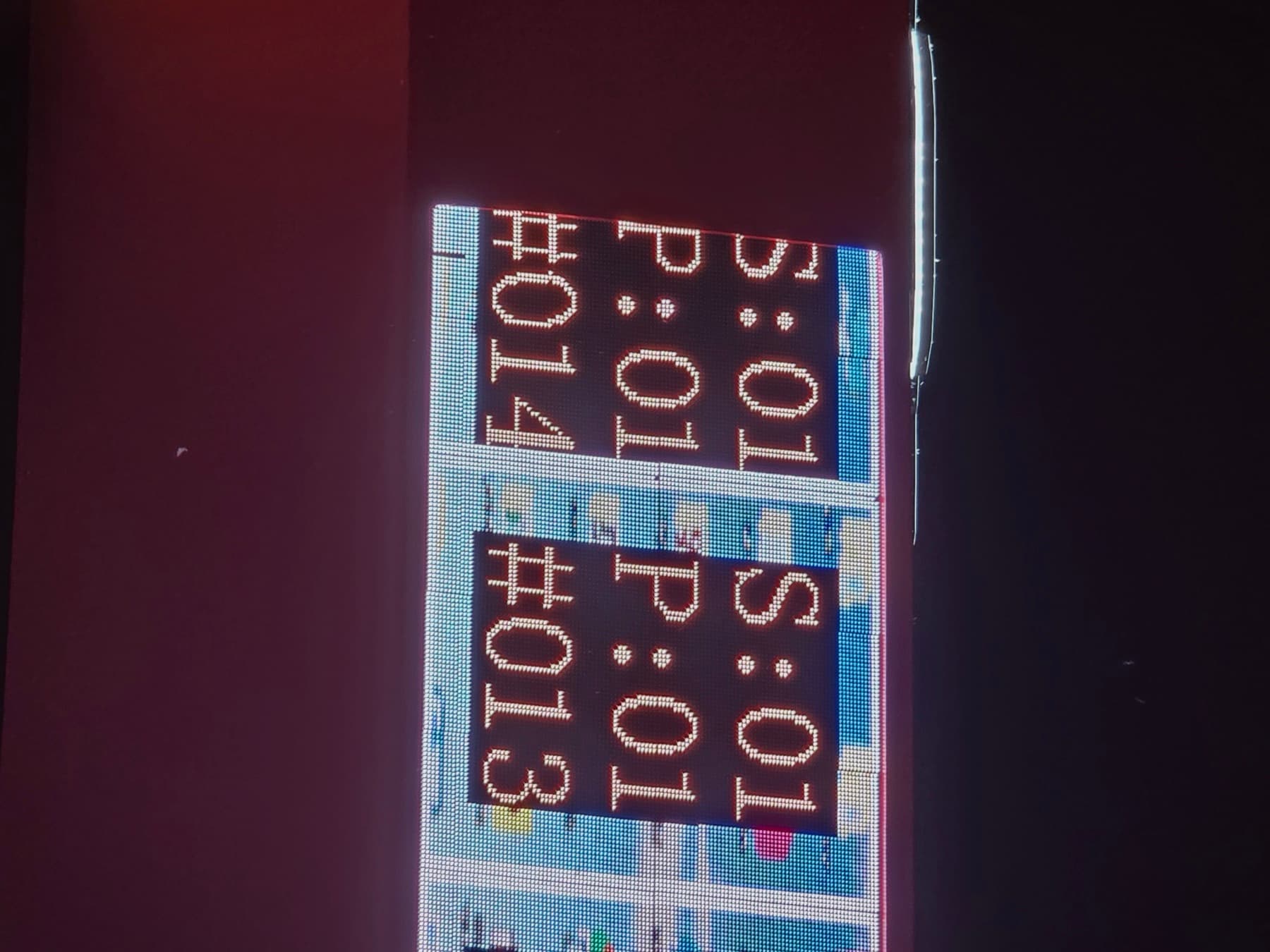
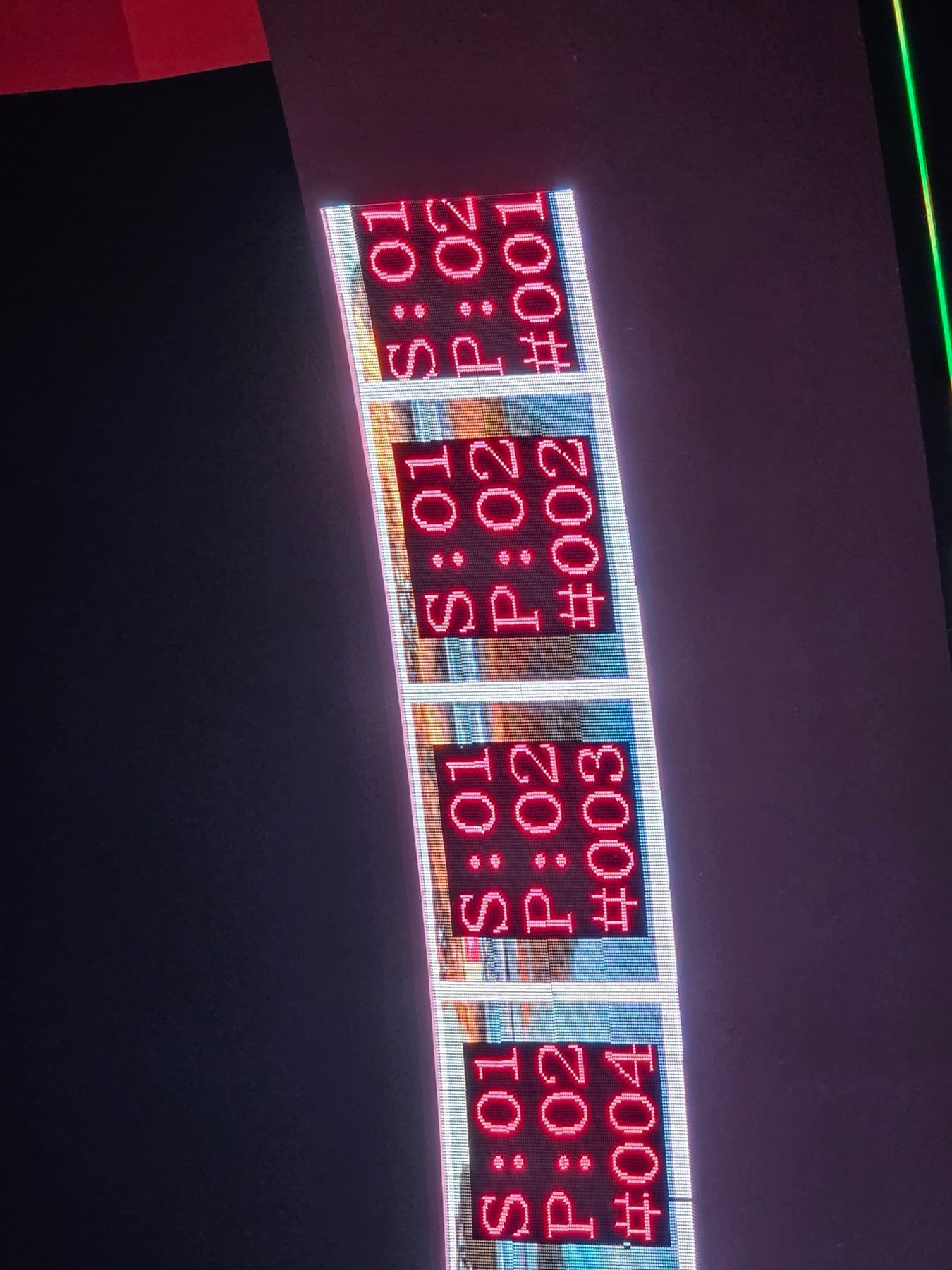
With all LED modules and wiring complete, we ran lighting tests.
We confirmed the whole screen displayed properly and checked LED color and brightness from both the front and the back.
As this sculpture displays preset colors, we also confirmed the specified colors were reproduced accurately.
We then performed calibration to adjust brightness and color differences between modules, finishing with a uniform screen.
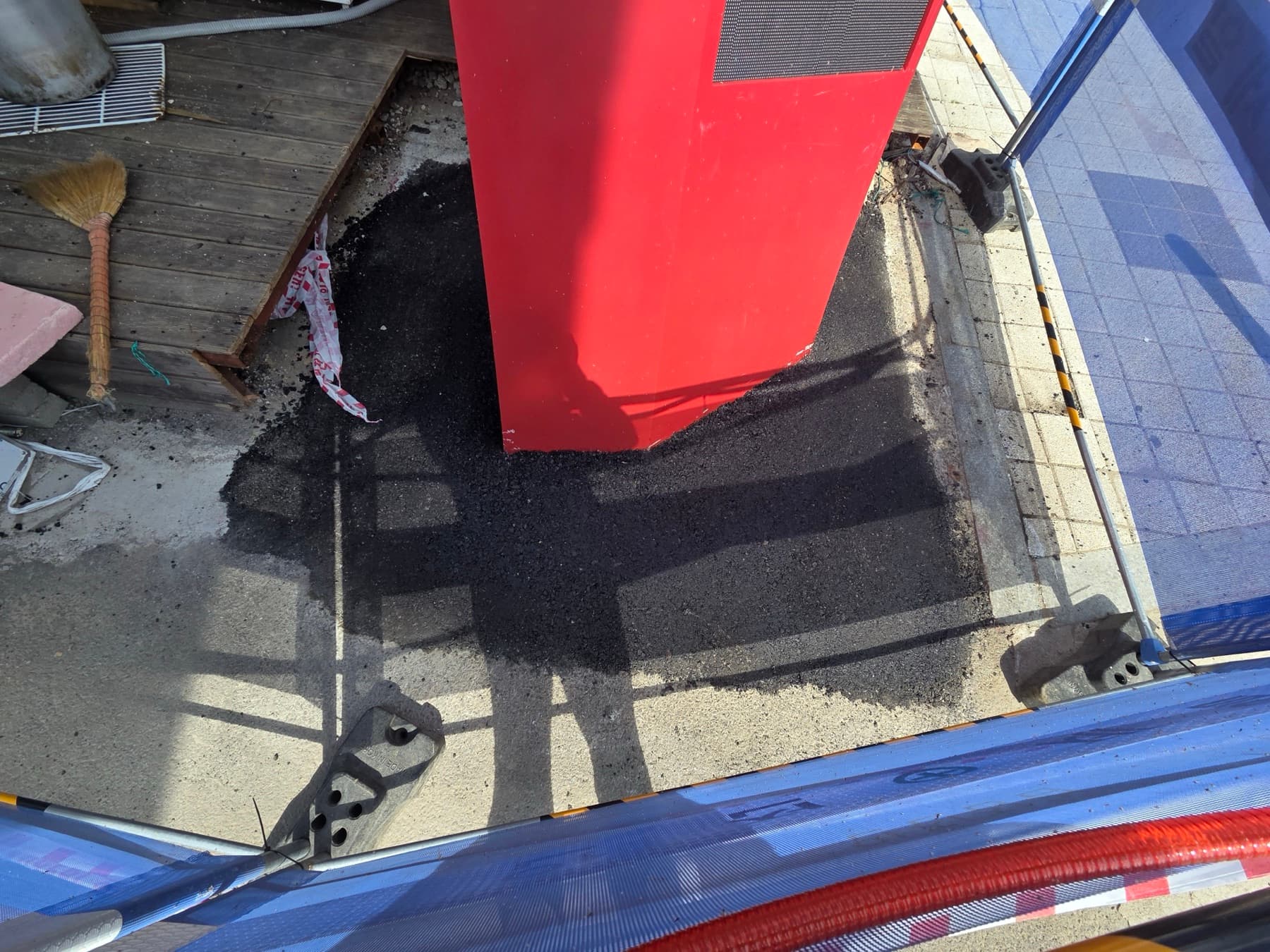
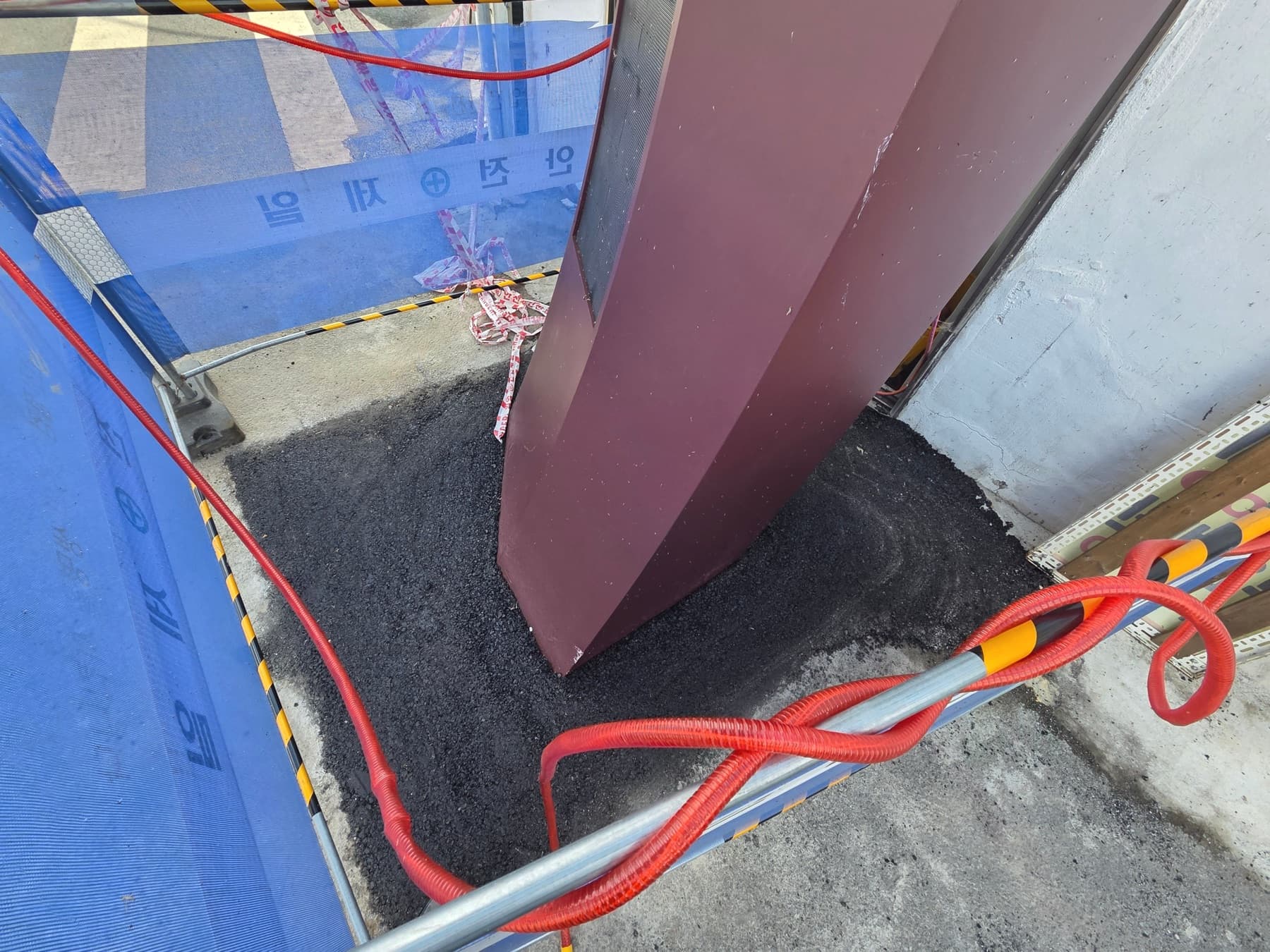
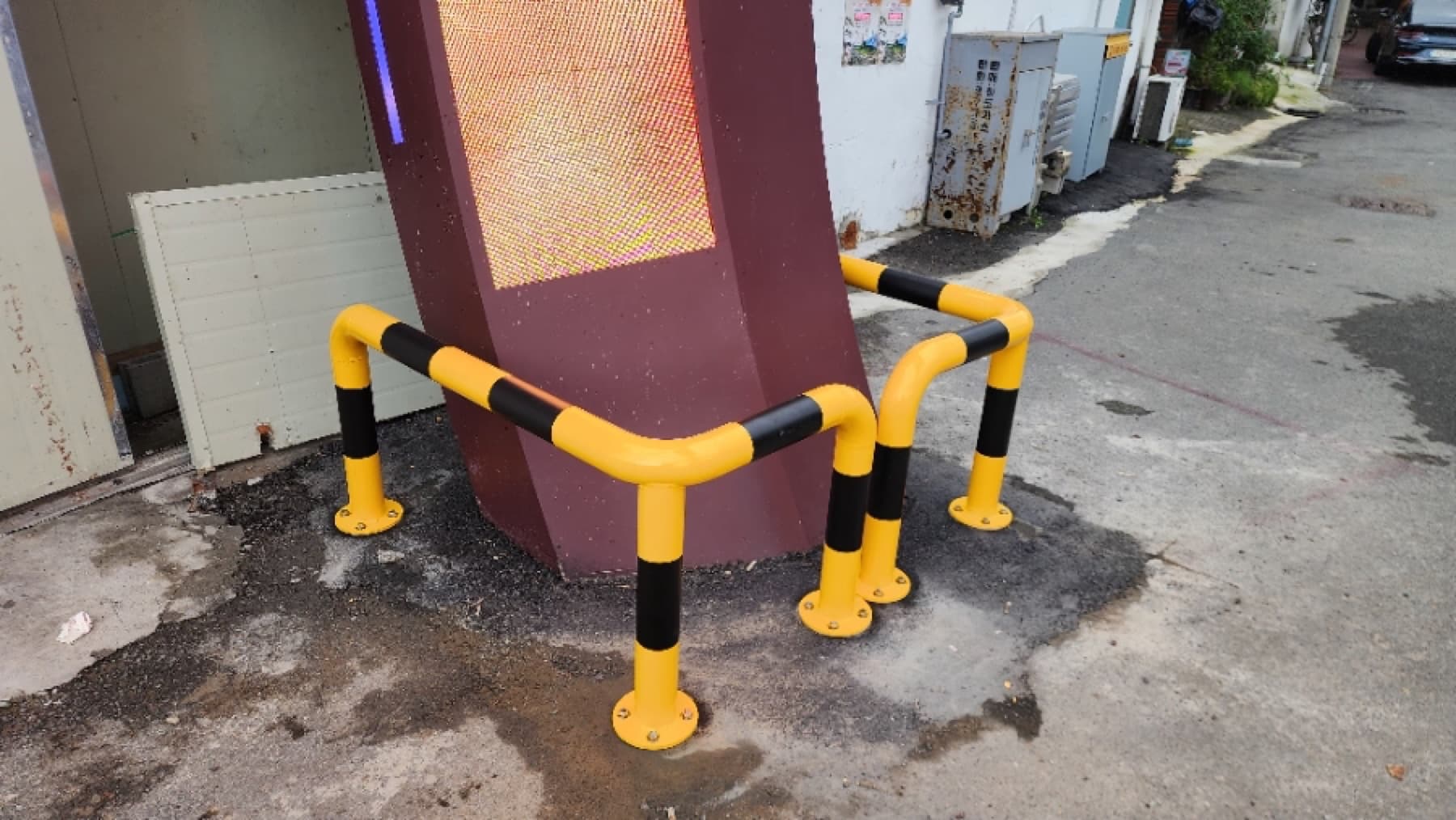
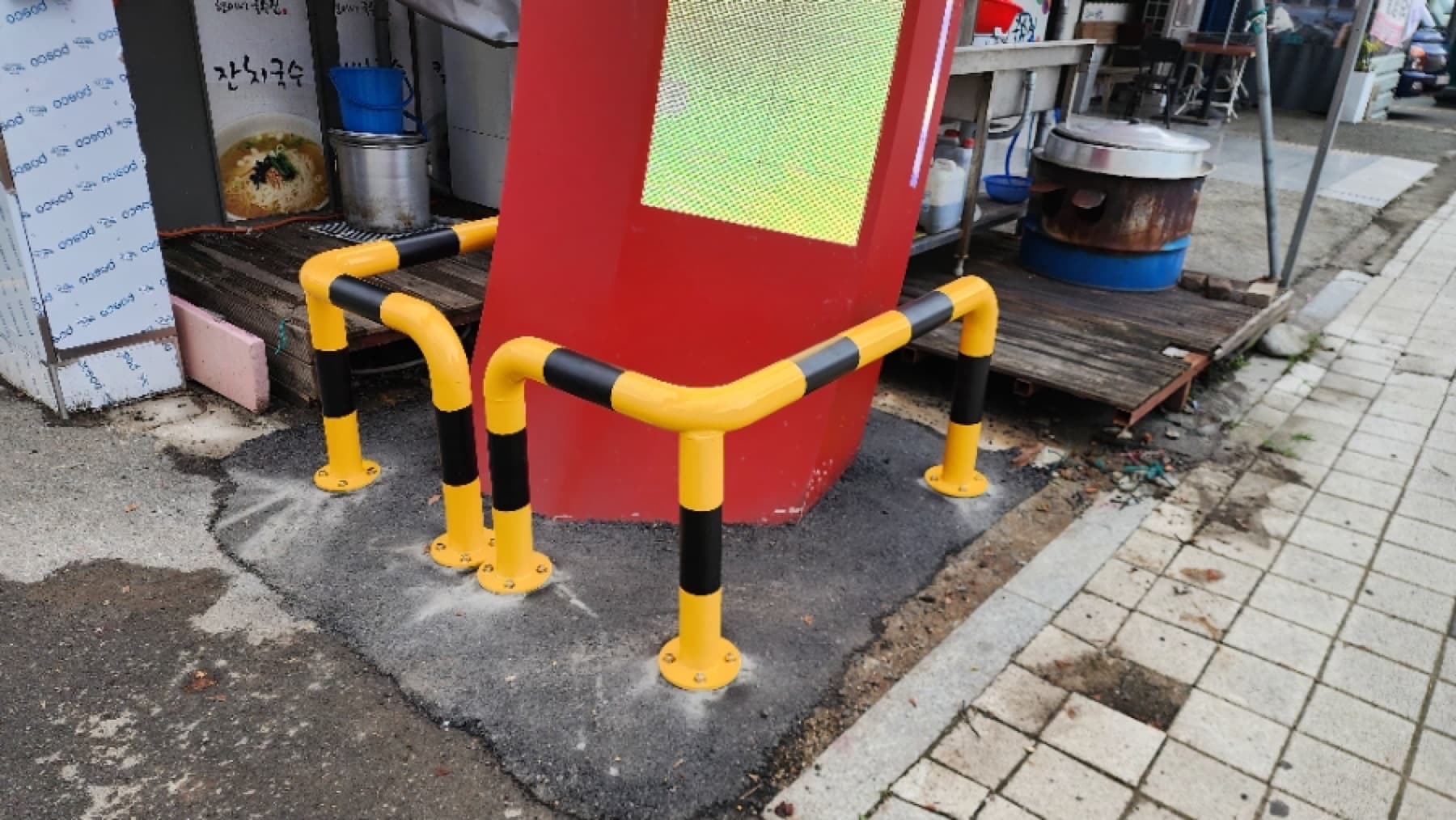
Asphalt finishing and bollard installation
After all installation and inspection were complete, we carried out asphalt finishing around the base of the sculpture.
After tidying the ground around the sculpture, we also installed bollards to further protect it.
Cheongdo Market is where the Cheongdo five-day market is held on days ending in 4 and 9 each month. On market days, there are not only crowds of visitors but also plenty of trucks and cars moving around the market. We therefore installed bollards to protect the LED sculpture and structure from external impact, preventing vehicles from hitting or getting too close to it.
The Cheongdo Market LED sculpture was also designed, with the market's traffic flow in mind, at a height that lets vehicles pass beneath it. We considered height and structure together so it would not obstruct traffic while still standing out.
After installing the bollards, we rechecked pedestrian and vehicle flow around the sculpture and inspected the structure and the ground finish as well.
Final inspection
We made a final check of the distribution board's power and connections, LED lighting, wiring and waterproofing. We checked that the whole screen lit evenly with no brightness or color differences in any module, and that video and images played back correctly.
We also checked the power supply inside the distribution board and the tightness of each connection, and looked for any exposed wiring or connectors. We confirmed the waterproof finish was done properly against rain and moisture, and made a final check for any dirt or scratches on the sculpture's exterior.
With all checks done, we completed the installation of the large LED sculpture that will become Cheongdo Market's new landmark.
We tidied the site once more, reviewed the final condition with the stakeholders, and completed the installation so it can operate reliably.
▶ Final LED module inspection
Completed installation
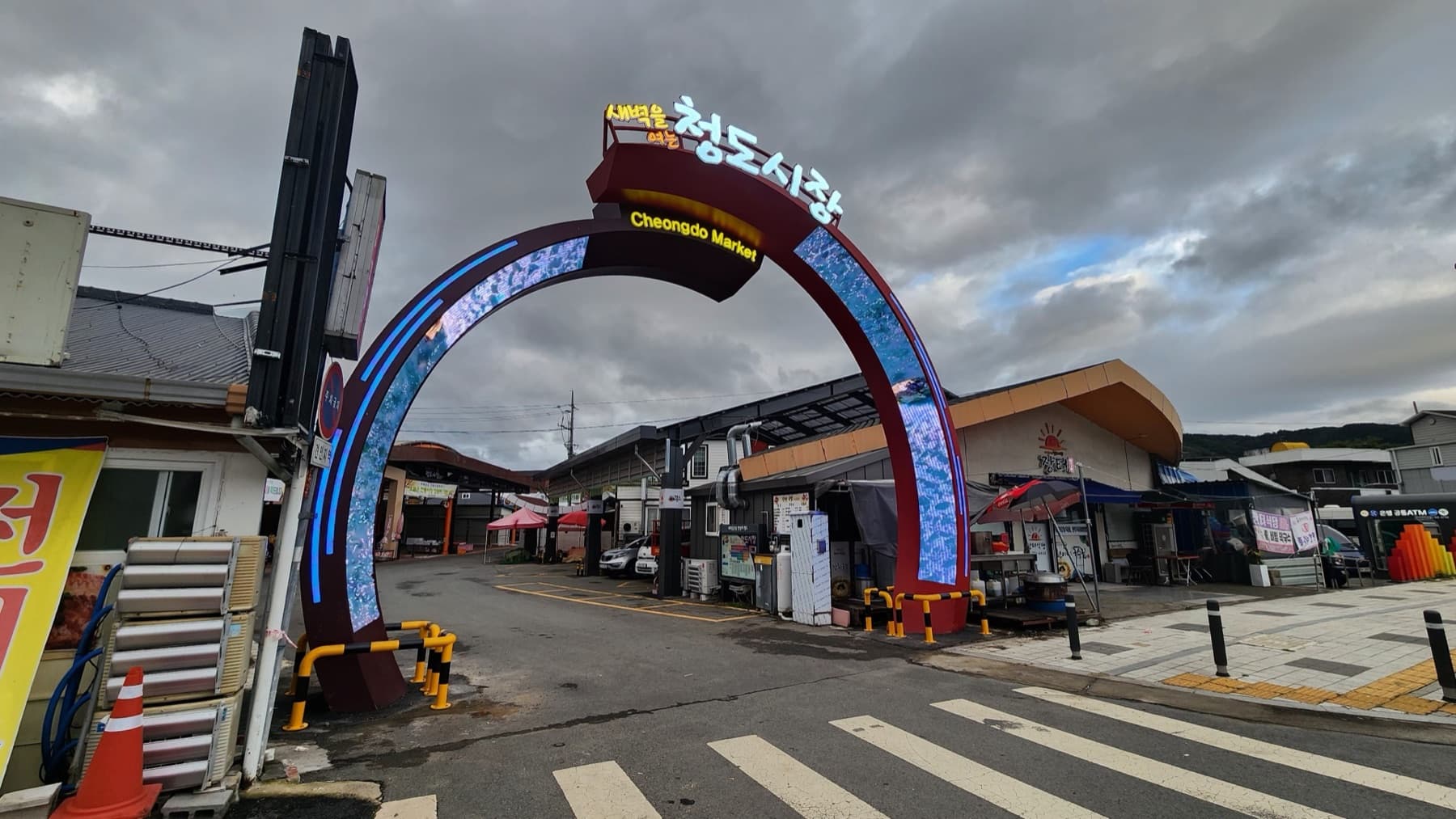
The once-empty space now features a newly installed arched LED sculpture display shaped after the market's entrance.
The sculpture and LED display were built as a single structure, designed to leave a strong first impression on market visitors.
Normally it shows market promotional videos and information, and during festivals and events it can run a variety of videos in real time, greatly increasing its usefulness.
What changed
Empty market entrance → arched LED sculpture display installed
An LED display is more than equipment that plays videos; it completely transforms the image of a space.
At Cheongdo Market, too, an ordinary entrance has been transformed into a landmark LED sculpture that is now the face of the market. Below, we take a detailed look, with photos, at the actual installation process, from foundation work and steel structure fabrication to LED module installation, wiring and final inspection.
- A new landmark representing the market
- Displays a variety of promotional and information content for visitors
- Excellent visibility and high attention day and night
- Stronger brand image and symbolism for the market
Cheongdo Market environmental improvement project: creating a new landmark
The Cheongdo five-day market is a leading traditional market in the region that has drawn many people for years, but its cramped space and aging facilities called for a fresh image.
Rather than simply repairing existing facilities, a key goal of this project was to create a symbolic landmark that visitors would remember at a glance.
So we built an LED sculpture that suits the market's character and space and stands out at night. An LED sculpture has the advantage of displaying a wide range of colors and content.
By day it shapes the atmosphere of the space as a sculpture, and at night its LEDs give it an even more vivid presence, making it well suited as a new attraction for the market.
In this project, we focused on making the most of these LED strengths while creating a three-dimensional, curved sculpture unlike conventional flat displays.
Wrapping up production
Through structural fabrication, reinforcement, welding and grinding, the basic build of the large sculpture was completed.
In particular, the critical grinding process, smoothing crack points at the welds and carefully cleaning up rough areas, raised the structure's quality and finish.
We also prepared custom trapezoidal LED modules and dedicated housings to fit the sculpture's curves, completing preparations for on-site installation.
Closing thoughts
A large LED sculpture about 10 m wide is complete only when countless processes mesh precisely, from foundation work to transport and lifting, joining the top, LED module installation, wiring and waterproofing, and lighting tests.
This Cheongdo Market sculpture was an especially meaningful project because it used irregular, trapezoidal LED modules made to fit the sculpture's curves, rather than standard rectangular modules, to achieve smooth, natural curves.
We carefully adjusted the position and height of each module to improve the screen's continuity and finish, and installed it with great care so the structure's form and LED screen blend in harmony.
We paid close attention to every step, from production to transport and installation, wiring and waterproofing, and final lighting and inspection. The result is a new landmark that fits the Cheongdo Market space and leaves a lasting impression on visitors.
We'll continue to share more LED display installation projects.
LO-GIN IT is a custom signage specialist that handles everything from design to installation. If you are planning an installation or have any questions about our products, feel free to contact us anytime!
Thank you.
Similar projects
 All projects