
Keungogae Intersection overpass pier LED display
Dong-gu Office, Daegu · Dong-gu, Daegu · 2024.12 Completed
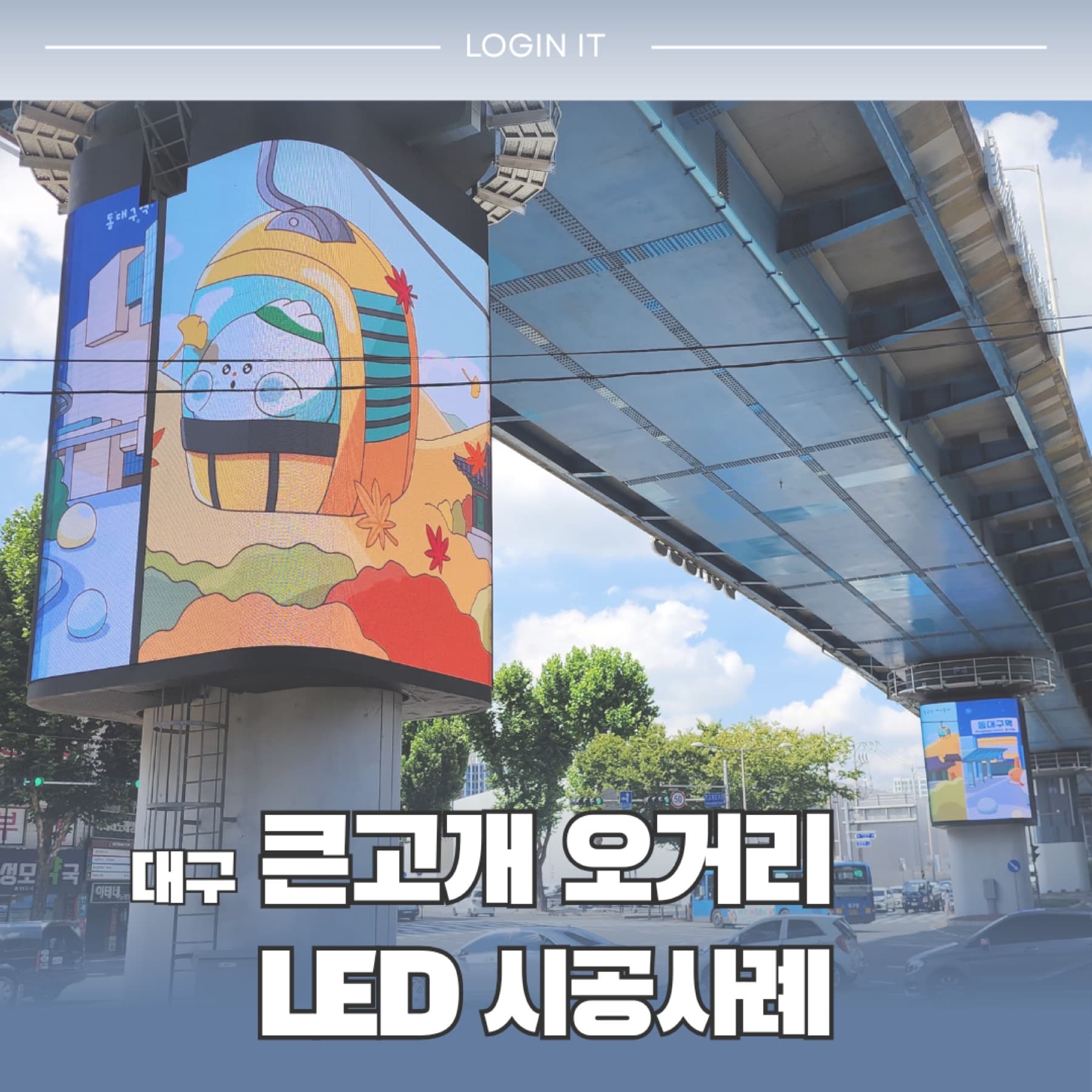
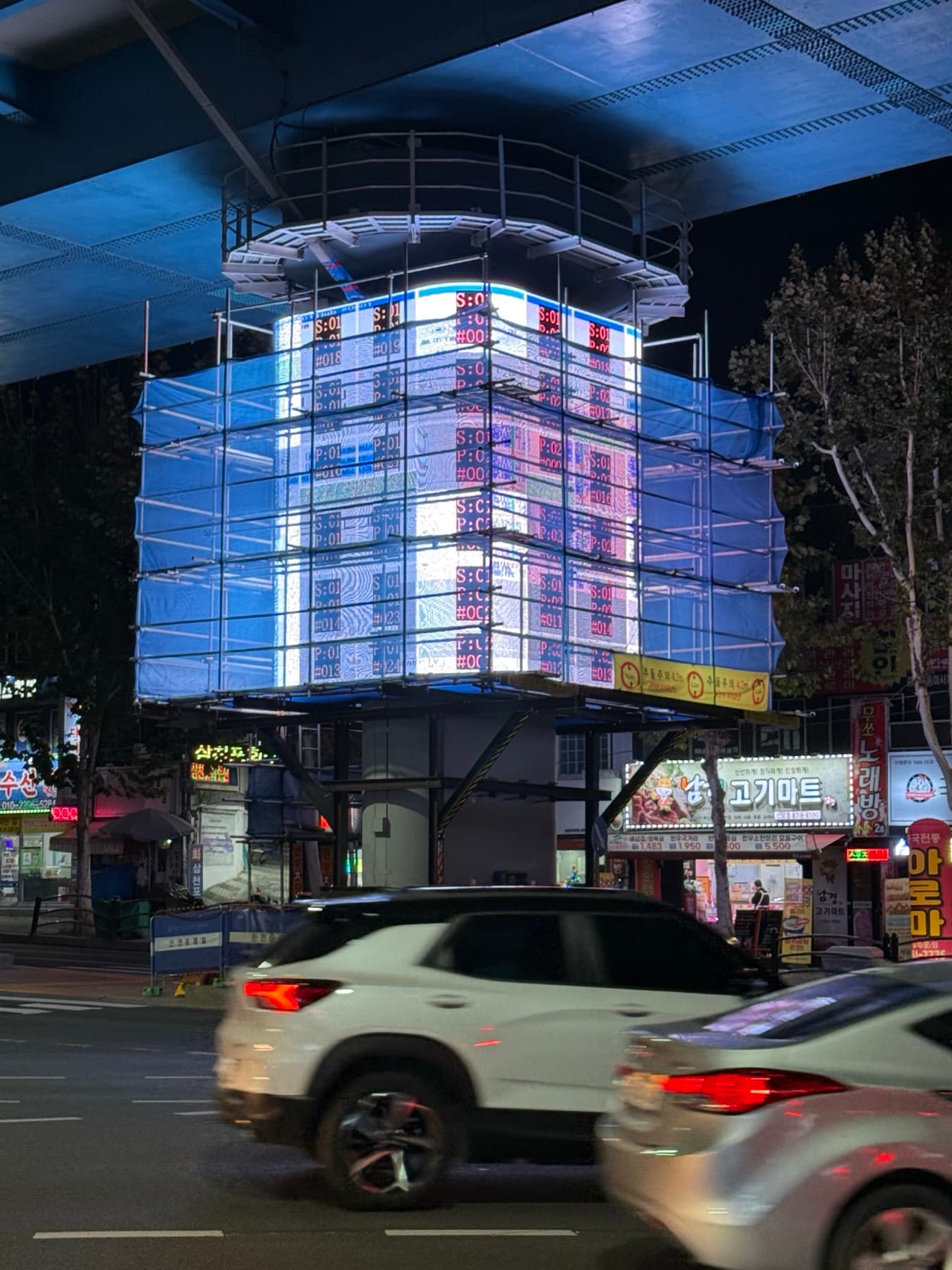
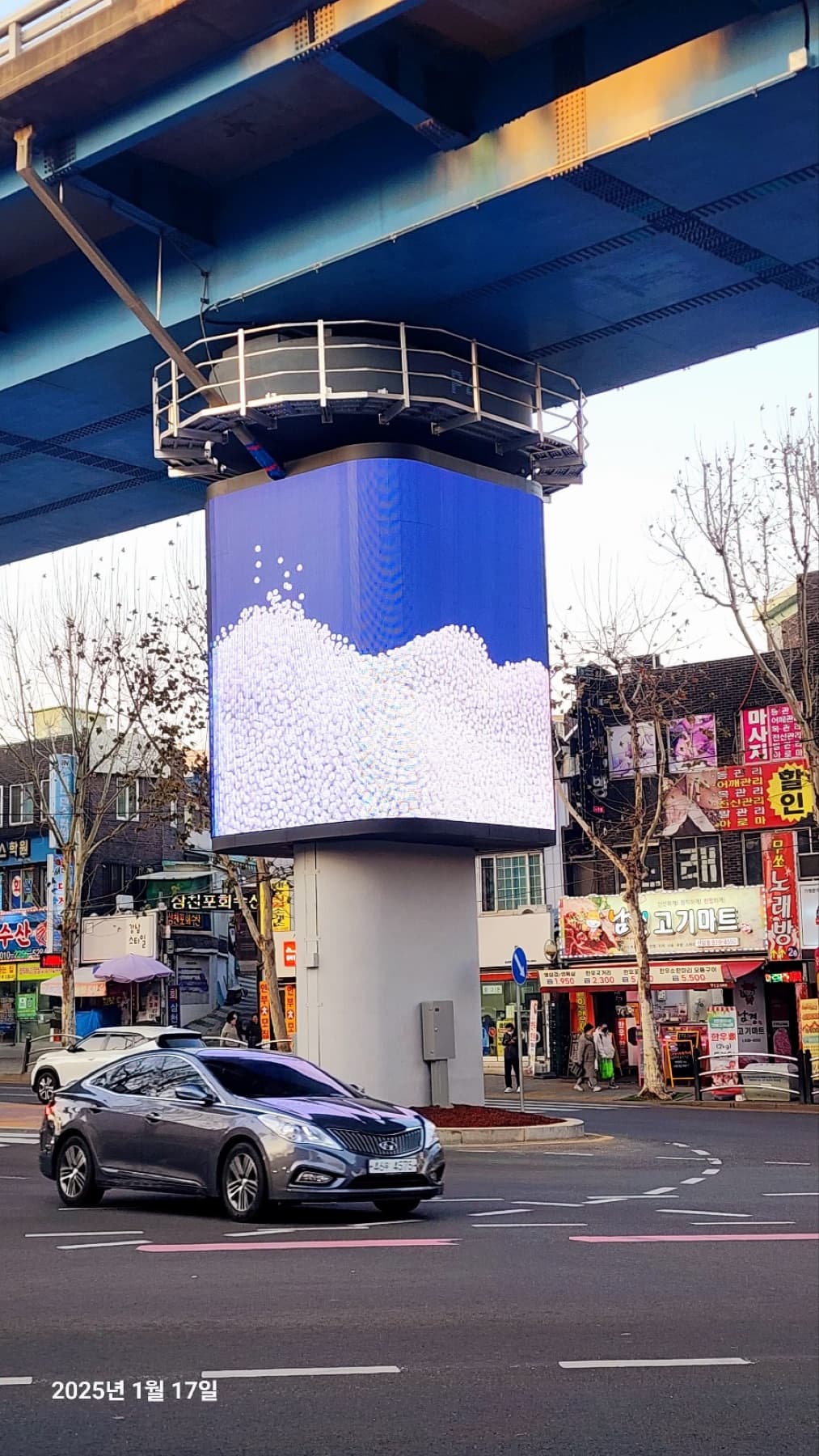
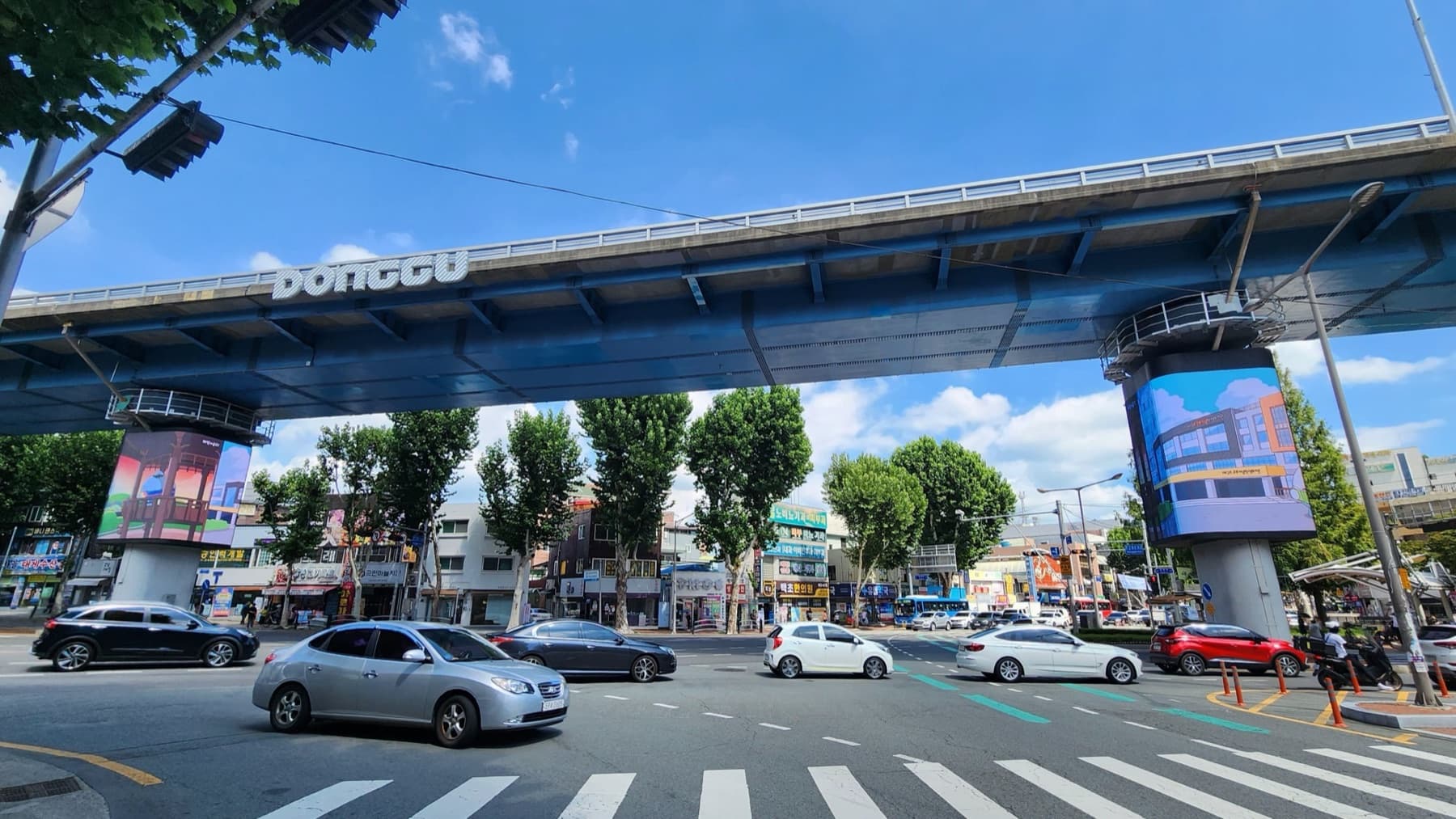
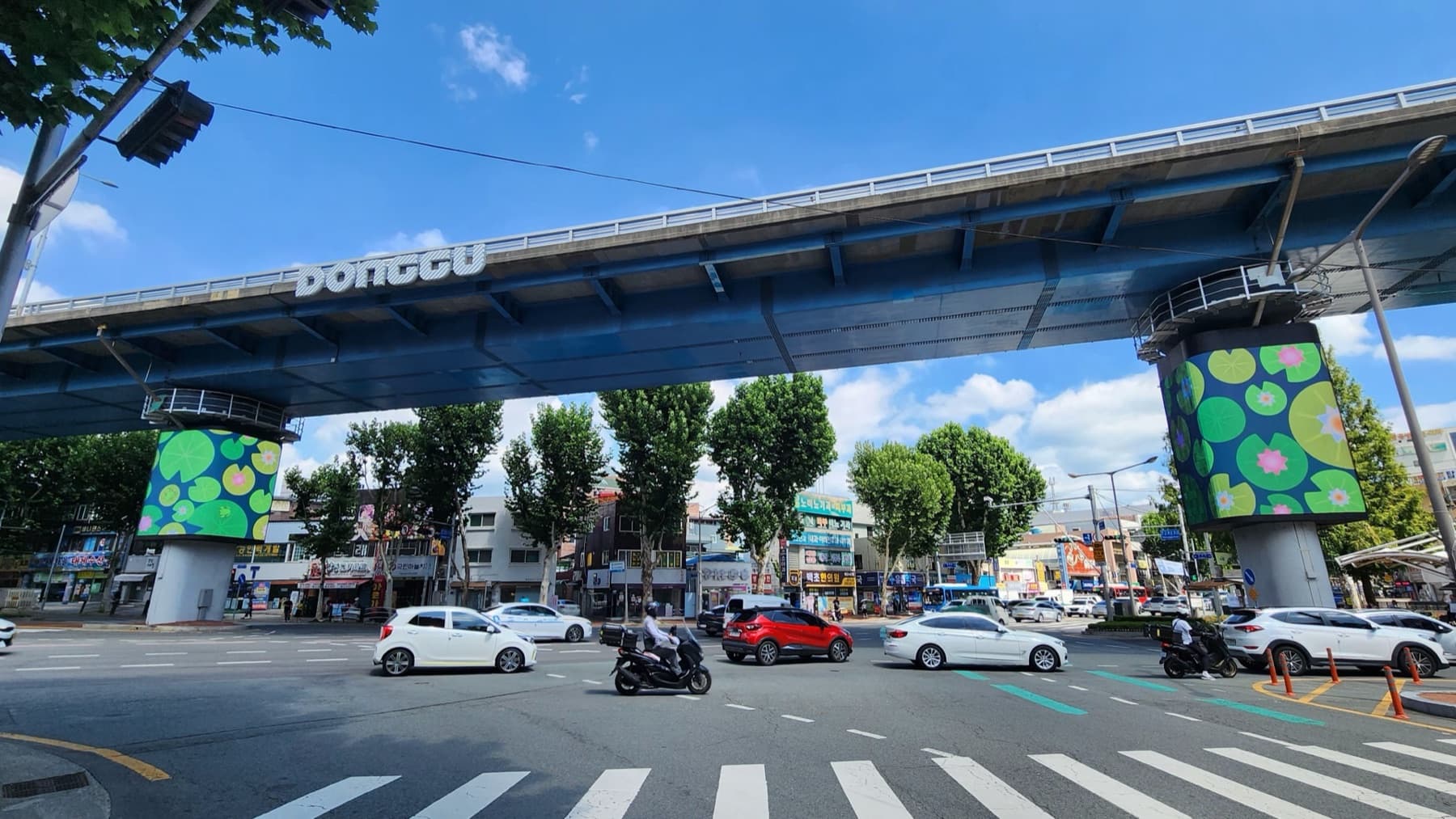
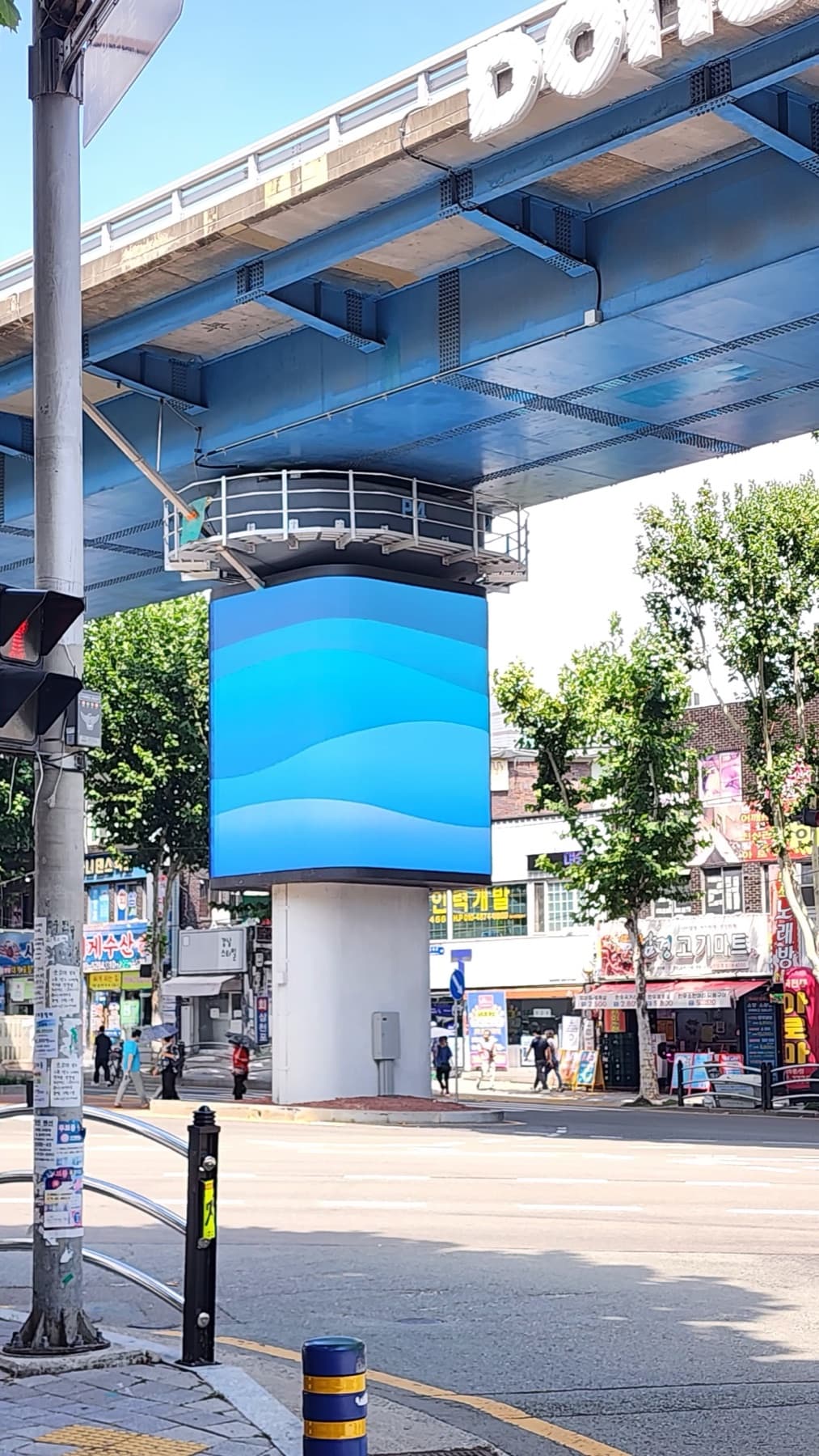
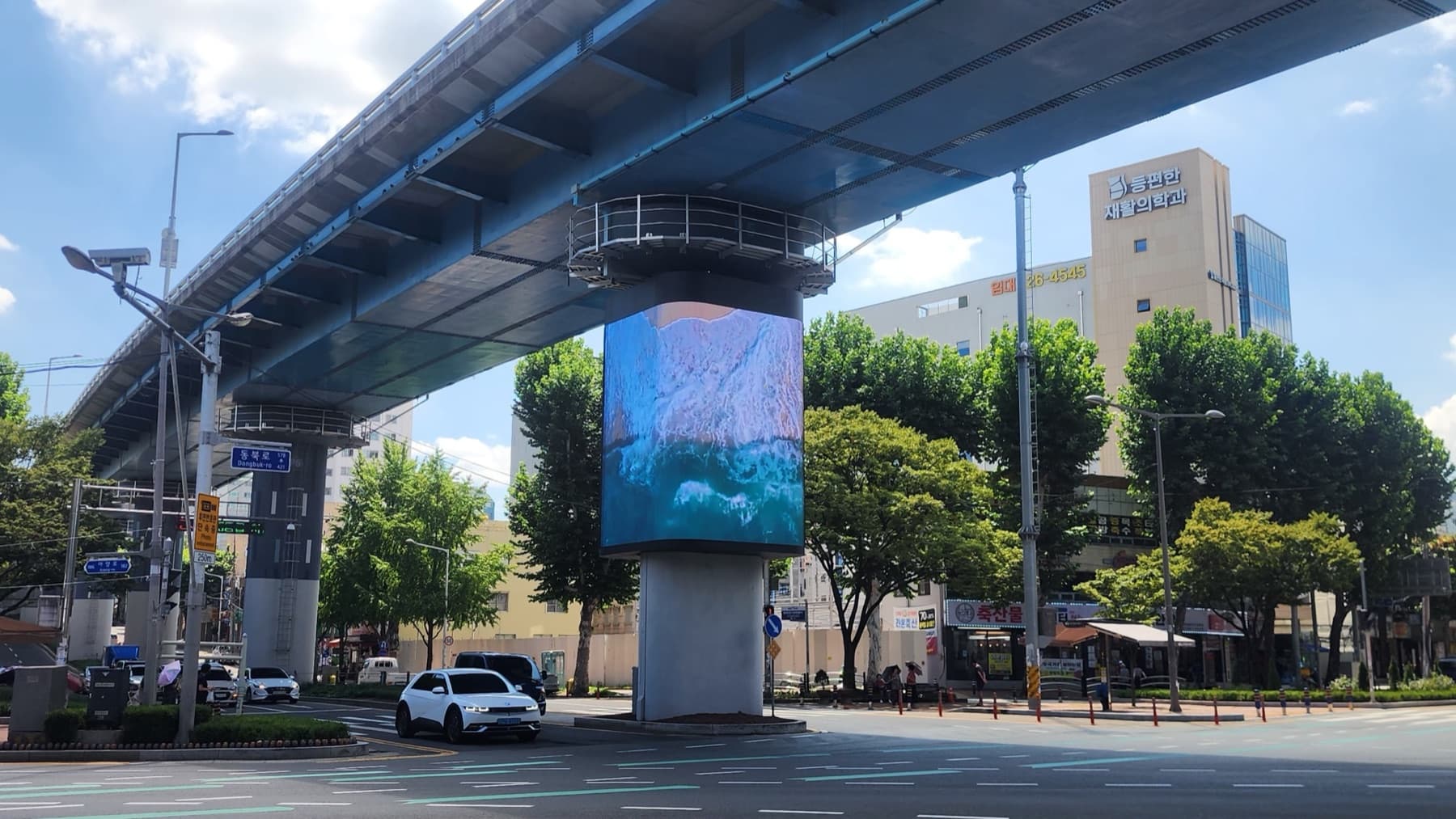
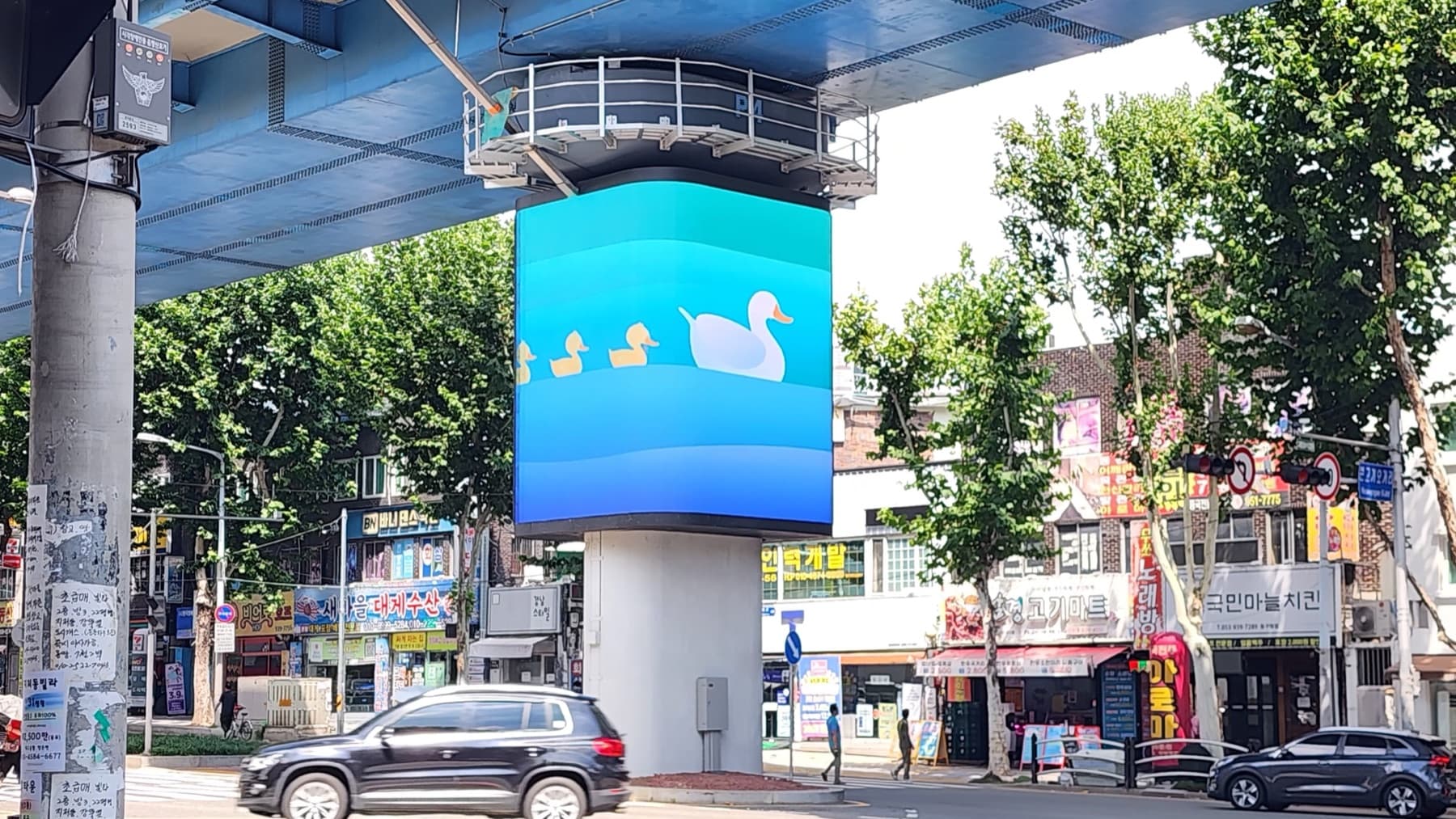
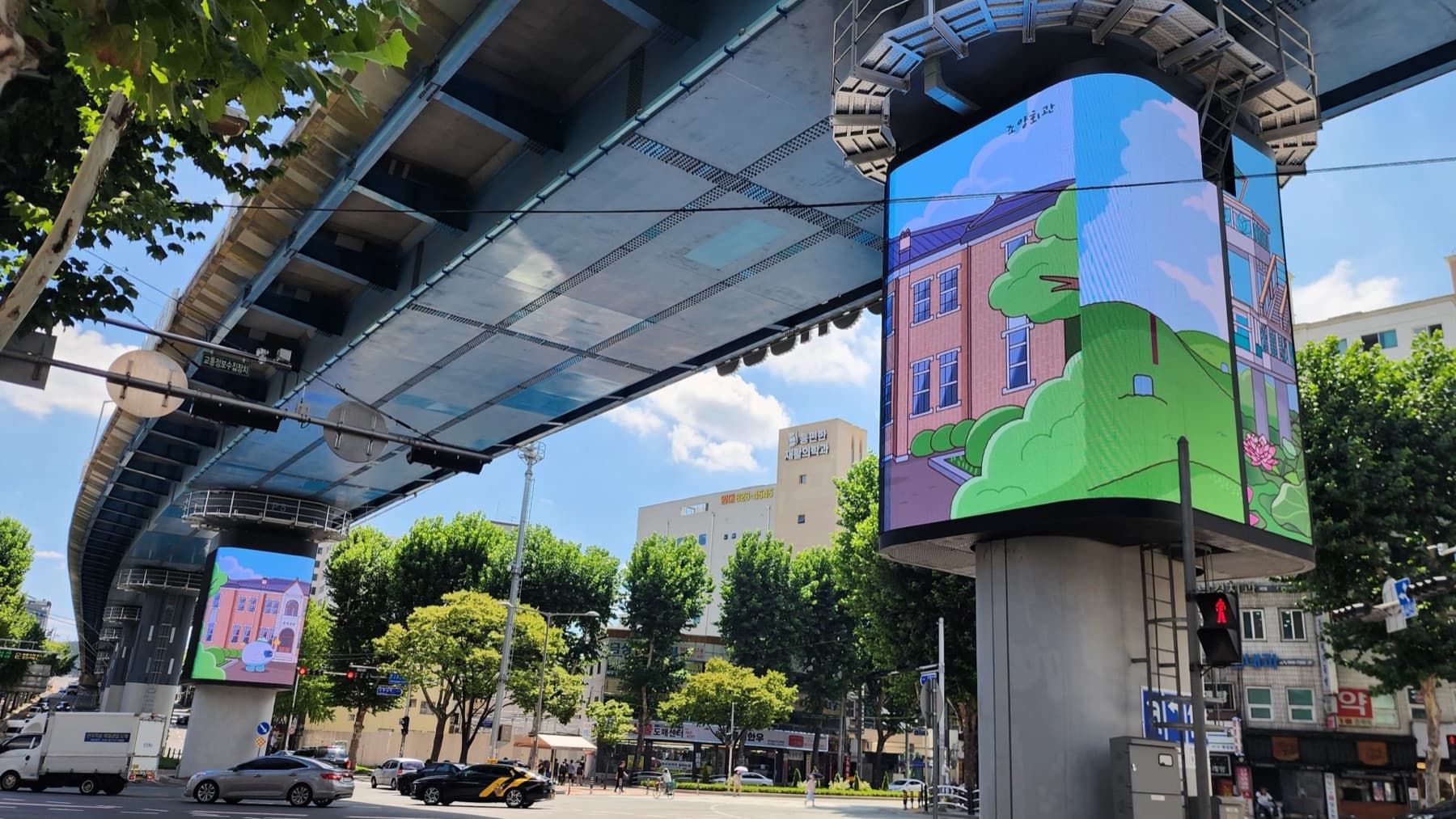
An anamorphic LED installed on the overpass at Keungogae Intersection in Daegu. It sits about 4.5 m above the ground with a total height of 7 m, and was built with a special method to withstand heavy vibration. The LED display wraps 350° around the pier, so the content can be viewed from any direction.
- Installation location
- Dong-gu, Daegu
- Client
- Dong-gu Office, Daegu
- Completed
- 2024.12
- Category
- Outdoor LED
- Product used
- P8
- Size
- 6.08 × 4.41 × 4.57 m
- Resolution
- 2020 × 760 px
Before installation
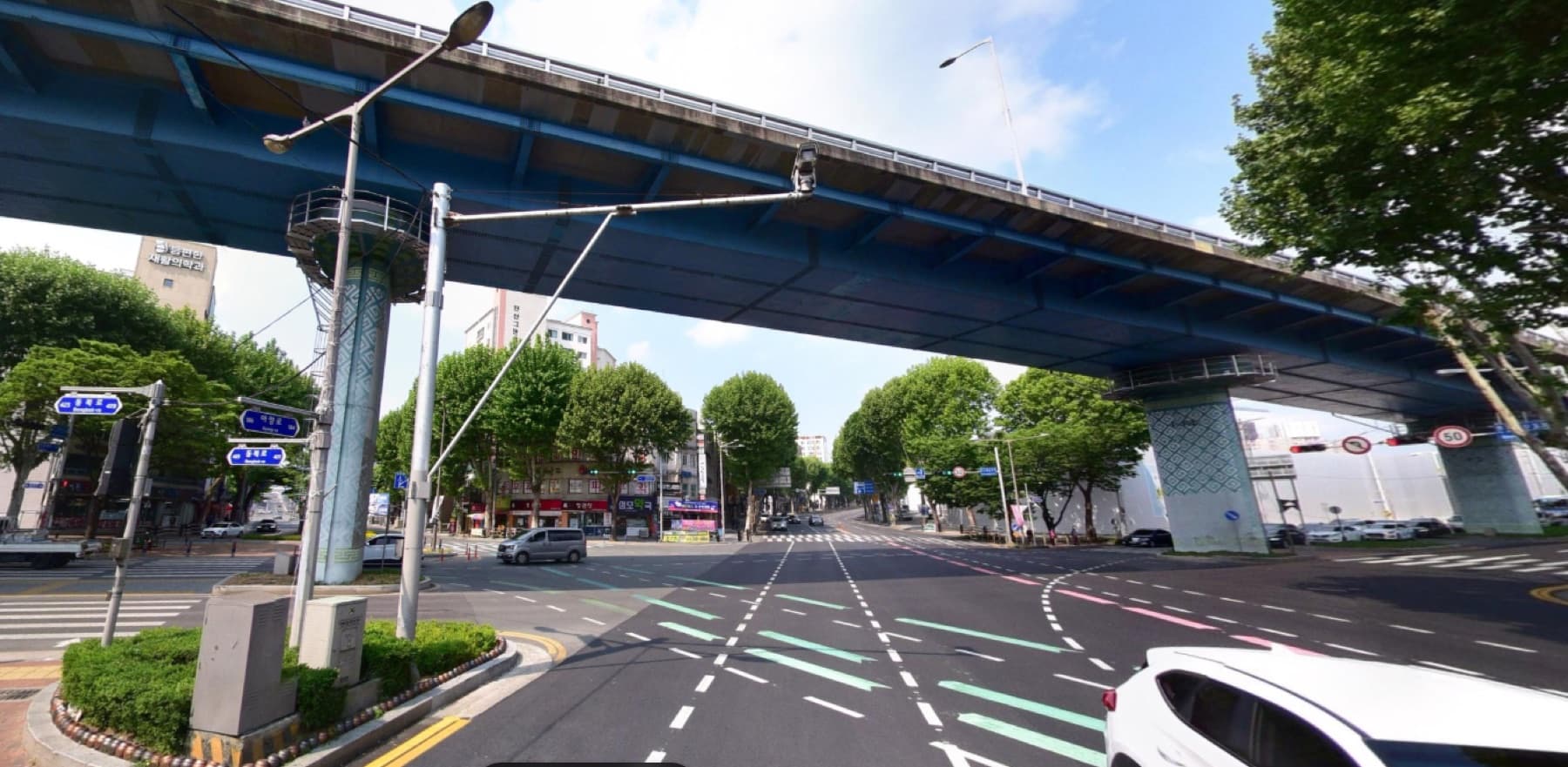
Previously, only large pillars stood at the site, and there was no highly visible promotional medium.
Keungogae Intersection carries heavy traffic, and with vehicles entering from several directions at once, drivers' eyes rest on any one point only briefly. The site needed a display that could be recognized at a glance, even from a distance.
Through on-site measurements, we carefully reviewed the column dimensions, wind and allowable loads, the display's orientation and sightlines, and the power and cabling routes, with ease of maintenance and safety in mind.
Installation process 8 steps
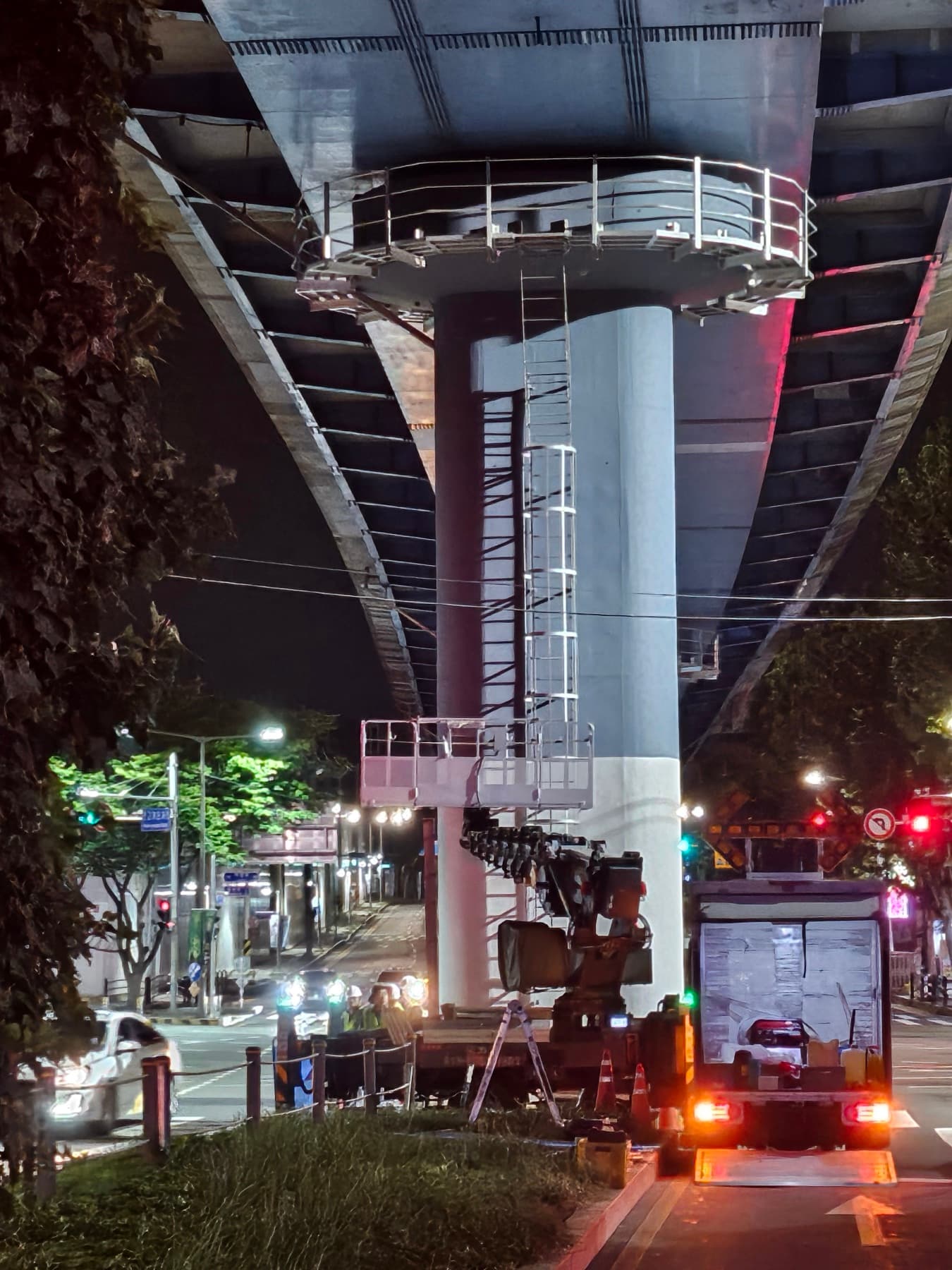
H-beam pier work
After carefully checking site conditions to minimize disruption to traffic, we installed the H-beam piers efficiently using minimal equipment.
We positioned the H-beams to stably support the size and weight of the display and fixed them securely, keeping surrounding traffic and site safety in mind throughout the work.
At busy roadside sites, workspace and equipment use are limited, so it is important to avoid unnecessary equipment and carry out the required work efficiently. At this site, too, we completed the H-beam piers in a constrained environment while balancing safety and efficiency.
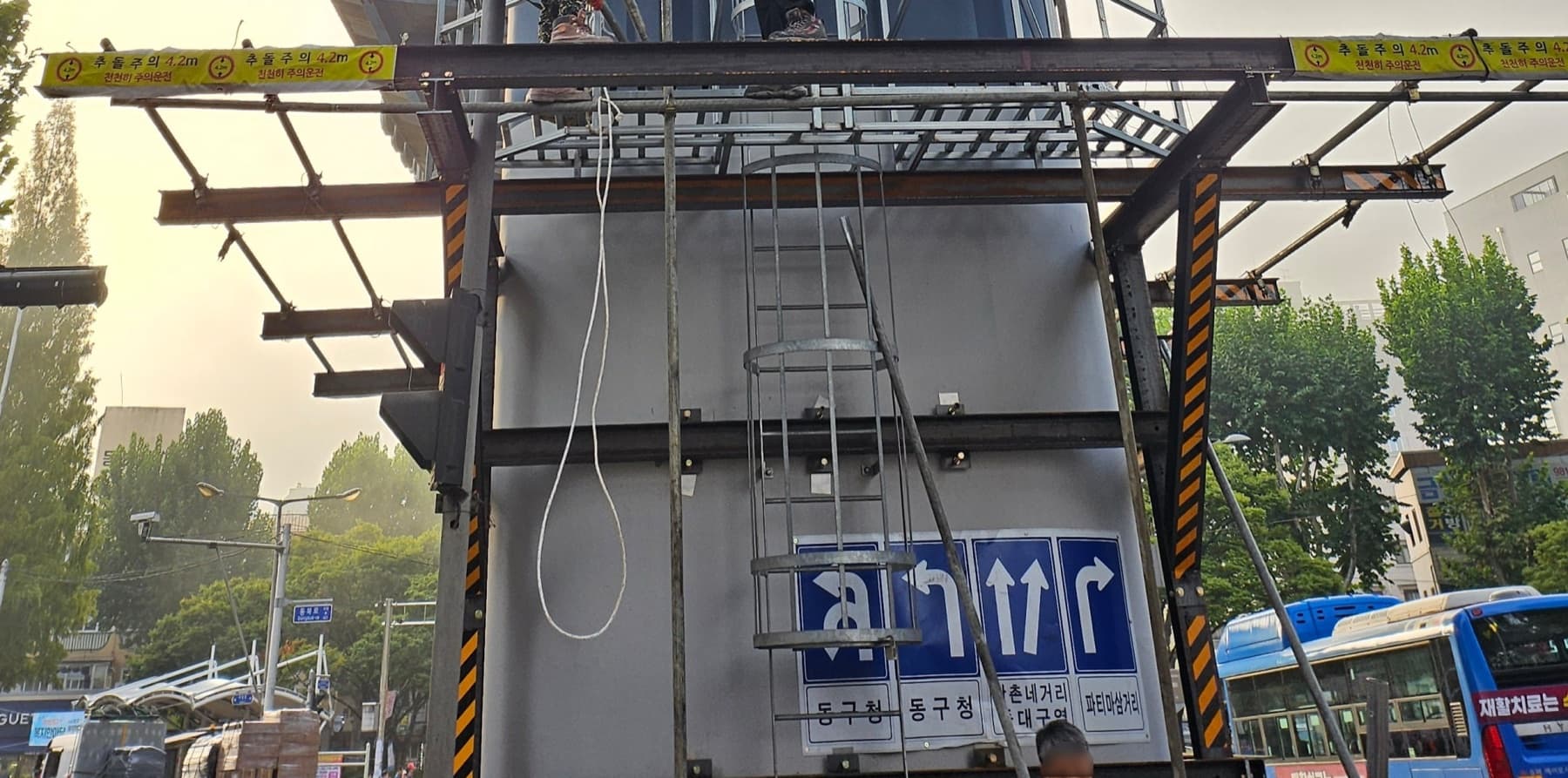
Truss installation
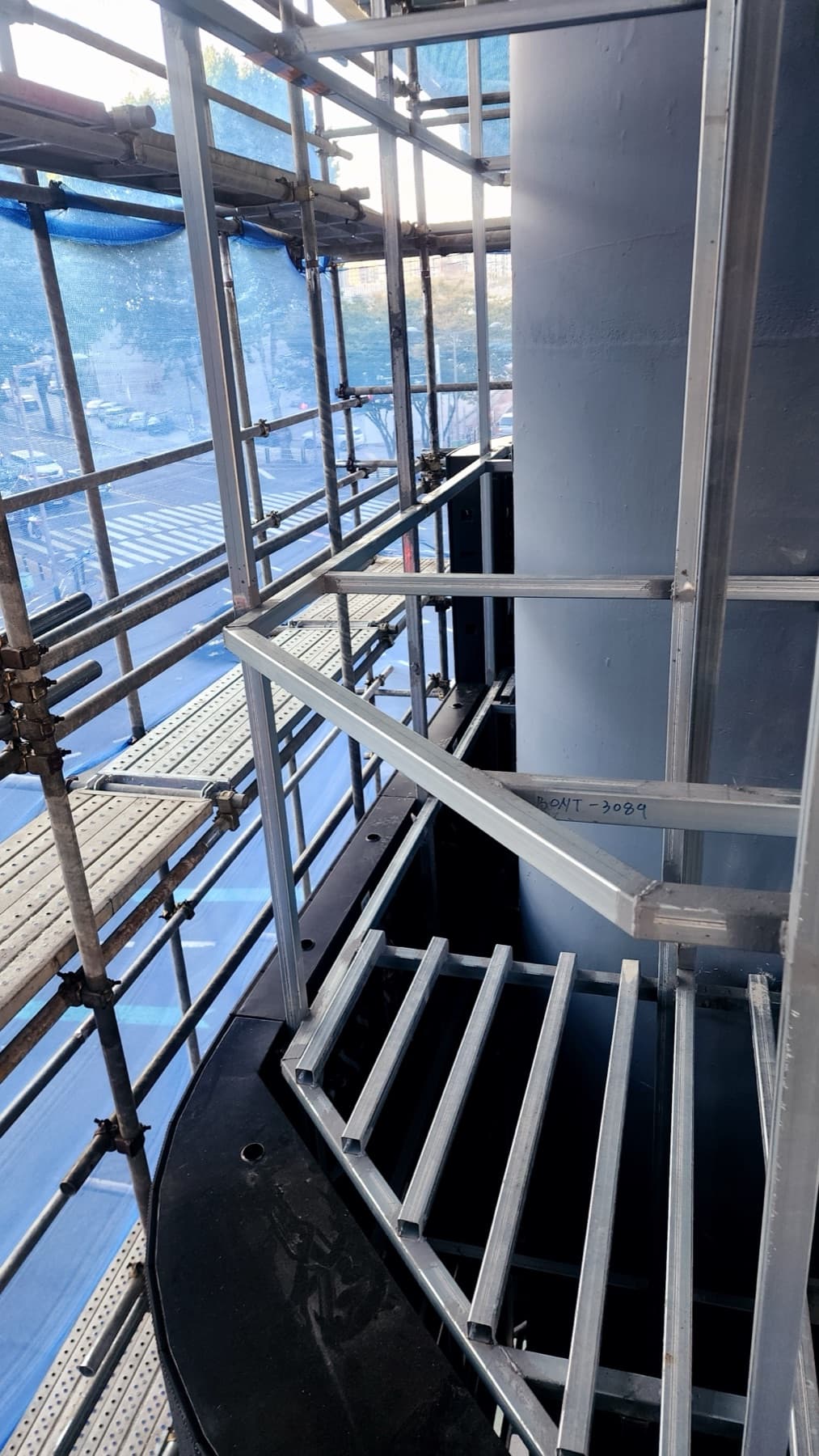
After the H-beam piers were complete, we moved on to installing the truss structure that supports the LED display.
The pier columns at this site were not aligned in a straight line but slightly skewed in a diamond-like layout, which made it difficult to build the truss to standard dimensions. We therefore precisely measured the position, angle and spacing of the columns, then designed and fabricated the truss to suit the site.
Rather than building the truss on site, we prefabricated it at the factory, transported it to the site and installed it. This reduced on-site work time and made installation more efficient.
To transport and install the prefabricated truss, we chose a 25-ton cargo crane, selected after considering the road conditions, the weight of the structure and the working environment.
Because Keungogae Intersection normally carries heavy traffic, we scheduled the work for the early morning hours when traffic is relatively light to minimize the impact on vehicles.
For smooth and safe work, we also had an aerial lift truck on standby at the site so it could be deployed the moment it was needed.
Through thorough prefabrication and equipment preparation, and by working during low-traffic hours, we completed the truss installation safely and efficiently while minimizing on-site work time.
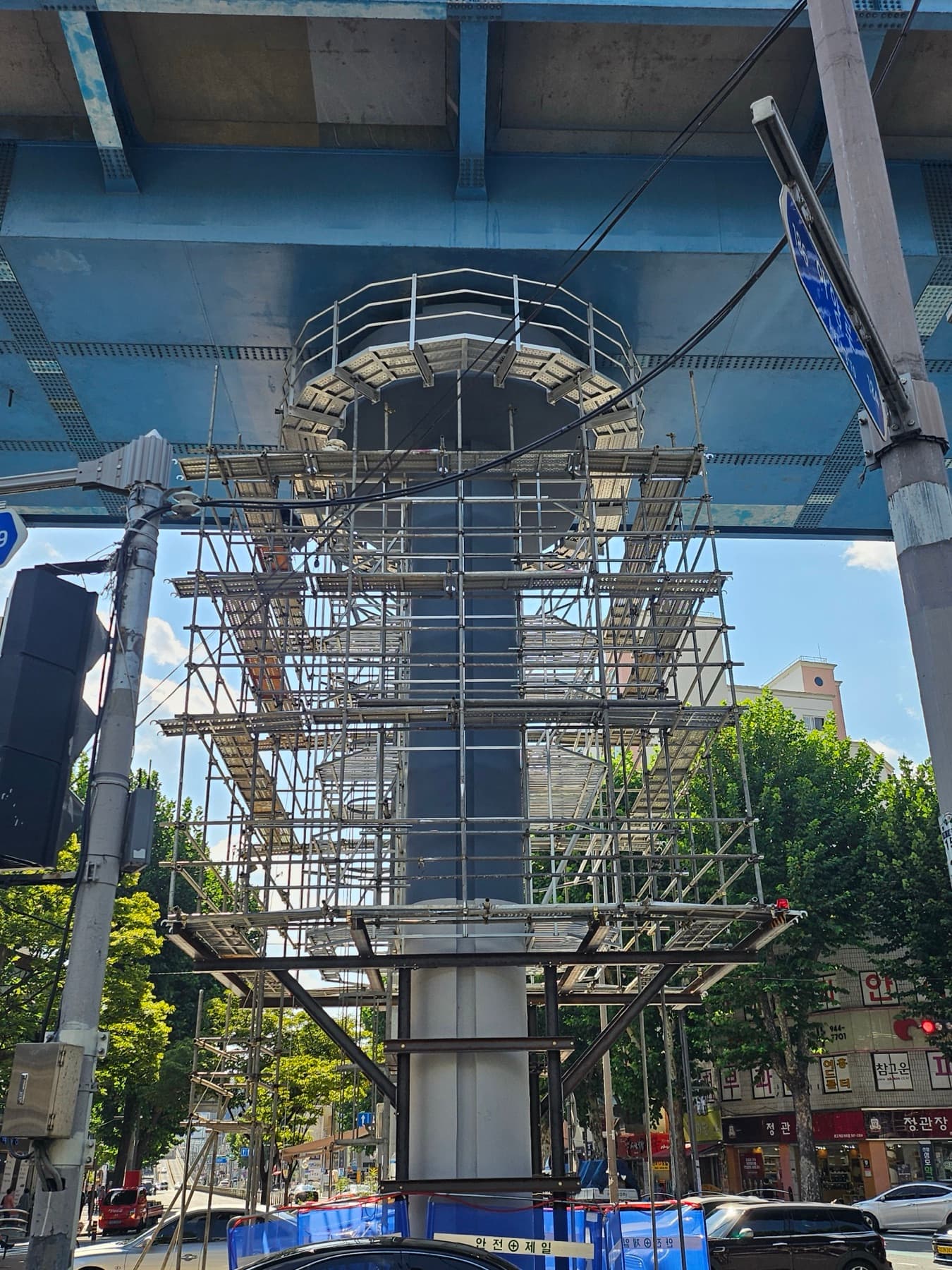
Scaffolding
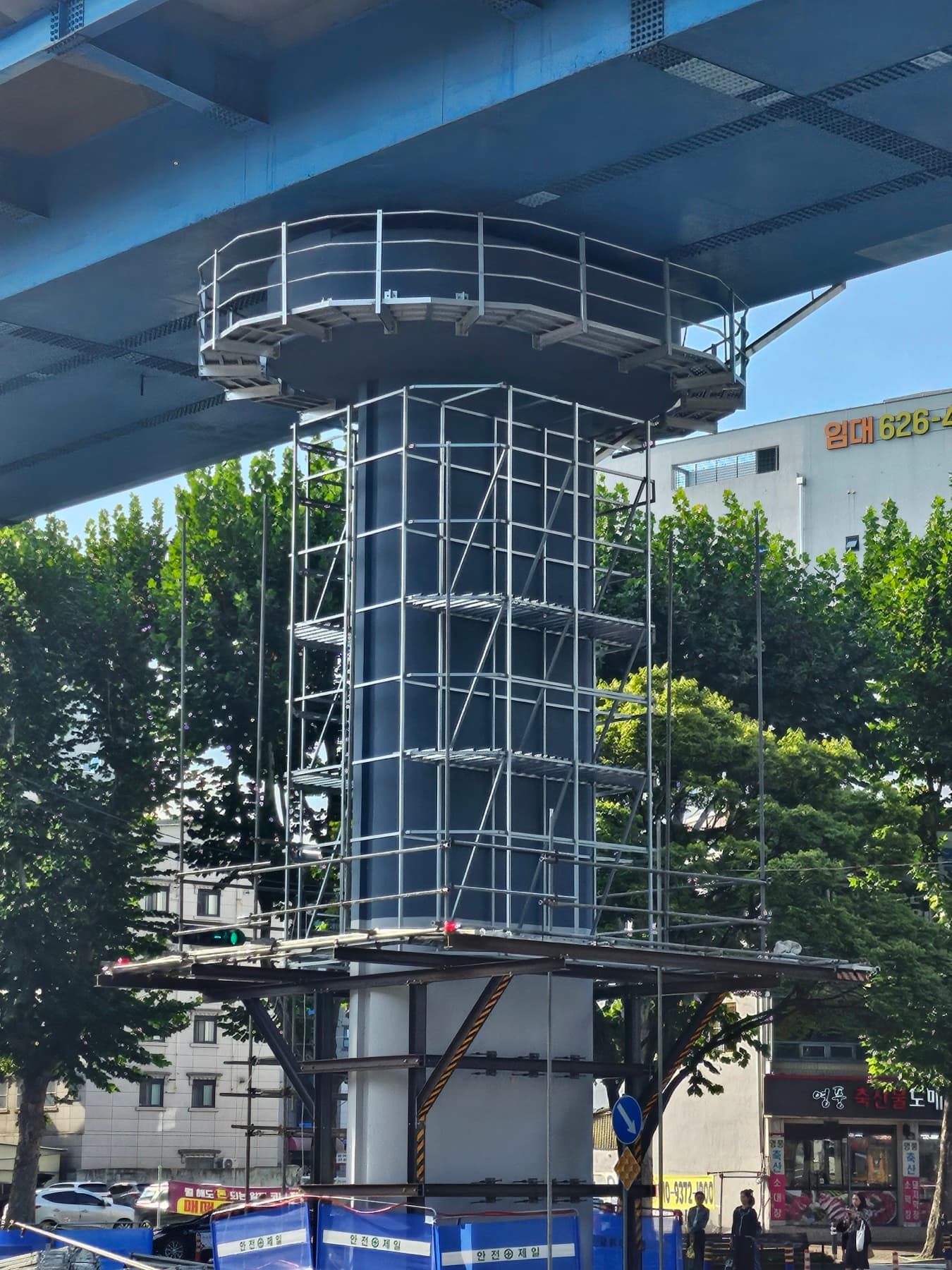
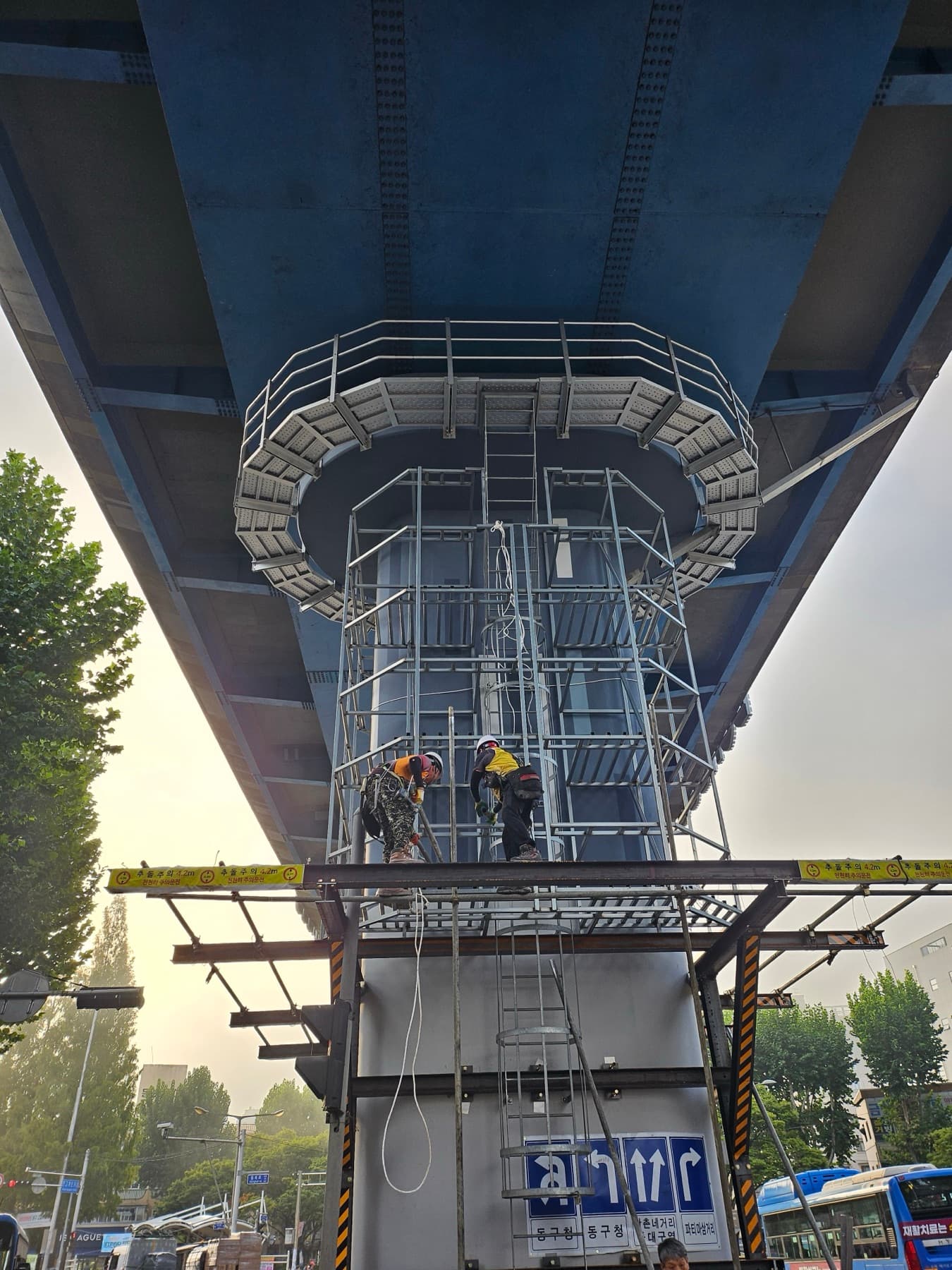
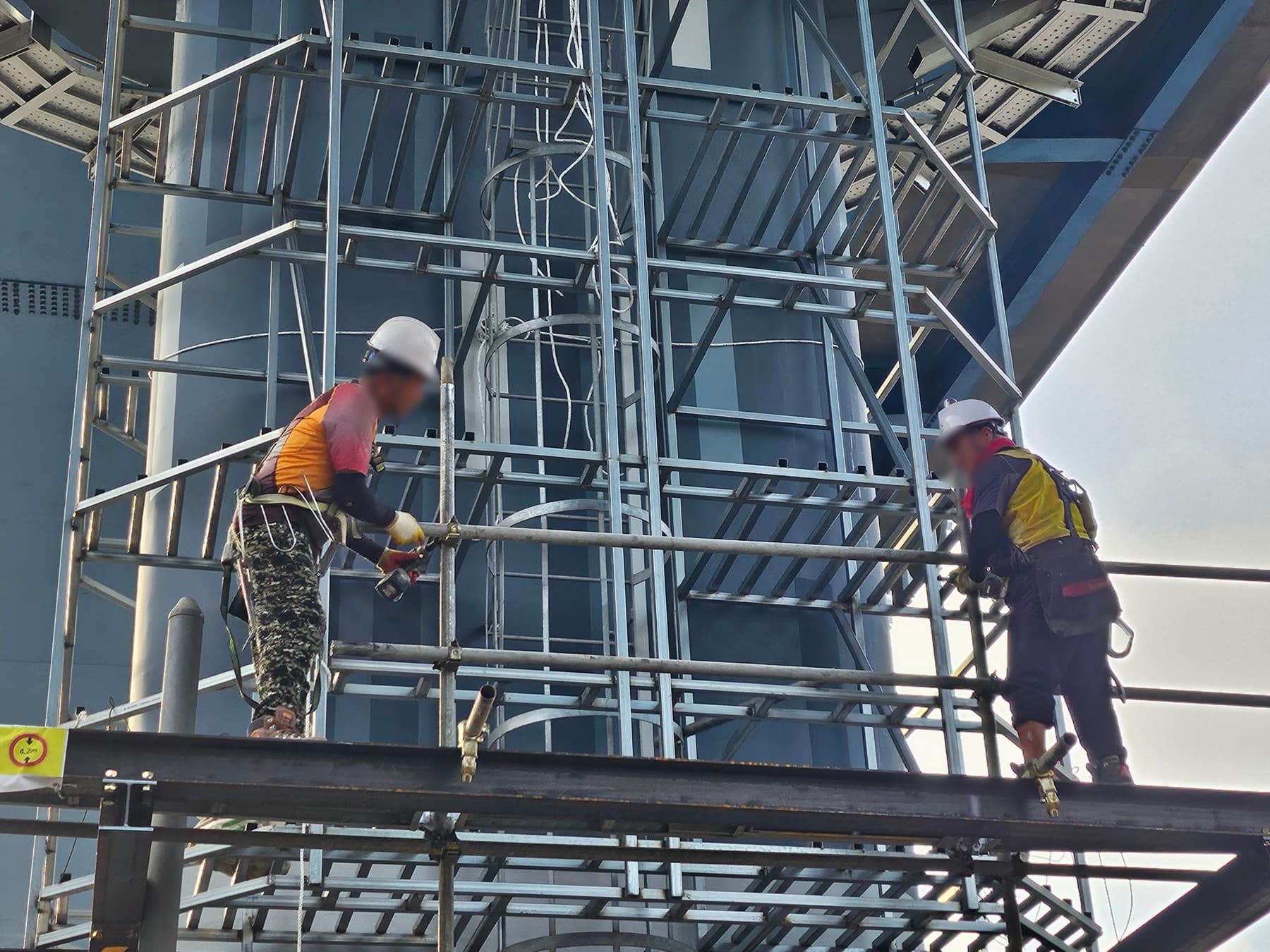
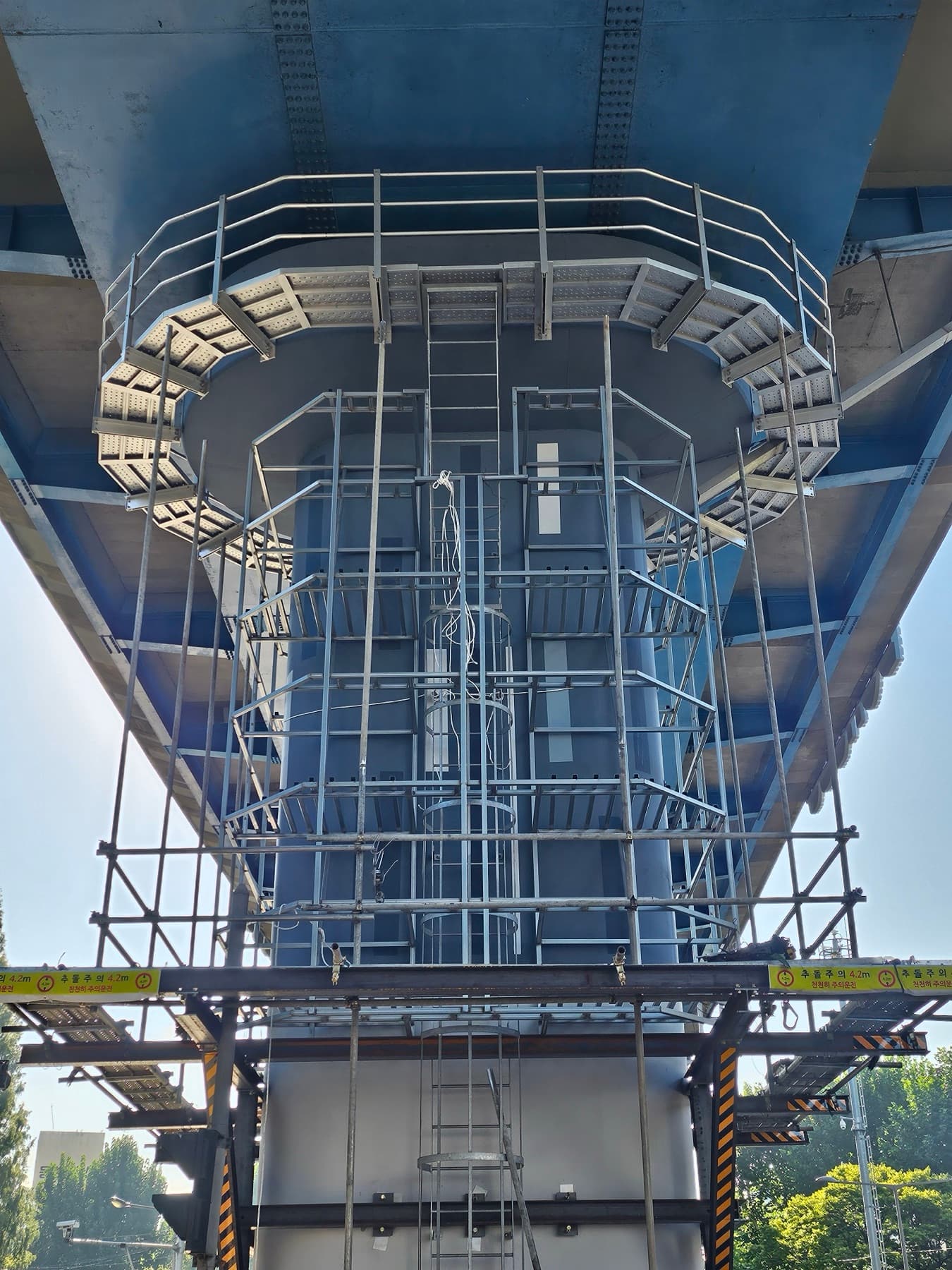
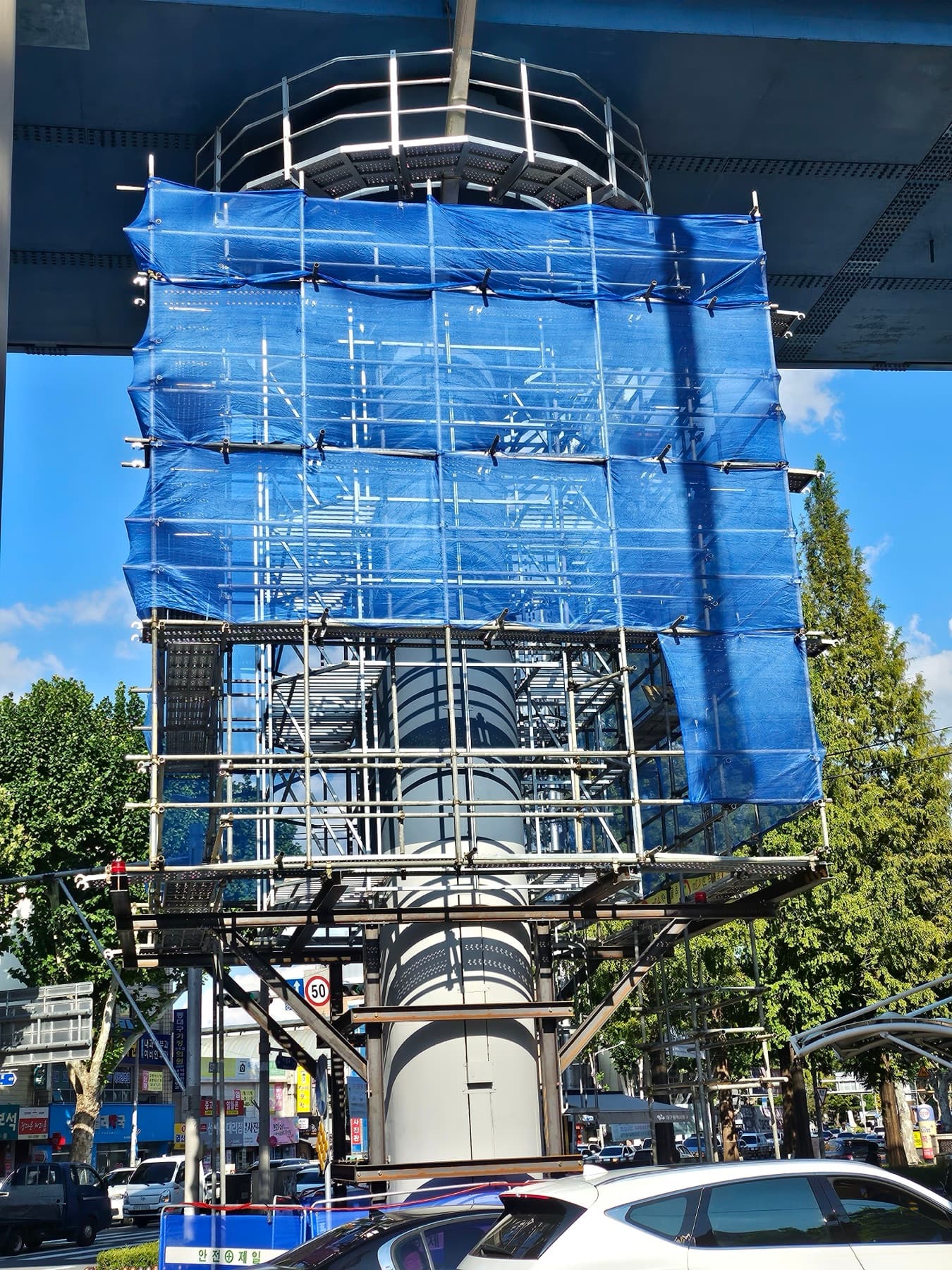
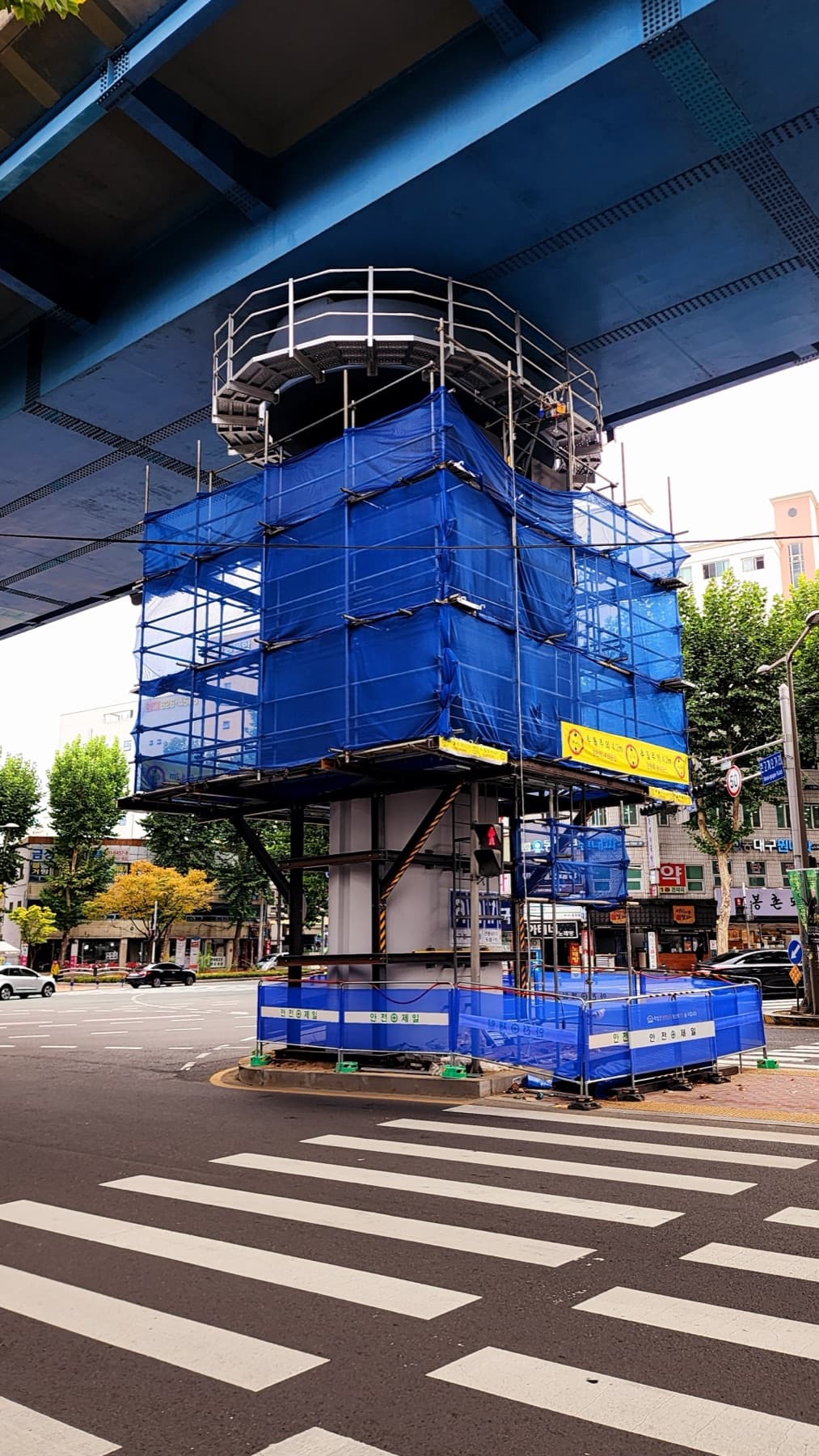
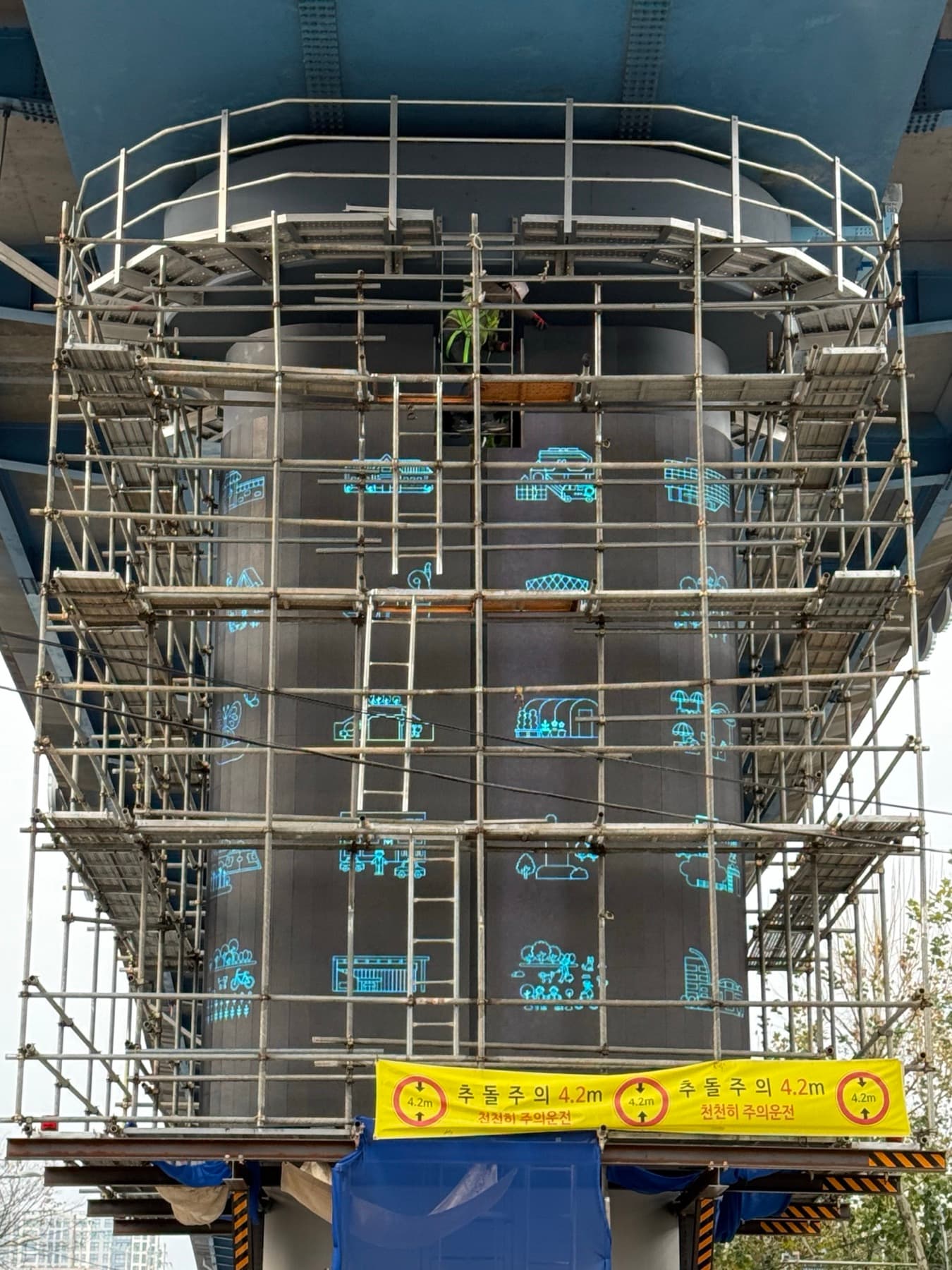
Once the truss was in place, we erected scaffolding so that the LED display could be installed safely.
The scaffolding was installed to prevent parts and materials from falling during work at height and to keep workers safe.
Since the work took place above a busy road, we installed the scaffolding carefully to secure a stable workspace and prevent materials from falling onto the surroundings.
With a safe working environment in place first, we proceeded to the next display installation stage, keeping both workers and passing vehicles safe.
Cabinet installation
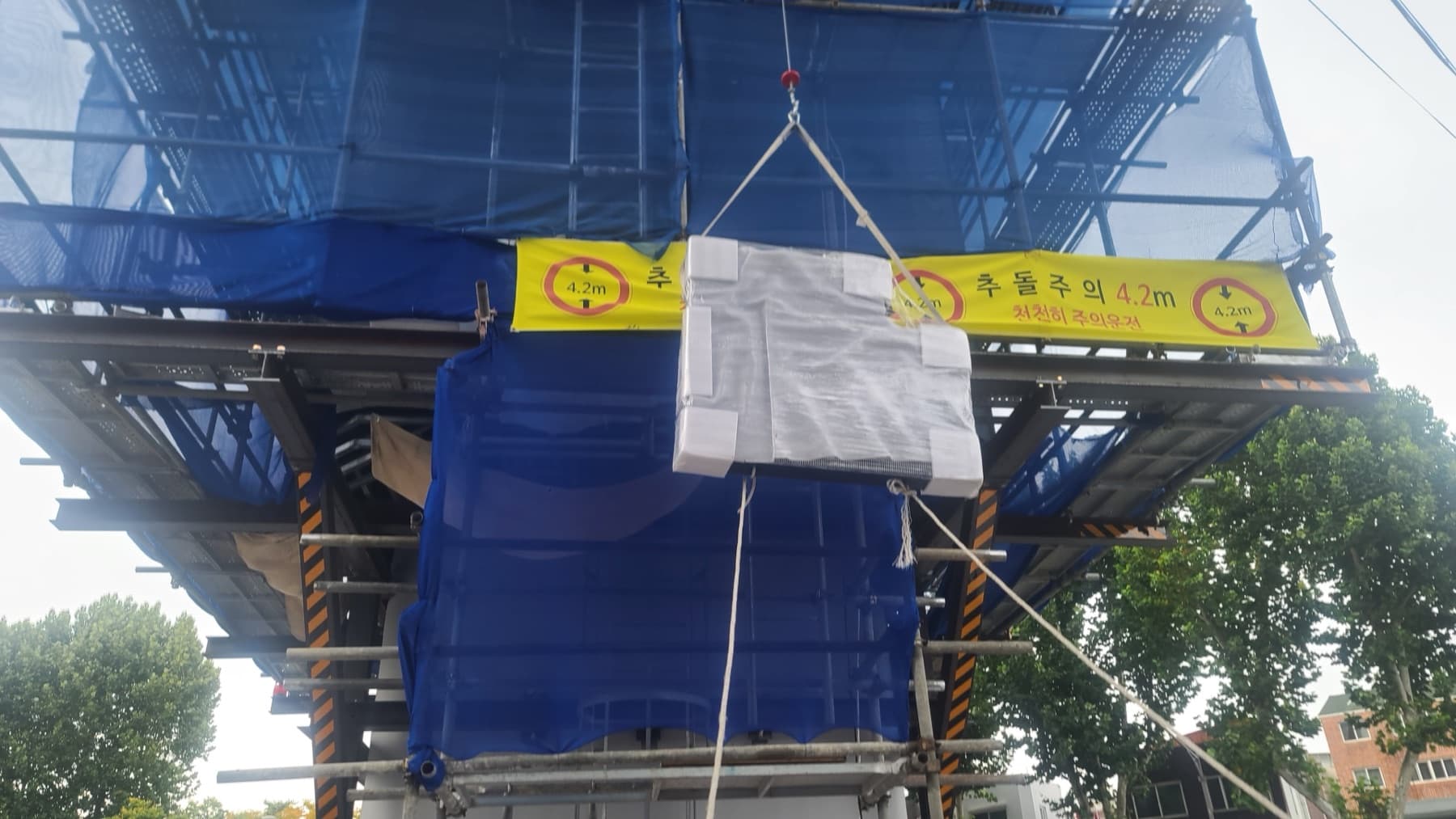
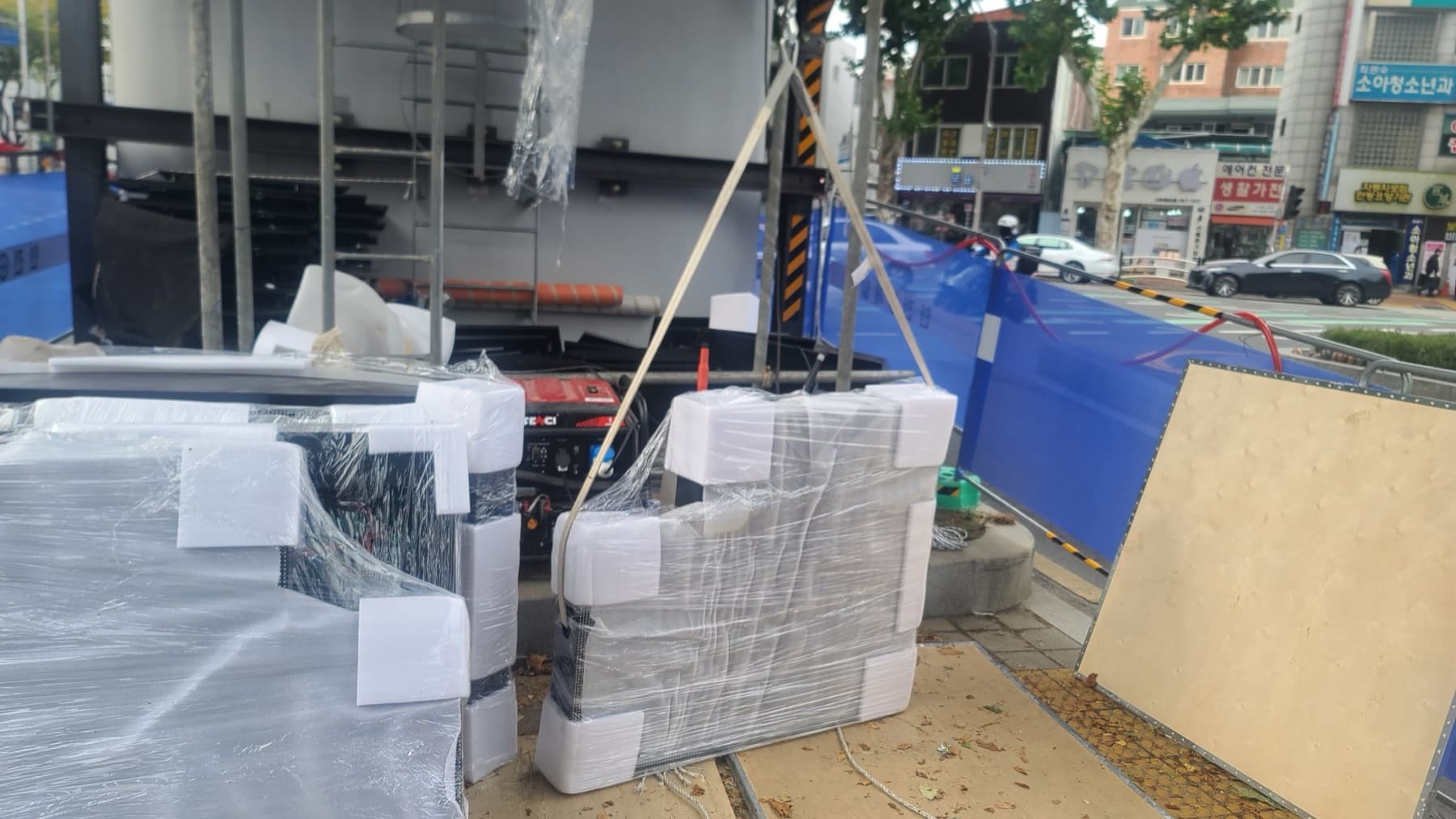
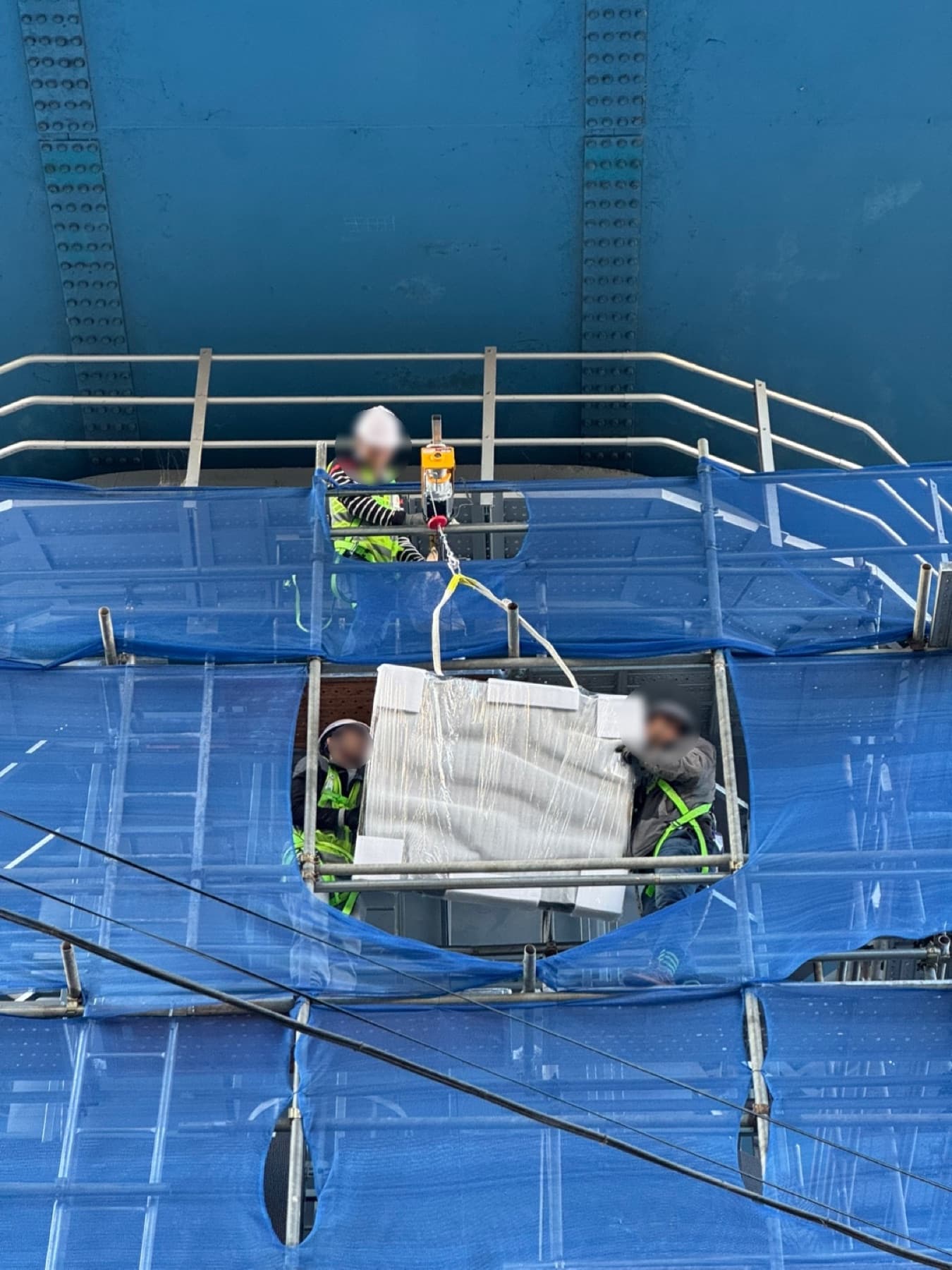
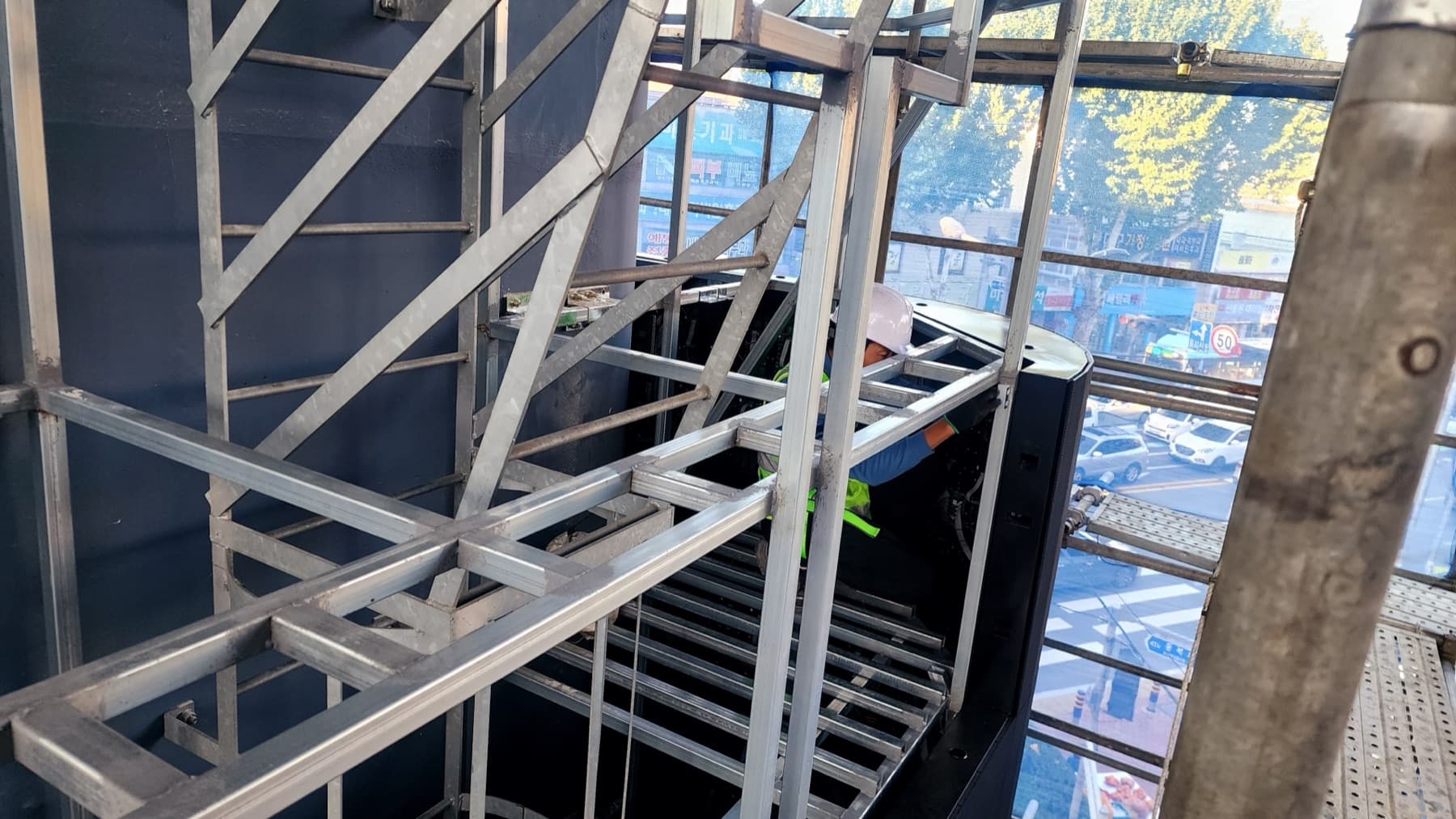
With the scaffolding providing a safe working environment, we began installing the LED display cabinets in earnest.
To move the cabinets safely and efficiently up to the working height, we lifted them with a wire winch. Using a winch instead of carrying the heavy cabinets by hand reduced the workload and moved the materials to their positions more steadily.
If you look closely at the LED display, you will notice a dividing line at the edge of the screen.
This is not just a design element. It is a reference line that marks the start and end of the display and makes each section easy to locate.
This division also makes it easier to identify and arrange screen areas when producing video content, which helps with content production and screen composition.
We fitted each cabinet precisely in place so that the whole screen would join seamlessly into a single LED display.
Power and signal cabling
After the cabinets were installed, we carried out power and signal cabling so the LED display would operate properly.
An LED display consists of many connected cabinets forming one large screen, so cabling that delivers power and video signals accurately to each cabinet is essential.
On site, we checked the connection points of each cabinet and connected the power lines and data cables in order, tidying the cable routes as we worked to keep cables from sagging or tangling.
Because the display is mounted at height, we did not stop at simply connecting everything. We carefully checked cable placement and routing to make future maintenance and inspection easier.
Calibration
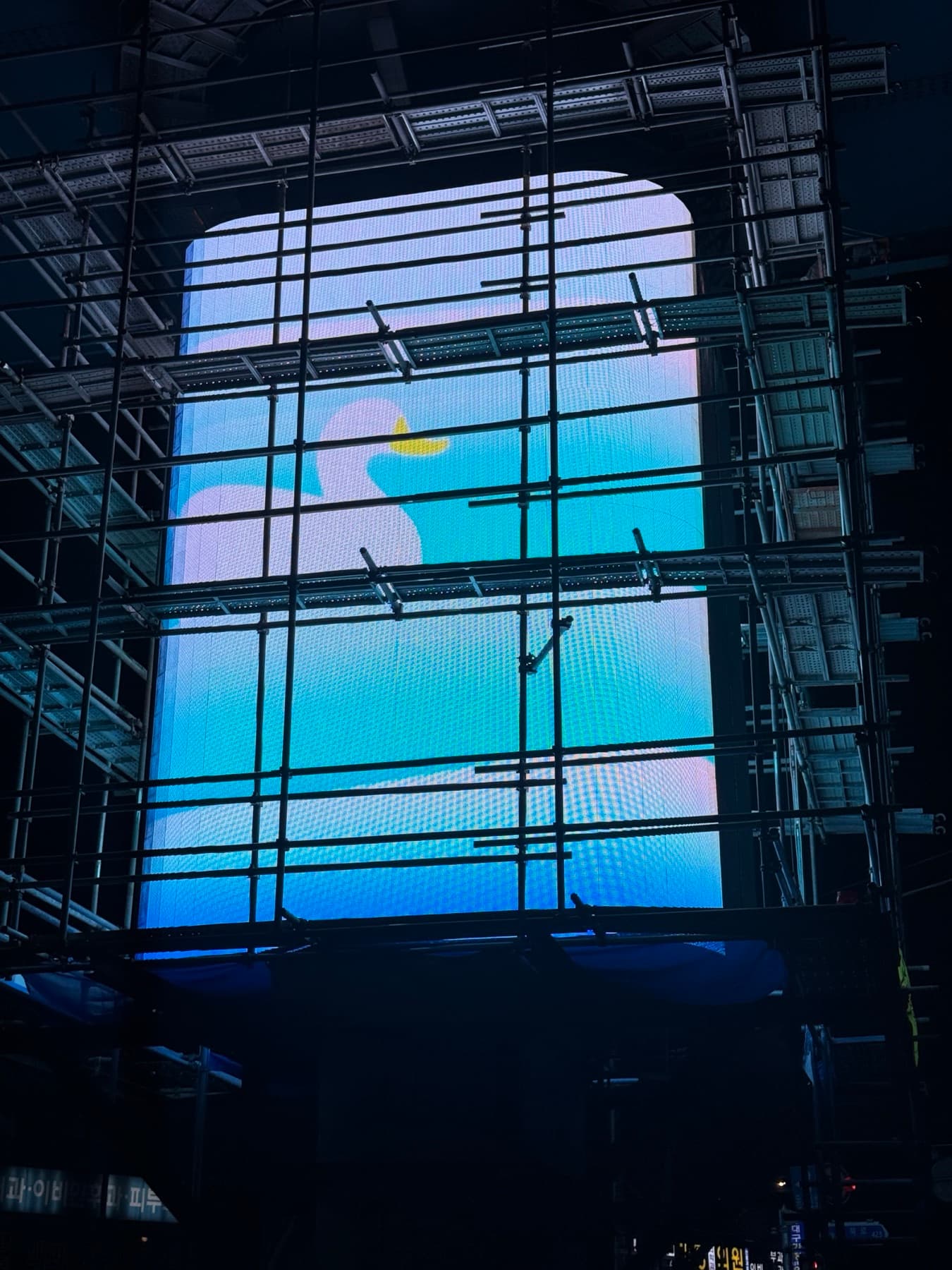
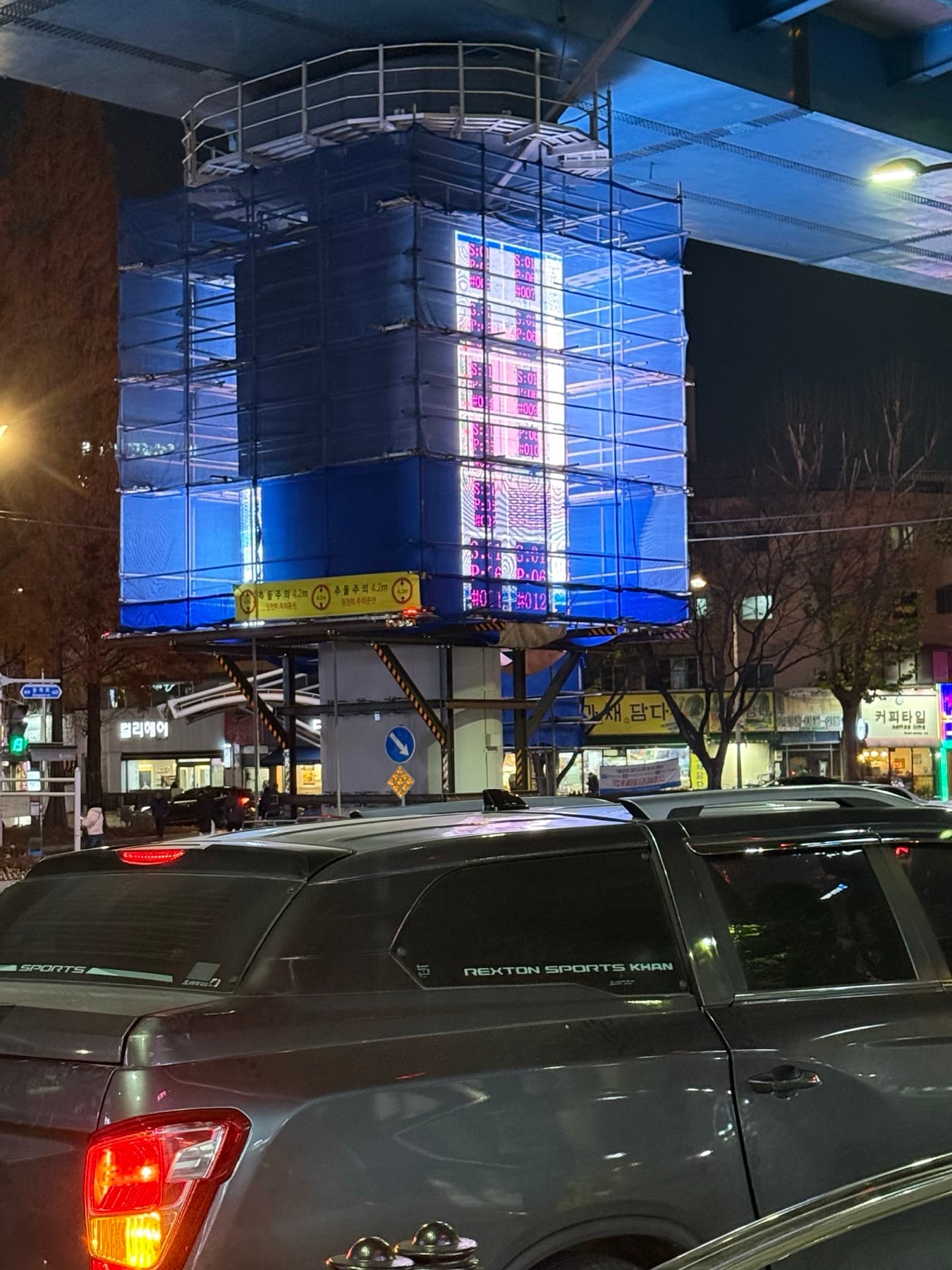
After all installation and cabling work, we performed calibration and screen testing of the LED display.
Calibration is the process of adjusting the brightness and color of each module so that a screen made up of many LED cabinets looks like one seamless image. We fine-tuned every cabinet to eliminate differences in brightness and color and achieve uniformity across the whole screen.
After calibration, we played actual video and carefully checked brightness, color, playback and the overall continuity of the screen. We completed the installation after a final check that every part of the screen was displaying correctly.
Once screen testing was complete, we safely dismantled the scaffolding and also removed the H-beams used for the initial structural work.
Aging test
After all installation and screen tests were complete, we carried out an aging test.
An aging test is a process of running the display continuously for an extended period, as in actual operation, to confirm stable and correct output.
At this site, we ran the display 24 hours a day for one month, continuously monitoring brightness, color and video output.
We checked carefully for any screen faults during long-term operation and for problems with LEDs in specific sections, making a final check that the display was ready for stable long-term use.
By completing the aging test, we went beyond simply confirming that the screen turns on and finished the final quality verification for stable use in real operating conditions.
Maintenance and after-sales service
To keep the LED display running reliably after installation, we also signed a maintenance and after-sales service contract.
Beyond management during the warranty period, we handed over management duties and signed a contract to ensure continued maintenance after the warranty expires.
Over years of use, an LED display may need inspection of its modules or power and signal systems, so ongoing care and quick response are essential.
At this site, too, we did not stop at installation and testing but put in place an after-sales system that covers maintenance beyond the warranty period.
We continue to provide maintenance and management to this day, supporting stable operation of the LED display.
Completed installation
After completion, the display's visibility improved from many directions around Keungogae Intersection. It can also broadcast images, videos and notices in real time, boosting promotional impact to suit each situation.
A key advantage of an LED display is that content can be changed freely by time of day or situation, making it highly useful in areas with heavy foot and vehicle traffic.
Safety-first installation
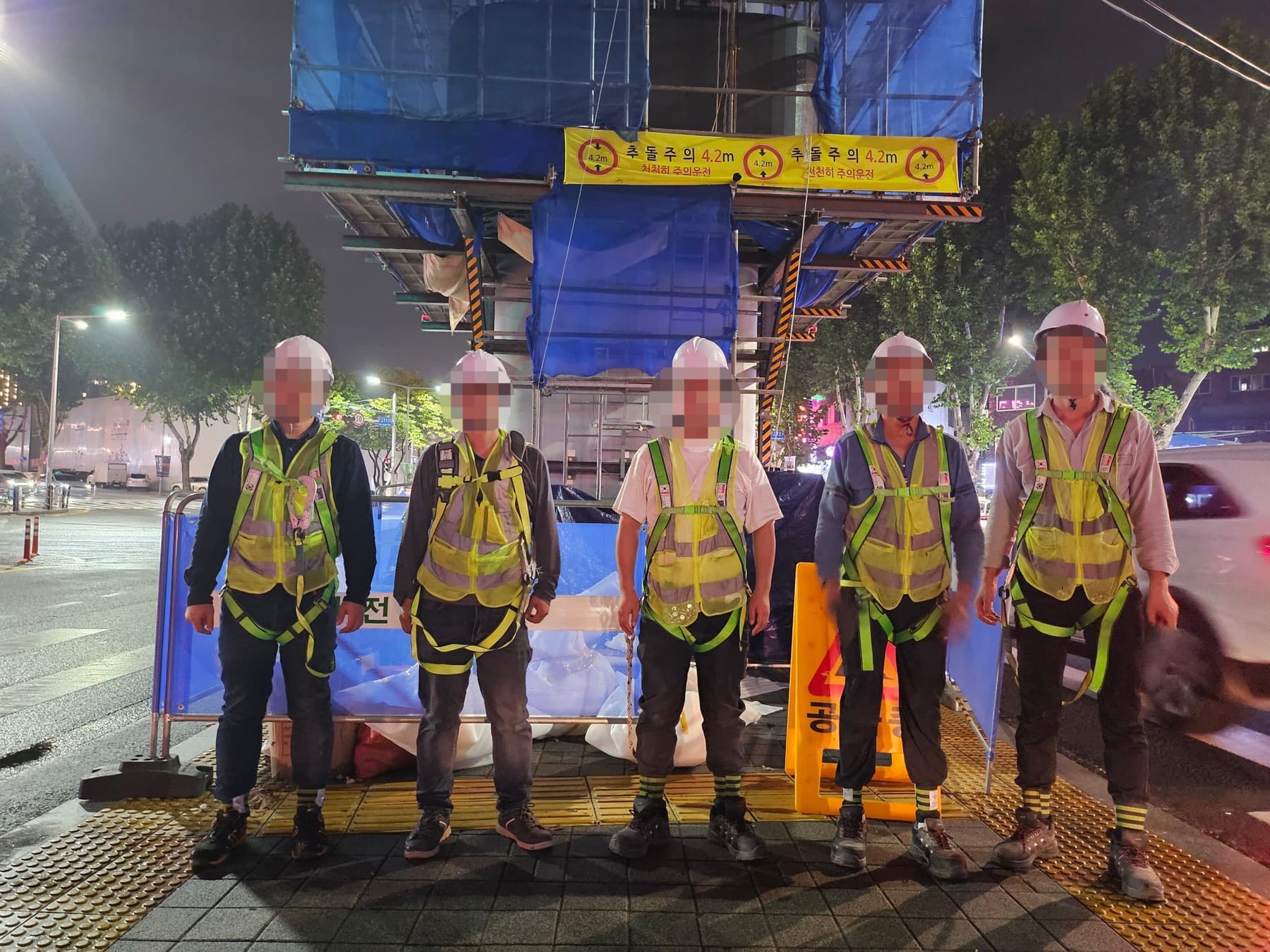
At LO-GIN IT, we put safety first at every site. Before work begins each day, we provide safety training to all workers on site and make sure everyone wears the required safety equipment before starting work.
Especially at sites like this one, where roadside work with heavy traffic is combined with work at height, even a small lapse can lead to a serious accident. We carefully checked site conditions and hazards before work and followed safety rules throughout.
We also reviewed the equipment and methods for each stage in advance to reduce unnecessary risk, and secured a safe working environment before proceeding with each stage.
Installing an LED display involves structural, electrical and at-height work all at once. Going forward, we will continue to put safety first, with responsible installation and thorough after-sales care.
Similar projects
 All projects